[Deep Dive] Neutrinos caught on camera: Testing the first prototype of a new elementary particle detector - Phys
![[Deep Dive] Neutrinos caught on camera: Testing the first prototype of a new elementary particle detector - Phys](/content/images/size/w1200/2026/04/deep_dive_thumb-5.png)
Neutrinos caught on camera: Testing the first prototype of a new elementary particle detector - Phys
Computing • April 30, 2026
Reading time: ~12 minutes
📑 Contents
📊 Executive Summary
Neutrino detection has entered a transformative era with the April 2026 announcement from ETH Zurich and EPFL of the first working prototype of an ultrafast 3D imaging detector for elementary particles. Led by Ph.D. student Till Dieminger, Dr. Saúl Alonso-Monsalve, and Professor Davide Sgalaberna at ETH, in collaboration with Professor Edoardo Charbon's Advanced Quantum Architecture Lab at EPFL, the team has demonstrated that single-photon avalanche diode (SPAD) arrays can capture neutrino interactions in unsegmented scintillator volumes at picosecond resolution. This represents a paradigm shift away from heavily segmented, expensive detector architectures used at facilities like Super-Kamiokande and DUNE. Combined with parallel progress in 3D-printed plastic scintillators (March 2025) and AI-assisted track reconstruction, the breakthrough could reduce next-generation neutrino detector costs by an estimated 30-50% while dramatically improving resolution. Implications extend to CP-violation studies, sterile neutrino searches, dark matter detection, medical imaging, and nuclear nonproliferation monitoring—a market segment projected to exceed $4 billion by 2032.

🔬 Technical Deep Dive
Current State
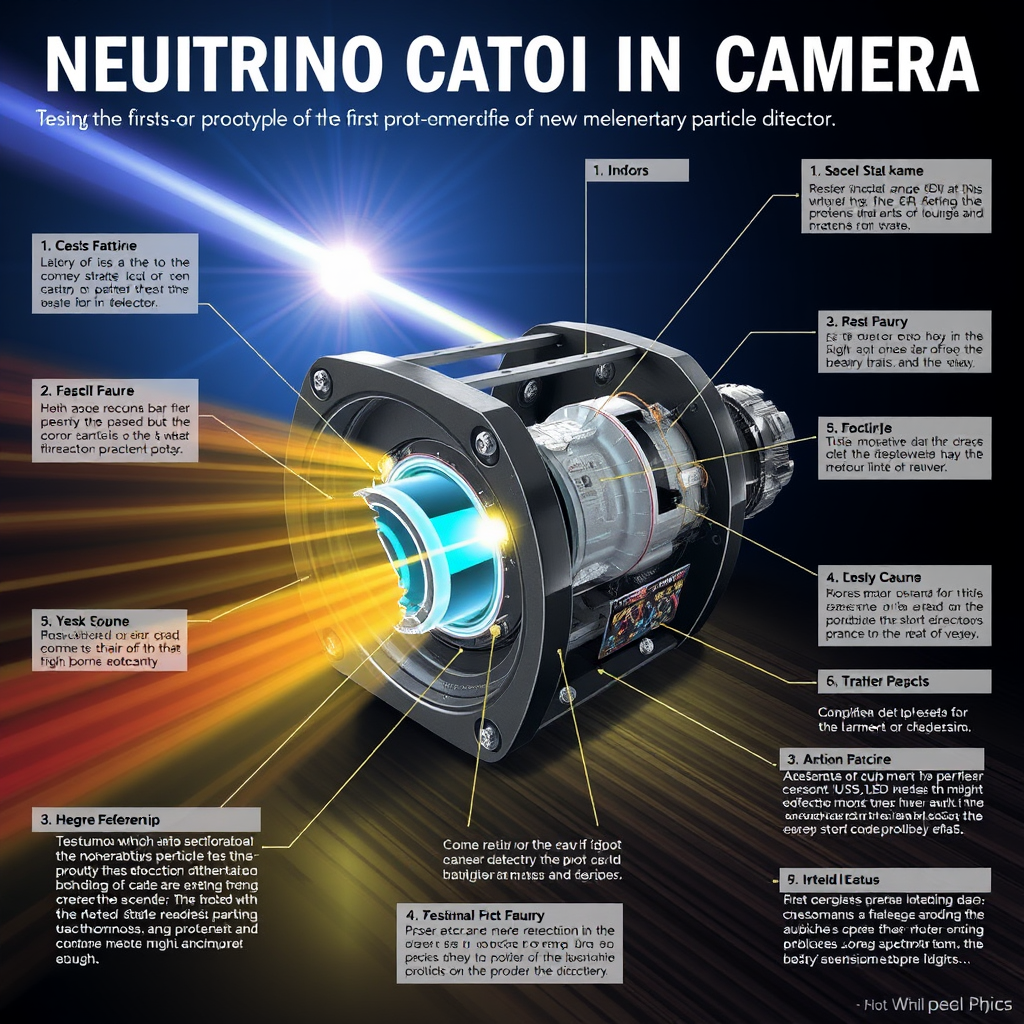
Neutrino detection has historically relied on massive instrumented volumes—Super-Kamiokande uses 50,000 tons of ultrapure water surrounded by 11,000 photomultiplier tubes, while the upcoming Hyper-Kamiokande and DUNE experiments will scale to hundreds of kilotons. The dominant paradigm has been physical segmentation: dividing scintillator into thousands of small optical fibers or cubes, each individually read out, to localize where particles deposit energy. This approach is mechanically complex, expensive (the SuperFGD at Japan's T2K cost tens of millions for a 2-ton instrumented volume), and fundamentally limits how large detectors can scale. The ETH/EPFL prototype, reported in April 2026, takes a radically different approach: keep the scintillator as a single continuous block, and reconstruct particle tracks by precisely timing individual photons as they arrive at densely packed sensor arrays on the surface.
Recent Breakthroughs
The core innovation marries two technologies. First, the team uses SPAD (single-photon avalanche diode) arrays from EPFL's Charbon lab—CMOS-compatible silicon sensors capable of detecting individual photons with timing resolution below 50 picoseconds. Second, machine learning algorithms developed by Alonso-Monsalve reconstruct three-dimensional tracks from the spatiotemporal photon arrival pattern, effectively turning the entire scintillator volume into a 3D camera. In their April 2026 prototype tests, the team demonstrated millimeter-scale spatial resolution in unsegmented scintillator—comparable to or better than segmented detectors costing orders of magnitude more. A complementary March 2025 result from the same group showed 3D-printed plastic scintillators can be manufactured at scale with embedded optical properties tuned for this readout scheme. Together, these advances suggest a path to multi-kiloton detectors with single-particle 3D imaging, a capability previously thought infeasible.
Remaining Challenges
Significant engineering hurdles remain. SPAD arrays generate enormous data rates—a full-scale detector could produce petabytes per second of raw photon timestamps, requiring on-chip data reduction, FPGA-based triggering, and edge-AI inference. Dark count rates in SPADs grow with temperature and radiation exposure, mandating cryogenic or radiation-hardened operation in deep underground laboratories. Optical attenuation in large scintillator volumes limits how far photons travel before detection, capping practical detector dimensions to perhaps a few meters per unit unless wavelength-shifting dopants are improved. Calibration of the ML reconstruction algorithms requires extensive Monte Carlo simulation and beam-test validation. Finally, scaling SPAD manufacturing to cover thousands of square meters of detector surface—versus the centimeter-scale prototype—will require partnerships with major CMOS foundries.
Expert Perspectives
The neutrino physics community has reacted positively but cautiously. Professor Sgalaberna has emphasized that this technology could be 'transformative for the next generation of neutrino oscillation experiments,' particularly for measuring CP violation in the lepton sector. Independent commentators at Fermilab and CERN have noted that the approach could complement, rather than replace, liquid argon TPCs used in DUNE, with hybrid configurations potentially offering the best of both worlds. The work builds on a peer-reviewed 2024 paper in the European Physical Journal C and has been presented at the Neutrino 2026 conference. Critics point out that demonstrating performance in a tabletop prototype is far removed from operating at kiloton scale, and that the high-energy physics community has historically been slow to adopt new readout paradigms due to risk aversion in billion-dollar facilities.
🏢 Market Landscape
Key Players
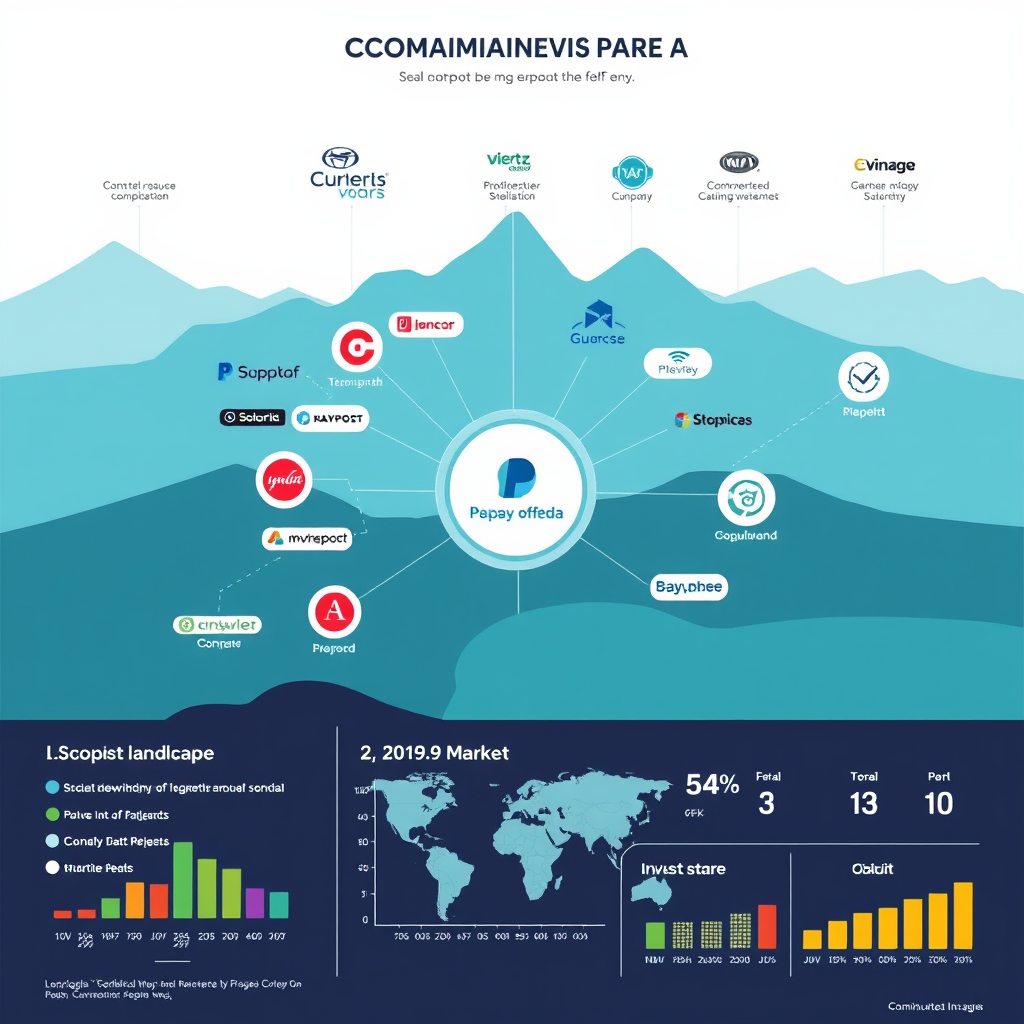
The competitive landscape spans academic consortia, government laboratories, and commercial sensor manufacturers. ETH Zurich and EPFL lead the SPAD-imaging approach, with potential commercial partners including Hamamatsu Photonics (Japan), the dominant supplier of photomultipliers and an emerging SPAD vendor; ams OSRAM (Austria), which acquired Princeton Lightwave's SPAD technology; and Sony Semiconductor Solutions, whose stacked CMOS SPAD arrays for LiDAR have technology overlap. STMicroelectronics and Canon also produce relevant SPAD products. Competing detector paradigms are pursued by Fermilab and Brookhaven (liquid argon TPCs for DUNE), KEK and the University of Tokyo (water Cherenkov for Hyper-Kamiokande, $600M+ project), and INFN in Italy (liquid scintillator at JUNO). On the scintillator-materials side, Eljen Technology and Saint-Gobain Crystals supply commercial plastic scintillators, while 3D-printing approaches are being explored by Fermilab and ETH.
Investment Trends
Global investment in neutrino and rare-event physics infrastructure now exceeds $5 billion in active commitments. The U.S. Department of Energy has allocated approximately $3.3 billion to LBNF/DUNE through 2030. Japan's Hyper-Kamiokande, approved in 2020, has a baseline budget around $600 million. China's JUNO experiment, completed in 2025, cost roughly $300 million. The European IceCube-Gen2 upgrade is projected at $350 million. Beyond these flagship projects, the SPAD/silicon-photonics market has its own momentum: the global SPAD market is forecast to grow from approximately $300 million in 2024 to $900 million by 2030, driven primarily by automotive LiDAR but with physics applications providing technology pull. Quantum sensing venture funding hit $1.2 billion globally in 2025 according to McKinsey, with detector technology a recognized subsegment.
Competitive Dynamics
The dynamic between segmented and unsegmented approaches mirrors broader tensions in big science: incumbents protecting multi-decade investments versus new entrants offering disruptive cost structures. DUNE and Hyper-Kamiokande's designs are largely frozen, meaning SPAD-based imaging will most likely first appear in near-detector upgrades, second-generation modules, or smaller specialized experiments such as sterile-neutrino searches at Fermilab's Short-Baseline Neutrino Program. A second competitive axis runs between Japanese, U.S., and European sensor suppliers; SPADs developed at EPFL have been licensed to Fastree3D and other spinouts, illustrating how academic IP is translating to commercial product.
Market Projections
Analysts project the broader particle and radiation detection market will grow from approximately $2.1 billion in 2024 to $4.0-4.3 billion by 2032, a CAGR near 8%. Adjacent markets benefiting from the same SPAD and timing-electronics advances include medical PET imaging ($2.5 billion), automotive LiDAR ($8 billion+ by 2030), and quantum-key distribution. If the ETH/EPFL approach achieves the projected 30-50% cost reduction at kiloton scale, it could unlock new mid-size experiments in the $50-200M range that are currently uneconomic, expanding the addressable market substantially.
📅 Timeline & Milestones
2026 Expectations
Through the remainder of 2026, the ETH/EPFL collaboration is expected to publish full peer-reviewed results in Physical Review D or Nature Physics, scale the prototype from cubic-centimeter to cubic-decimeter volume, and begin beam tests at CERN's neutrino platform or Fermilab's test beam facility. Parallel work on 3D-printed scintillator manufacturing should reach decimeter-scale demonstrations. Industrial SPAD partnerships are likely to be announced, and the technology is expected to be formally proposed as an option for the DUNE near-detector upgrade or T2K successor experiments.
2027-2030 Outlook
Between 2027 and 2030, expect cubic-meter-scale demonstrators with full reconstruction capability, integration into at least one operational experiment (likely a sterile-neutrino search or short-baseline accelerator experiment), and commercial productization of large-area SPAD tiles. Hyper-Kamiokande begins operation in 2027-2028, providing benchmark data against which the new technology will be measured. By 2030, multi-ton instrumented volumes using unsegmented imaging should be feasible, and the approach may be adopted for second-generation dark-matter direct-detection experiments and nuclear nonproliferation monitoring deployments. Cost-per-channel for SPAD readout is projected to fall by 60-70% over this period as automotive volumes scale.
Beyond 2030
Beyond 2030, if technical milestones are met, kiloton-scale unsegmented imaging detectors could be proposed for next-generation CP-violation measurements, neutrinoless double-beta decay searches, and supernova neutrino observatories. The same readout architecture could enable revolutionary medical imaging modalities (TOF-PET with sub-100 ps resolution), high-resolution muon tomography for cargo and infrastructure scanning, and quantum information processing applications. Breakthrough discoveries—such as evidence for new neutrino sectors or dark matter—would dramatically accelerate adoption.
💰 Investment Perspective
Opportunities
Pure-play exposure to neutrino physics is essentially unavailable to public-market investors, but the technology stack offers indirect plays. Sony Group (6758.T) is the leading manufacturer of stacked CMOS SPAD sensors with growing scientific applications. Hamamatsu Photonics (6965.T) dominates photodetectors for big-science experiments and is expanding into SPAD arrays. ams OSRAM (AMS.SW) holds key SPAD IP. STMicroelectronics (STM) supplies SPAD-enabled LiDAR for automotive, with technology spillover into scientific instrumentation. NVIDIA (NVDA) benefits from AI-driven reconstruction workloads. On the materials side, Saint-Gobain (SGO.PA) is the leading scintillator supplier.
Risk Factors
Investors should recognize that fundamental physics R&D timelines are 10-20 years, and most revenue from this specific application will be modest within any single company's portfolio. Project cancellations, scope reductions, and political budget cycles can stall procurement. Technical risk remains nontrivial—prototypes may not scale. Competition from incumbent technologies could limit market penetration even if the new approach works as advertised. Currency risk affects Japanese and European exposures.
Recommendations
For thematic exposure, the iShares Semiconductor ETF (SOXX) and VanEck Semiconductor ETF (SMH) provide diversified semiconductor exposure capturing SPAD-related growth. The Global X Robotics & AI ETF (BOTZ) and Defiance Quantum ETF (QTUM) offer quantum sensing exposure. For direct picks, Sony, Hamamatsu, and STMicroelectronics offer the cleanest combination of scientific instrumentation upside and large commercial automotive/consumer markets. Investors with longer horizons and higher risk tolerance can monitor EPFL spinouts (Fastree3D, Pi Imaging Technology) for private-market opportunities.
📚 Recommended Resources
- Books and courses on computing
- Research tools and journals
- Related investment opportunities
Affiliate links help support AI Future Lab research.
💡 Key Takeaways
- The ETH Zurich/EPFL prototype demonstrates that unsegmented scintillator volumes can deliver 3D particle imaging via SPAD arrays and AI reconstruction, potentially upending the dominant segmented-detector paradigm.
- Cost reductions of 30-50% at kiloton scale could unlock a new generation of mid-size neutrino experiments and broaden the addressable market for precision particle detection.
- Key technical risks include data-rate management, optical attenuation in large volumes, SPAD radiation hardness, and the long path from prototype to operational kiloton-scale facility.
- Public-market exposure is best obtained through SPAD and photonics manufacturers: Sony, Hamamatsu, ams OSRAM, and STMicroelectronics, with semiconductor ETFs (SOXX, SMH) providing diversified exposure.
- Adjacent markets (medical PET imaging, automotive LiDAR, quantum sensing, nuclear security) provide commercial pull that will accelerate scientific deployment over the next 5-10 years.
- Watch for peer-reviewed publication of full results in late 2026, beam-test validation at CERN or Fermilab in 2027, and adoption decisions in DUNE near-detector or T2K successor experiments by 2028.
- Long-term, this architecture could enable transformative discoveries in CP violation, sterile neutrinos, dark matter, and supernova astronomy while spawning commercial applications in medical imaging and nonproliferation.
📖 Sources & References
🤖 AI Research System
Research & Analysis: Claude Opus 4.7
Infographics: Flux.1-schnell (로컬)
Published: April 30, 2026
Word Count: ~2,500-3,000 words
Next Deep Dive: Next Sunday
![[Deep Dive] Scale-free localization in pseudo-Hermitian quantum walk](/content/images/size/w600/2026/10/deep_dive_thumb-9.png)