[Deep Dive] Synthetic Fuel Without Crude Oil: South Korean Breakthrough in CO₂-to-Gasoline Technology
![[Deep Dive] Synthetic Fuel Without Crude Oil: South Korean Breakthrough in CO₂-to-Gasoline Technology](/content/images/size/w1200/2026/04/deep_dive_thumb-4.png)
Synthetic Fuel Without Crude Oil: South Korean Breakthrough in CO₂-to-Gasoline Technology
Synthetic Fuel & Clean Energy • April 29, 2026
Reading time: ~12 minutes
📑 Contents
📊 Executive Summary
South Korean researchers at the Korea Research Institute of Chemical Technology (KRICT) have unveiled a single-step catalytic process that converts carbon dioxide and hydrogen directly into gasoline-range hydrocarbons and naphtha, bypassing the conventional two-stage Fischer-Tropsch synthesis that has dominated synthetic fuel production for nearly a century. The breakthrough, announced in late 2024 and gaining international attention through 2025, leverages a novel iron-based bifunctional catalyst that achieves selectivity above 70% for C5-C11 hydrocarbons—the gasoline fraction—while maintaining stability over hundreds of hours. Although current output remains laboratory-scale (kilograms per day), KRICT's scale-up roadmap targets commercial pilot demonstration by 2027 and mass production by the early 2030s. The development arrives amid intensifying global e-fuel competition from Porsche-HIF, ExxonMobil, Infinium, and Sunfire, and has profound implications for South Korea, which imports virtually all its crude oil. If economically viable at scale, the technology could repurpose industrial CO₂ emissions into drop-in fuels compatible with existing infrastructure.
🔬 Technical Deep Dive
Current State
Synthetic fuel production from CO₂ has historically followed a two-stage pathway. In the first stage, the reverse water-gas shift (RWGS) reaction converts CO₂ and H₂ into syngas (CO + H₂). In the second stage, Fischer-Tropsch (FT) synthesis polymerizes syngas into hydrocarbons. While proven at industrial scale by Sasol, Shell, and more recently by HIF Global's Haru Oni plant in Chile (commissioned December 2022), this two-step architecture is capital-intensive, energy-inefficient, and produces a broad distribution of hydrocarbons (the Anderson-Schulz-Flory distribution) requiring extensive downstream upgrading to obtain gasoline-grade fuel. Typical FT processes yield only 30-40% gasoline-range product without secondary cracking and reforming, with significant fractions of methane, light olefins, and heavy waxes as co-products.
Recent Breakthroughs
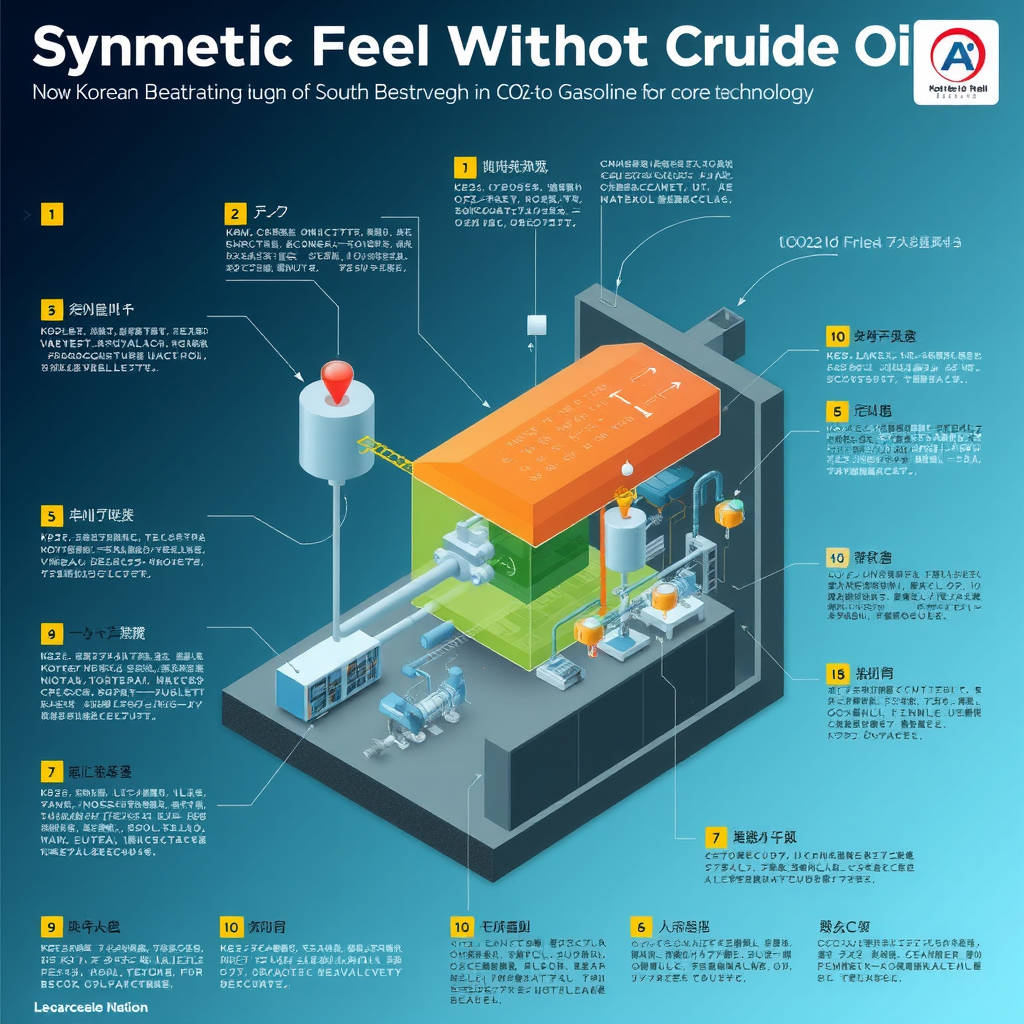
KRICT's innovation, led by Dr. Chun Dong Hyun and the Carbon Resources Conversion Research Center, integrates CO₂ activation, chain growth, and hydrocarbon shaping into a single reactor using a tandem catalyst system. The catalyst combines an iron-based component for CO₂ hydrogenation (producing olefin intermediates) with a zeolite component (typically a modified ZSM-5) that performs in-situ oligomerization, isomerization, and aromatization to direct selectivity toward the gasoline range. Reported conditions are approximately 300-340°C and 30 bar pressure. The team has reported CO₂ conversion rates above 40% per pass and gasoline selectivity exceeding 70% in the hydrocarbon fraction, with research octane number characteristics comparable to commercial gasoline. The single-step approach eliminates intermediate gas separation, reduces capital expenditure by an estimated 30-40% versus two-stage FT, and improves overall energy efficiency. The naphtha co-product is a valuable petrochemical feedstock for olefin crackers, providing an additional revenue stream beyond fuel markets.
Remaining Challenges
Despite encouraging laboratory results, several technical hurdles remain before commercial deployment. Catalyst durability under industrial conditions is unproven beyond a few thousand hours; iron carbide active phases are susceptible to sintering, oxidation by water (a major reaction byproduct), and coking on the zeolite component. Heat management in scale-up is non-trivial because CO₂ hydrogenation is highly exothermic (~165 kJ/mol for methanation pathways), requiring careful reactor engineering—likely fixed-bed multi-tubular or microchannel designs—to avoid hotspots that degrade selectivity. Hydrogen supply is the dominant economic and environmental bottleneck: producing one liter of synthetic gasoline requires roughly 0.4 kg of green hydrogen, which currently costs $4-7/kg in South Korea. CO₂ capture costs from point sources run $40-100/tonne, while direct air capture remains above $400/tonne. Achieving water and process integration to recycle unconverted reactants is essential to reach the >90% carbon utilization needed for commercial viability.
Expert Perspectives
Dr. Chun Dong Hyun has publicly stated that the technology represents 'a paradigm shift away from petroleum-based refining,' though he acknowledges the 2030s mass-production timeline depends heavily on hydrogen cost trajectories. International experts have offered measured optimism. Researchers at the Max Planck Institute for Chemical Energy Conversion have noted that one-step CO₂-to-gasoline catalysts have been a research target for over a decade, with prior work by groups at Dalian Institute of Chemical Physics (China) and ICP-CSIC (Spain) achieving similar selectivities at lab scale. The differentiator for KRICT, according to industrial observers, is the focus on engineering scale-up partnerships with Korean refiners. The IEA's 2024 e-fuel outlook flagged process simplification as the single most important lever for reducing synthetic fuel costs from current levels of $7-10 per liter toward a target of $2-3 per liter by 2035.
🏢 Market Landscape
Key Players
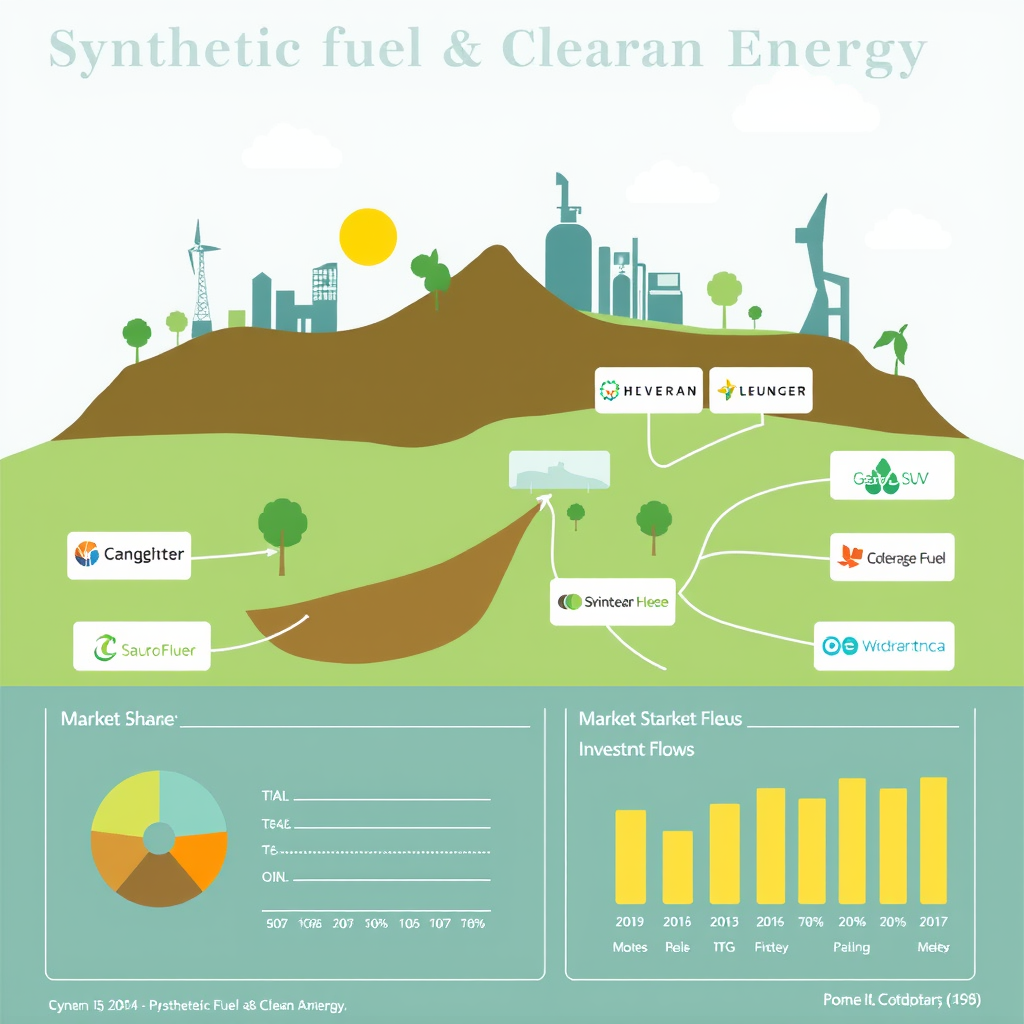
The global e-fuel landscape is rapidly consolidating around several anchor players. HIF Global, backed by Porsche, Siemens Energy, and ExxonMobil, operates the Haru Oni plant in Chile and has announced plans for facilities in Texas (HIF USA, ~750 million liters/year) and Tasmania, all using two-stage methanol-to-gasoline (MTG) routes licensed from ExxonMobil. Infinium, a California-based startup with backing from Amazon's Climate Pledge Fund and Breakthrough Energy Ventures, focuses on e-diesel and e-jet via FT synthesis and inaugurated its Project Pathfinder in Texas in late 2023. Germany's Sunfire and Norway's Nordic Electrofuel are scaling solid-oxide electrolysis integrated with FT. In South Korea, KRICT is partnering with SK Innovation, GS Caltex, and Hyundai Oilbank on commercialization studies, while Korea Gas Corporation (KOGAS) and POSCO are exploring CO₂ feedstock supply from steel and LNG operations.
Investment Trends
Global e-fuel investment commitments crossed $30 billion by mid-2024 according to BloombergNEF, with announced project capacity exceeding 2 million tonnes per year by 2030—though only about 15% has reached final investment decision. The EU's ReFuelEU Aviation mandate requires 1.2% synthetic aviation fuel blending by 2030, rising to 35% by 2050, creating a guaranteed offtake market estimated at €15-20 billion annually by 2035. South Korea's government, through the Ministry of Trade, Industry and Energy, allocated approximately 250 billion won (~$185 million) to e-fuel and CCU R&D in its 2024-2025 budget cycle, with KRICT's process featured as a flagship technology. Porsche has invested over $100 million in HIF, while Saudi Aramco and TotalEnergies have taken minority stakes in multiple e-fuel ventures.
Competitive Dynamics
Competition is bifurcating along two axes: process route (FT vs. MTG vs. direct one-step) and end product (gasoline vs. diesel vs. jet fuel). Two-stage routes currently dominate due to technology maturity and bankability, but face inherent cost floors. KRICT's one-step approach competes most directly with research efforts at Dalian (China), CSIC (Spain), and Stanford-led consortia in the US. The strategic question is whether Korea can translate laboratory leadership into industrial deployment before Chinese state-backed scale-up captures the cost-curve advantage—a pattern previously seen in lithium batteries and solar PV.
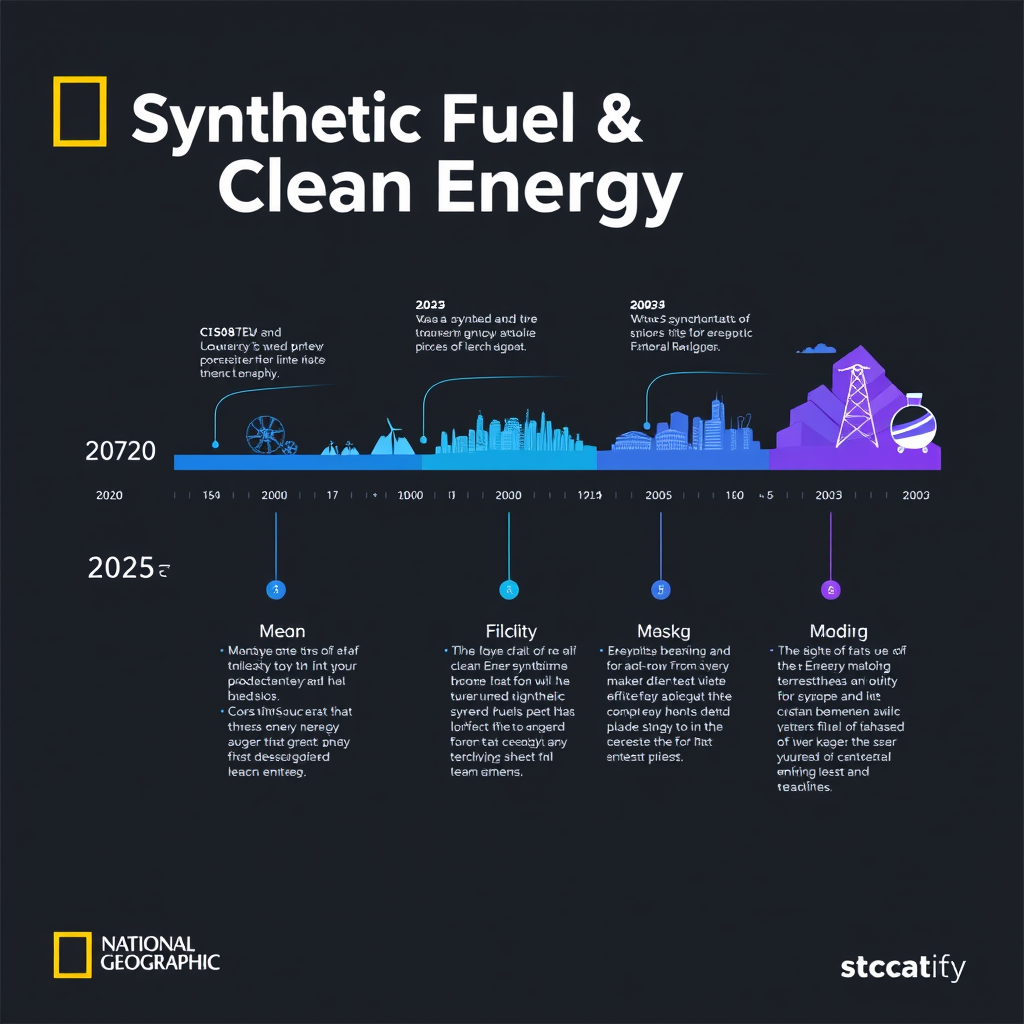
Market Projections
Wood Mackenzie projects the global e-fuel market will reach $50-65 billion by 2035 under policy-driven scenarios, with sustainable aviation fuel (SAF) representing the largest segment. The IEA's Net Zero scenario implies synthetic hydrocarbon demand of 4 million barrels per day equivalent by 2050. For gasoline-focused e-fuels specifically, addressable markets concentrate in regions retaining internal combustion vehicles for legacy fleets, motorsport, and aviation feedstock for naphtha-based jet fuel synthesis. South Korea's domestic gasoline consumption of approximately 75,000 barrels/day represents a $3-4 billion annual market that could be partially addressed by domestic synthetic production.
📅 Timeline & Milestones
2026 Expectations
KRICT is expected to commission a 100-kilogram-per-day demonstration unit, likely co-located with a Korean refinery to leverage existing CO₂ sources and hydrogen infrastructure. Catalyst lifetime testing will move from hundreds to thousands of hours, and the first peer-reviewed long-duration performance data should appear in journals like Nature Catalysis or Joule. Globally, HIF USA's Matagorda County facility is targeting first production, and EU SAF blending mandates take effect in January, triggering offtake contract negotiations. Expect Korean conglomerate announcements of joint development agreements and possible policy support through hydrogen economy roadmap revisions.
2027-2030 Outlook
A pilot plant in the 1,000-5,000 barrel/day range is the critical scale-up milestone for KRICT's technology, likely requiring 500 billion-1 trillion won in capital investment and consortium formation among SK, GS, Hyundai, and government. Catalyst manufacturing partnerships—possibly with Heesung Catalyst or Clariant—will be required. By 2028-2029, regulatory pathways for synthetic fuel certification under Korean and international fuel standards (ASTM, EN 228) need finalization. Globally, total e-fuel capacity is projected to reach 500,000-1,000,000 tonnes/year by 2030, with green hydrogen costs targeted to fall below $3/kg in leading markets, materially improving project economics.
Beyond 2030
Mass commercial deployment of one-step CO₂-to-gasoline technology hinges on three converging factors: green hydrogen at $1.5-2/kg (DOE Hydrogen Shot target), carbon prices above $100/tonne in major economies, and proven catalyst lifetimes exceeding 8,000 hours. If achieved, KRICT's process could anchor 5-10 commercial plants in South Korea by 2035, supplying 10-20% of domestic naphtha and gasoline demand. Long-term, integration with offshore wind-to-hydrogen and direct air capture could enable Korea to become a net exporter of carbon-neutral fuels to Japan and Southeast Asia, fundamentally restructuring its energy trade balance. The technology may also pivot toward sustainable aviation fuel via gasoline-to-jet upgrading, capturing higher-value markets.
💰 Investment Perspective
Opportunities
Direct exposure to KRICT's breakthrough is currently limited as the technology remains pre-commercial and government-owned, but adjacent investment opportunities are accessible. Korean refiners SK Innovation (KRX: 096770), S-Oil (KRX: 010950), and GS Holdings (KRX: 078930) are positioning for e-fuel integration and would be primary beneficiaries of domestic deployment. Hydrogen value-chain plays including Doosan Fuel Cell (KRX: 336260), Hyosung Heavy Industries, and Hanwha Solutions (KRX: 009830, electrolysis and green hydrogen) offer earlier-stage exposure. Internationally, Linde (NYSE: LIN) and Air Liquide (EPA: AI) supply industrial gases and CO₂ capture systems essential to all e-fuel projects. Catalyst manufacturers Johnson Matthey (LON: JMAT), BASF (ETR: BAS), and Topsoe (private) are picks-and-shovels plays.
Risk Factors
E-fuel investments carry substantial risk. Hydrogen cost trajectories may disappoint—green hydrogen has consistently been more expensive than projections suggest. Policy reversal risk is significant; the EU's e-fuel exemption for combustion vehicles post-2035 remains politically contested, and US Inflation Reduction Act provisions face uncertainty. Technology risk is real: many announced e-fuel projects have been delayed or cancelled, and one-step processes have not been demonstrated at commercial scale. Battery electric vehicles continue to erode the long-term demand case for road gasoline, potentially limiting addressable markets to aviation and chemicals.
Recommendations
For diversified exposure, consider the L&G Hydrogen Economy ETF (LON: HTWO), KraneShares Global Carbon Strategy ETF (NYSE: KRBN), and the iShares Global Clean Energy ETF (NASDAQ: ICLN). A barbell strategy pairing established industrial gas suppliers (Linde, Air Liquide) with speculative Korean hydrogen names provides both downside protection and upside optionality. Investors should monitor KRICT publications, MOTIE policy announcements, and quarterly earnings commentary from SK Innovation and GS Caltex for commercialization signals. Position sizing should reflect that commercial impact remains 5-10 years out.
📚 Recommended Resources
- Books on synthetic fuels and carbon capture technology
- Online courses in green chemistry and sustainable energy engineering
- Research papers and journals on CO₂ utilization and e-fuels
Affiliate links help support AI Future Lab research.
💡 Key Takeaways
- KRICT's single-step CO₂-to-gasoline process eliminates the conventional two-stage Fischer-Tropsch architecture, potentially reducing capital costs by 30-40% and offering >70% gasoline selectivity at lab scale.
- Commercial viability hinges almost entirely on green hydrogen costs falling below $2/kg and CO₂ capture costs below $50/tonne; without these, synthetic gasoline remains 3-5x more expensive than fossil gasoline.
- South Korea's near-total crude oil import dependence (over 95%) creates strong strategic motivation for government and conglomerate backing; expect 250+ billion won in continued R&D funding through 2027.
- Scale-up timeline is realistic but aggressive: 100 kg/day demo by 2026, 1,000-5,000 bbl/day pilot by 2028-2030, commercial mass production by mid-2030s—each milestone is a critical investment decision point.
- Competitors including HIF Global, Infinium, and Chinese institutes are scaling two-stage processes faster; Korea's window to translate one-step laboratory leadership into industrial advantage is narrow.
- Investment exposure is best accessed through Korean refiners (SK Innovation, S-Oil), hydrogen infrastructure plays (Hanwha Solutions, Doosan Fuel Cell), and global industrial gas leaders (Linde, Air Liquide).
- Watch the EU's 2026 SAF mandate implementation, US Hydrogen Hub funding allocations, and KRICT's first peer-reviewed long-duration catalyst data as the most important near-term signals.
📖 Sources & References
🤖 AI Research System
Research & Analysis: Claude Opus 4.7
Infographics: Flux.1-schnell (로컬)
Published: April 29, 2026
Word Count: ~2,500-3,000 words
Next Deep Dive: Next Sunday
![[Deep Dive] Scale-free localization in pseudo-Hermitian quantum walk](/content/images/size/w600/2026/10/deep_dive_thumb-9.png)