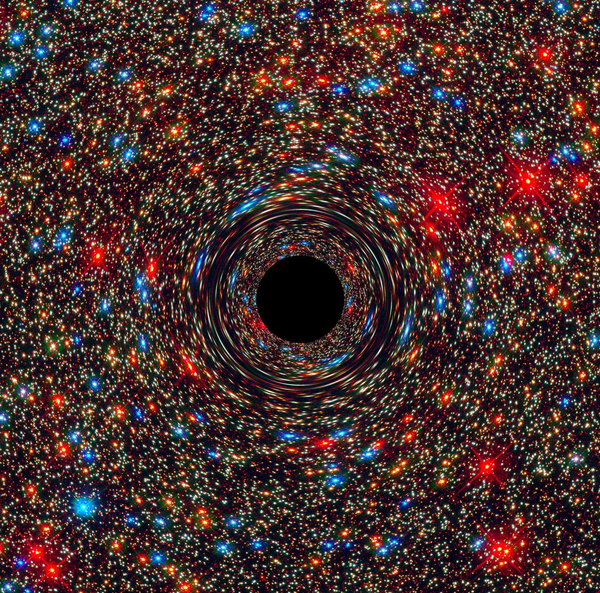
The Big Bang: It Happened. Nobody Saw It.
Episode 0: Prologue: How Do We Know What We Cannot See?
I like science that leaves room to imagine. When things that seemed unrelated turn out to share a hidden pattern — that moment feels like finding one of the world's secrets. Which opens a door I didn't know was there. Which leads somewhere unexpected. Which eventually leads back to me.
You've done this. Probably at night, probably alone. You looked up.
And maybe it was a city sky, three sad stars and a plane. Or maybe it was somewhere far from streetlights, the kind of sky that makes you a little dizzy because you suddenly understand you're standing on a ball, looking out, not up. Either way — you felt something. Something old. The same thing a kid felt three thousand years ago in a desert with no electricity and no homework.
You felt small. And you felt curious. And those two feelings showed up at exactly the same time, which is strange when you think about it. Small things shouldn't be curious. A pebble doesn't wonder where it came from. But you do. You're a pile of atoms that asks questions about itself. That's the weirdest thing in the universe and we've all just kind of agreed to ignore it.
Here's what I want you to do. Pick a star. Any one. The bright one, the dim one near the edge, doesn't matter.
You're not seeing that star. You're seeing light that left it. The light from the closest star to us, after our sun, took a little over four years to get here.[1] The light from the stars you can see with your eyes alone — most of them took decades, centuries, sometimes thousands of years.[2] When that light started traveling, the Roman Empire was a going concern. The light just got here. You caught it. With your face.
So when you look at the sky, you're not looking at the present. You're looking at a collage of different pasts, all glued together by the speed of light, and your brain processes the whole thing as one image and calls it "tonight."
Tonight is a lie. Tonight is a museum.
And here's where it gets uncomfortable, because the question that follows is the one nobody really wants to ask out loud. If the closest star is four years in the past, and some are thousands of years in the past, then somewhere out there — further, dimmer, harder — is light that's been traveling for a very long time. Longer than humans. Longer than Earth. Longer than the sun.
How far back does this go?
You can feel the question pulling. It's the same question a five-year-old asks when they figure out their parents had parents, and those parents had parents, and at some point the chain has to either go on forever or start somewhere, and both of those answers feel wrong in a way that's hard to put into words.
The universe has the same problem. The light has to come from somewhere. The stars had to form from something. That something had to come from something else. And you can keep playing this game — and physicists have, professionally, for about a century now — and the game does not goon forever. That's the part that broke my brain when I first heard it. The chain stops. Or, more honestly, the chain gets to a point where the rules we use to ask the question stop working, and we can't see past it.
That point has a name. We'll get to it.
But before we get to it, I want you to sit with something. Because I think the way this is usually told skips the most important part, which is the feeling you had ten minutes ago when you walked outside.
Nobody saw the beginning. There were no eyes. There were no atoms that could form eyes. There was no light in the form we'd recognize — no stars, no sky, nothing to look at and nothing to look with.[3] And yet, somehow, sitting in a room a very long time later, on a planet that didn't exist back then, made of stuff that did — we have figured out a remarkable amount about what happened.
Not by seeing it. We can't see it. We will never see it, not directly, not with any telescope we will ever build. The thing we want to look at happened before looking was a thing the universe could do.
So how do we know anything at all?
This is the question I can't stop turning over. Because the honest answer isn't "scientists figured it out" — that's the press release answer, and it's boring, and it lets you off the hook. The honest answer is that humans, using leftover heat and bent light and the chemical fingerprints of stars that died before our sun was born, reconstructed a story about a moment none of us were there for. Like a detective walking into a room where the crime happened fourteen billion years ago, and the body is gone, and the witnesses are gone, and the room itself has expanded into something a trillion trillion times bigger — and still, somehow, finding fingerprints.
That's the story I want to tell you. Not the answer. The fingerprints.
Because once you see how we know, the question of what we know gets a lot more interesting. And a lot stranger. And — I think — a lot more personal than anyone told you in school.
So. Back to you, standing outside, looking up at a museum of old light.
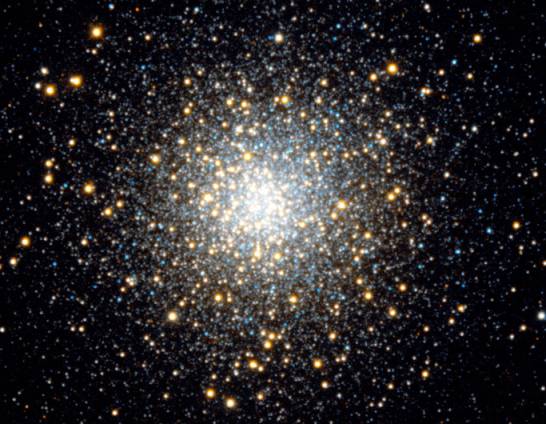
📷 Hydrogen, Helium, and the Stars of M10 — Till Credner, Sven Kohle (Bonn University), Hoher List Observatory (NASA APOD, Public Domain)
What if some of that light is older than you can possibly imagine?
So here is the problem. The Big Bang happened. We're pretty sure of that. But nobody was there. No camera, no notebook, no witness. Not even an atom that looks the way atoms look now. The thing we want to understand is the one thing in the universe that nobody, by definition, could ever have seen.
How do you know something nobody saw?
Let me tell you about a detective. Not Sherlock Holmes — too smug. Think of a real detective, the boring kind, the kind who shows up at a crime scene at three in the morning with bad coffee and a notebook. The victim is gone. The criminal is gone. The witnesses, if there were any, are also gone. What's left?
Marks. A scuff on the floor. A wineglass that's still warm. A door that's locked from the inside. The cold air from a window that was open six hours ago and is closed now. The detective doesn't see the crime. The detective sees the shape the crime left behind.
This is the only way we know anything about the Big Bang. We are detectives at a crime scene that is 13.8 billion years old [1]. The criminal — the event itself — left town a long time ago. But the room is full of clues, and the clues are very weird, and once you start noticing them you can't stop.
Clue one: everything is moving away from everything else [2]. Stand in a room where every person is walking backwards from every other person, and you don't need a PhD to figure out they were all standing together a minute ago. Wind the movie backwards. They collapse into a point.
Clue two: the room is warm. Not warm like a coffee shop — warm like the faintest possible whisper of warm, about 2.7 degrees above the coldest anything can possibly be [3]. Everywhere. In every direction you point a sensitive enough antenna. It's the heat of something that happened a long time ago and is still cooling off. It's the wineglass, still warm. We call this the cosmic microwave background *1, and it's basically the afterglow of the explosion that wasn't an explosion.
Clue three — and this one is my favorite — if you count up all the hydrogen and helium in the universe, the ratio is almost exactly what you'd get if the whole universe had spent its first three minutes as a kind of nuclear kitchen, hot enough to cook the lightest elements and then cool too fast to cook anything heavier [4]. The recipe matches. The proportions are right to a stupid number of decimal places.
None of these clues, on their own, would convict anyone. A warm room could bea furnace. A receding crowd could be a protest dispersing. A particular ratio of elements could be a coincidence, if you squint hard enough and ignore the rest of physics.
But all three together? At the same scene? Telling the same story?
That's when the detective closes the notebook and says, okay. I wasn't there. I'll never be there. But I know what happened in this room.
Here's the part that bothers people, and it bothered me for a long time, so I want to say it out loud. "Knowing" something nobody saw feels like cheating. It feels like a story we made up because we needed one. Religion did that for thousands of years — invented a thing nobody saw to explain the things people did see. Why is science any different?
The honest answer: because the clues have to keep working.
A made-up story only has to satisfy the person who made it up. A detective's story has to survive the next clue, and the next one, and the one nobody has found yet. If tomorrow we point a new telescope at the sky and the background glow is the wrong temperature, the story breaks. If we find a galaxy full of pure iron with no hydrogen, the story breaks. Every morning, the universe gets a chance to prove us wrong. And every morning, so far, it doesn't.
That's not certainty. That's something better than certainty, actually, because certainty is what you have before you check. This is what you have after.
So when I say "the Big Bang happened," I'm not telling you I was there. I'm telling you that I am standing in a room, very late at night, with a notebook and bad coffee, and the wineglass is still warm, and everyone is walking backwards, and the recipe on the counter matches the meal in the trash, and at some point you have to admit: somebody cooked dinner here.
You weren't invited. Neither was I. The dinner was 13.8 billion years ago and we are the leftover crumbs trying to figure out what was on the menu.
Which is a strange thing to be, when you think about it. We are not just looking at the crime scene. We are inside it. We are made of the warm air and the receding crowd and the cooked elements. The hydrogen in the water you drank this morning was forged in those first three minutes [4]. You are evidence.
AI-generated image — a conceptual visualization
So the question isn't really "how do we know what we cannot see." We can see it. We just have to learn to read what we're looking at.
And what are you, exactly, if you're the clue?
The detective metaphor only takes you so far. At some point you have to ask: what is the actual evidence? What did physicists find at the scene?
There are three big clues. I want to tell you about each of them, because once you see them together, the case stops feeling like a guess and starts feeling like something close to certainty. Not total certainty. Physicists are careful about that word. But close.
Clue one. The universe is moving.
In 1929, an astronomer named Edwin Hubble was looking at galaxies through the biggest telescope in the world at the time, on a mountain in California. He noticed something strange. The light from distant galaxies was stretched. Not blue, like you'd expect from something coming toward you, but red. Redshifted *1. And the farther away the galaxy was, the more its light was stretched [1].
Think about what that means. If everything is moving away from us, and the farther things are moving away faster, then run the movie backwards. Everything was closer. And closer. And closer. Until, at some point in the past, everything was in the same place.
Hubble didn't say "Big Bang." He just measured. He published a short paper with a graph in it — distance on one axis, speed on the other, a line going up [1]. That line is one of the most important lines ever drawn. It says: the universe has a history. It is not the same as it was. It is not eternal and unchanging, the way Aristotle thought, the way Newton kind of assumed, the way even Einstein wanted it to be. Einstein had actually added a fudge factor to his equations to keep the universe still, and later called it his biggest blunder [2]. The universe was not still. It was running.
Run it backwards far enough and you get a moment when it wasn't running yet. A starting gun.
Clue two. The static on an old TV.
This is my favorite, because of how stupid it is. In 1964, two engineers at Bell Labs in New Jersey — Arno Penzias and Robert Wilson — were trying to use a huge horn-shaped antenna to do radio astronomy. There was a hiss in the signal. A faint, constant noise, coming from every direction at once. They cleaned the antenna. They checked the wiring. They famously found pigeons nesting inside it and removed the pigeons and even, the story goes, the pigeon droppings [3]. The hiss stayed.
It turned out the hiss was the universe.
About forty kilometers away, at Princeton, a team led by Robert Dicke had been predicting exactly this. They thought: if therewas a hot, dense beginning, then the leftover heat should still be around. Not as fire — the universe has been expanding and cooling for almost fourteen billion years — but as a very faint, very cold glow, stretched out into microwaves [4]. Dicke was building an antenna to look for it. Penzias and Wilson, by accident, found it first.
When Dicke heard about the Bell Labs hiss, he reportedly hung up the phone and said to his team: "Boys, we've been scooped" [3].
The hiss is called the cosmic microwave background *2. The CMB. It is the oldest light in the universe. It comes from the moment, about 380,000 years after the beginning, when the universe finally cooled down enough that light could travel freely instead of bouncing around in a hot fog [5]. Before that moment, the universe was opaque, like the inside of the sun. After that moment, it was clear. The light from that exact moment is still arriving at us, right now, from every direction. If you have an old analog television and you tune it to a channel that isn't broadcasting, a tiny fraction of the static you see — about one percent — is photons that have been traveling for 13.8 billion years to land on your screen [6]. That is not a metaphor. That is what is happening.
Penzias and Wilson won the Nobel Prize for the hiss [3]. Later, satellites — COBE in the 1990s, then WMAP, then Planck — mapped the CMB across the entire sky in extraordinary detail [7]. The maps showed something incredible. The temperature of the leftover glow is almost exactly the same everywhere: 2.725 degrees above absolute zero [7]. Almost. There are tiny ripples, tiny hotter and colder patches, differences of one part in a hundred thousand. Those ripples are the seeds of everything — the slightly denser spots that, over billions of years, collapsed under gravity into galaxies, stars, planets, you [8].
When the Planck satellite team published their full results in 2018, they were able to read, from those ripples, the age of the universe, the rate of its expansion, the amount of ordinary matter, the amount of dark matter, the geometry of space itself [8]. From a hiss. From cleaning out a horn-shaped antenna in New Jersey.
I find that funny. I'm not sure why. Maybe because the deepest fact about the universe was something engineers were trying to filter out as noise.
Clue three. The recipe.
AI-generated image — a conceptual visualization
If the universe really did start hot and dense and then cooled, you can do some physics on a chalkboard and predict what kinds of atoms should have formed in the first few minutes. Not later — later, stars make atoms, that's a different story. I mean the atoms that existed before there were any stars at all.
The calculation was first done seriously by a physicist named George Gamow and his students Ralph Alpher and Robert Herman in the late 1940s [9]. They worked out that in a hot early universe, protons and neutrons would collide and fuse, but only for a brief window — a few minutes — before the universe cooled too much for fusion to keep happening. In that window, you'd make a specific mix. Mostly hydrogen, the simplest atom. About a quarter helium, by mass. A tiny pinch of lithium. Almost nothing heavier [10].
This is called Big Bang nucleosynthesis *3. It's a recipe with very specific proportions, and the proportions are not adjustable. They fall out of the physics.
So physicists went and looked. They measured the composition of the oldest, most pristine gas clouds they could find — clouds that have never been near a star, never been polluted by stellar manufacturing [11]. And the gas clouds matched. Roughly 75 percent hydrogen. Roughly 25 percent helium. A trace of lithium. The same numbers the chalkboard predicted, decades earlier, from a theory about something that supposedly happened in the first three minutes of time [11].
That is the part I want you to sit with. Somebody did math on a piece of paper about what should have happened in three minutes, thirteen point eight billion years ago, and then somebody else pointed a telescope at a cloud of gas, and the numbers agreed. Not "in the same ballpark." Agreed.
Three clues. The galaxies are running away. The leftover heat is still here. The recipe of the lightest atoms is exactly what a hot beginning would have cooked up.
Any one of these, on its own, would be suggestive. A defense lawyer could explain it away. Maybe the redshift means something else. Maybe the microwave glow has another source. Maybe the helium fraction is a coincidence.
But all three? All three pointing to the same story, with the same age of the universe, with the same temperature history, with the same expansion rate? That's not a coincidence. That's a conviction.
The physicist Steven Weinberg, who won a Nobel Prize for unrelated work and then wrote a
But here's where I have to be honest with you. Because if I just listed the three clues and stopped, I'd be doing the thing I hate, the thing that makes science feel like a finished building instead of a construction site at midnight.
The truth is, we don't know what banged.
Read that again. We have very good evidence that the universe was once unbelievably hot and dense, and then it expanded, and it's still expanding now [1]. We can run the movie backwards with real math and real measurements and get all the way back to about a trillionth of a second after the start [2]. That's astonishing. That's the part that should make you put the phone down for a second.
But the start itself? The actual moment? The thing the words "Big Bang" point at?
We don't have it.
Our equations — the ones that work everywhere else, the ones that put rovers on Mars and let your GPS find you at a gas station — those equations break when you push them all the way back. They give you infinity. Infinite density, infinite temperature, infinite curvature [3]. And infinity, in physics, is not an answer. Infinity is the universe's way of telling you your map ran out.
This is called a singularity *1. It's not a thing. It's a place where our description of things stops working. Imagine a map of your city that's perfect everywhere except for one street, where the map just says "here be dragons." That's where we are with the first instant.
There's more we don't know. We don't know why there's more matter than antimatter *2, even though our best theories say they should have been made in equal amounts and annihilated each other into pure light, leaving a universe with no stars, no planets, no you [4]. Somehow, for every billion pairs that cancelled out, one particle of matter survived. Nobody knows why. You are made of that leftover one-in-a-billion. Lucky.
We don't know what 95% of the universe is made of. Roughly 27% is something we call dark matter *3 — we know it's there because galaxies spin too fast to hold themselves together without it, but we've never caught a piece [5]. Another 68% is dark energy *4, which is pushing the universe apart faster and faster, and about which we know even less. We named it. That's most of what we've done. Naming a thing is not understanding it.
And we don't know if there was a "before." The honest answer to "what happened before the Big Bang" might be that the question doesn't make sense — time itself may have started then, the way north stops meaning anything once you're standing on the North Pole [6]. Or there may have been something. Another universe. A bounce. A bubble in a foam of other bubbles. We have math for some of these ideas. We don't have evidence for any of them.
AI-generated image — a conceptual visualization
I want you to sit with that for a second, because it matters.
The story I told you in the last section — the three clues, the expanding universe, the leftover heat, the recipe of light elements — that story is solid. It's been tested for almost a century and it keeps holding up. The Big Bang happened. Something hot and dense became something cold and spread out, and we are the cold spread-out part trying to remember the hot dense part.
But the deepest questions — what started it, what caused it, what came before, what the dark stuff is, why matter exists at all — those are open. Wide open. Not in the lazy way where someone says "well, science doesn't know everything," shrugging like that ends the conversation. Open in the real way. Smart people are working on them right now, this morning, in offices in Geneva and Tokyo and a basement in New Jersey, and they will probably not solve them this year, or next year, or maybe in your lifetime.
And I think that's the most honest thing I can tell you about the Big Bang. We have a story that works back to a trillionth of a second. Before that, we have guesses dressed in math. The line between those two things — the known and the guessed — is the most important line in cosmology, and most people writing about this stuff blur it on purpose because certainty sells better than honesty.
So here's where that leaves you, standing under your sky, looking up at the leftover light of something nobody saw.
You know more than any human who lived before about 1965. You know less than any human who'll be alive in 2200. You're in the middle of the story. Not the beginning, not the end. The middle, where the questions are bigger than the answers, and where the not-knowing is the whole reason to keep looking.
What would you do, if you knew you were standing inside a mystery this big?
So here's where this leaves you. Standing on your ball, looking out, not up.
We know the universe expanded from something hotter and denser than anything you can picture [1]. We know it because galaxies are still flying apart, because there's a faint hum of leftover heat soaking the whole sky [2], because the lightest atoms exist in exactly the proportions the math predicts [3]. Three clues, three witnesses who don't know each other, telling the same story.
And yet the first moment — the bang itself — is locked behind a door we can't open. Not yet. Maybe not ever.
I find this comforting, actually. Which probably says something weird about me.
Because most of the important things in your life work this way. You can't see the moment you fell in love, only the after. You can't see the moment you started becoming whoever you are now. You reconstruct it. You look at the evidence — the photos, the choices, the scars — and you run the movie backwards. You build a story that fits.
The universe is doing the same thing to us, and we are doing the same thing to it. We are two detectives interrogating each other in a room with no windows.
This series is about that room. Over the next posts, we're going to walk backwards. From the sky you saw last night, to the galaxies that made the stars, to the atoms that made the galaxies, to the strange hot soup that made the atoms, to the moment where physics shrugs and says I don't know what happens here.
We'll meet things we cannot see. Dark matter *1, which is most of the stuff in the universe and which nobody has ever held. Neutrinos, which are passing through your thumbnail right now, billions of them, and you can't feel a thing. The cosmic microwave background, the oldest light there is, which has been traveling for thirteen billion years just to end up as static on an old television.
Each one is a clue. Each one is a witness who wasn't there but knows something.
So here's the question I want you to carry into the next post.
If everything you know about the beginning is a story told by survivors — what kind of story would you trust?
TERMS EXPLAINED
- *1Light-year: How far light travels in one year. Not a measure of time — a measure of distance. About nine and a half trillion kilometers. When we say a star is four light-years away, we mean the light you're seeing left it four years ago.
- *2Antimatter: Regular matter has a mirror twin. For every electron, there's a positron with the opposite charge. When they meet, they destroy each other and turn into pure light. The universe should have made equal amounts of both, but didn't, and nobody knows why.
- *3Dark matter: Invisible stuff that has gravity but doesn't interact with light. We know it's there because galaxies would fly apart without it. We've never directly detected a particle of it. We don't know what it is.
- *4Dark energy: Whatever is causing the expansion of the universe to speed up instead of slow down. It makes up most of the universe. "Dark" here mostly means "we have no idea."
SOURCES & REFERENCES
- [1]Kervella, P., Thévenin, F., Lovis, C. (2017). "Proxima's orbit around α Centauri." Astronomy & Astrophysics, 598, L7. — Distance to Proxima Centauri, the nearest star beyond the Sun, is about 4.24 light-years.
- [2]Perryman, M.A.C. et al. (1997). "The Hipparcos Catalogue." Astronomy & Astrophysics, 323, L49–L52. — Distances to naked-eye stars range from a few light-years to several thousand light-years.
- [3]Planck Collaboration (2020). "Planck 2018 results. VI. Cosmological parameters." Astronomy & Astrophysics, 641, A6. — The early universe was opaque to light until roughly 380,000 years after the Big Bang, when neutral atoms formed and photons could travel freely.
- [4]Cyburt, R. H., Fields, B. D., Olive, K. A., & Yeh, T.-H. (2016). "Big bang nucleosynthesis: Present status." Reviews of Modern Physics, 88(1), 015004. — Predicted and measured abundances of light elements from the first minutes of the universe.
- [5]Bertone, G. & Hooper, D. (2018). "History of dark matter." Reviews of Modern Physics. — Overview of evidence for dark matter and ongoing search for direct detection.
- [6]Hawking, S. (1988). "A Brief History of Time." Bantam Books. — Discussion of the "no-boundary" proposal and why "before the Big Bang" may not be a meaningful question.
Inline citations [N] correspond to numbered references above.
A weekly journey from the present universe back to the Big Bang — and to what it means for us.
![[Deep Dive] Scale-free localization in pseudo-Hermitian quantum walk](/content/images/size/w600/2026/10/deep_dive_thumb-9.png)