[Deep Dive] Transient triplet blockade in Andreev junction
![[Deep Dive] Transient triplet blockade in Andreev junction](/content/images/size/w1200/2026/06/deep_dive_thumb-7.png)
Transient triplet blockade in Andreev junction
Superconductivity • June 20, 2026
Reading time: ~12 minutes
📑 Contents
📊 Executive Summary
Andreev junction research occupies a niche but increasingly strategic corner of quantum transport physics, sitting at the intersection of superconductivity, quantum dot engineering, and spin physics. The latest contribution, posted to arXiv on 18 June 2026 by Taranko, Baranski, and Jankiewicz, examines a transient triplet blockade in a double quantum dot junction wired in series between a superconducting and a normal metallic lead. Their central finding is that when both dots hold single electrons of identical spin, on-dot electron pairing is suppressed, which throttles subgap charge transport through Andreev reflection. This is a time-dependent, nonequilibrium effect rather than a static configuration, which distinguishes it from prior steady-state treatments. The implication matters for proposals using Andreev bound states as qubit platforms and for spin-controlled superconducting electronics. The result is theoretical, awaiting experimental confirmation, and the addressable commercial market remains pre-revenue and research-driven.
When both quantum dots are singly occupied by identical-spin electrons, on-dot electron pairing is suppressed, substantially throttling subgap charge transport through the Andreev junction.
🔬 Technical Deep Dive
Current State
Andreev reflection describes how an electron incident on a superconductor from a normal metal converts into a Cooper pair, retro-reflecting a hole back into the normal lead. In quantum dot junctions, this process becomes tunable: gate voltages set dot occupancy, and proximity-induced pairing on the dot mediates subgap current. A single dot between a superconductor and a normal lead is well-studied territory, with Andreev bound states and the quantum dot version of the Yu-Shiba-Rusinov physics mapped extensively over the past fifteen years. The two-dot series geometry adds a second site, opening the door to spin correlations between dots that a single dot cannot host. The new preprint works in this two-dot regime under explicitly time-dependent, nonequilibrium conditions rather than the equilibrium steady state most earlier models assumed.
Recent Breakthroughs
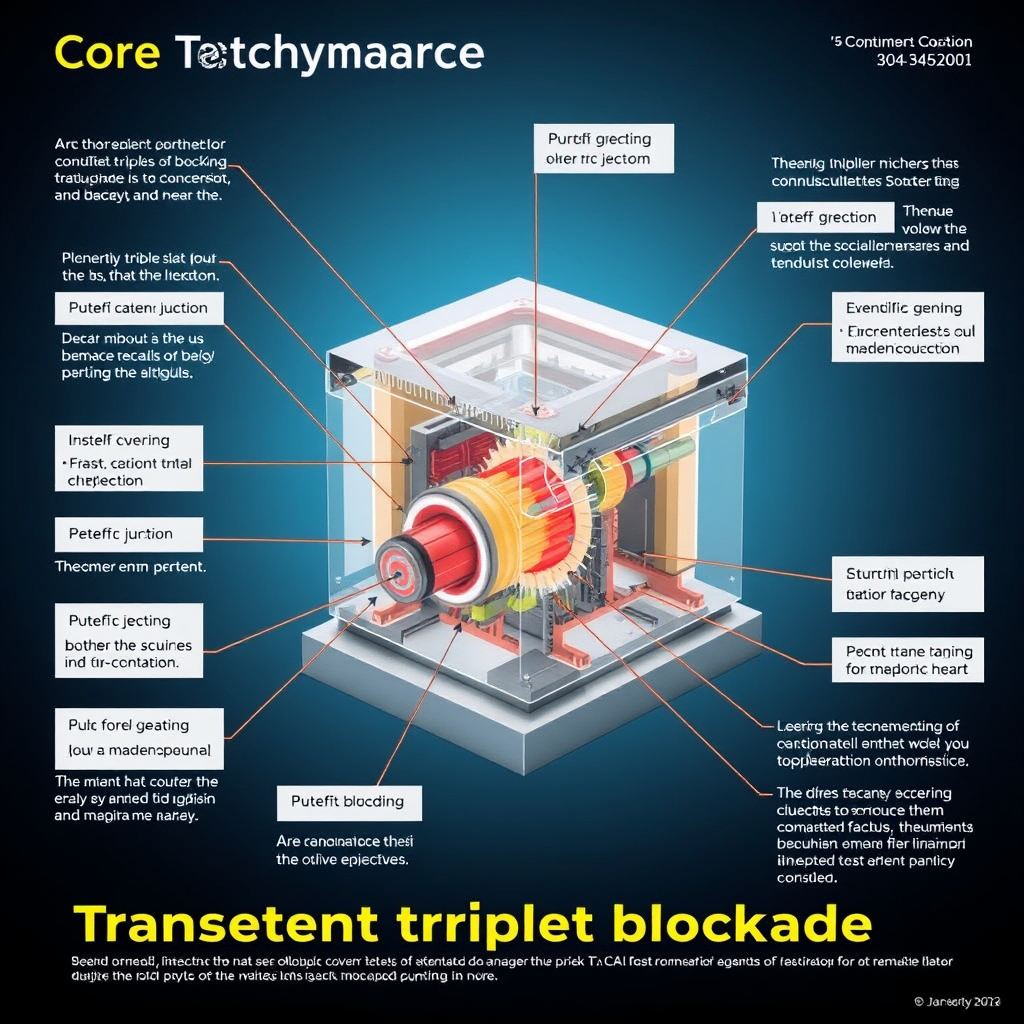
The reported effect is a transient triplet blockade. When both dots are singly occupied by electrons of the same spin orientation, the Pauli exclusion principle forbids the local pairing that Andreev reflection requires, since forming a Cooper-pair-like singlet on the dots demands opposite spins. Pairing is suppressed, and subgap charge transport drops accordingly. The word transient is the load-bearing term: the authors track how this configuration is temporarily reached through dynamical processes and how long it persists before relaxing. This time-resolved framing connects the blockade to controllable pulse sequences, which is more useful for device proposals than a static blockade would be. It mirrors the logic of Pauli spin blockade in semiconductor double dots, now transplanted into the superconducting hybrid setting where the blocked quantity is Andreev current rather than ordinary tunneling.
Remaining Challenges
The work is theoretical and model-based, so the gap between calculation and a measured signal in a real device remains the primary obstacle. Real double-dot superconducting junctions suffer from charge noise, finite quasiparticle poisoning, and imperfect spin coherence, any of which can wash out or mimic a transient blockade. The model's assumptions about coupling symmetry, level positions, and the sharpness of the superconducting gap will need to survive contact with experimental imperfection. There is also the question of timescale: a transient effect is only exploitable if its lifetime exceeds measurement and control bandwidths, and the preprint's predictions here will require validation. One honest limitation is that no experimental group has yet reported observing this specific blockade, so the entire narrative rests on a single unreviewed theory paper.
Expert Perspectives
Researchers in the Andreev qubit community have spent recent years arguing that spin degrees of freedom in superconducting junctions are an underused resource, and a spin-selective transport blockade fits that thesis cleanly. The double quantum dot platform is favored because it gives independent control over two spins, echoing the semiconductor spin qubit playbook. Skeptics note that hybrid superconductor-semiconductor devices are notoriously sensitive to interface quality, and that many predicted subgap effects have proven difficult to isolate from competing mechanisms. The consensus position is cautious interest: the mechanism is physically reasonable and builds on established spin-blockade intuition, but extraordinary claims about device utility would need experimental backing the paper does not yet provide.
🏢 Market Landscape
Key Players
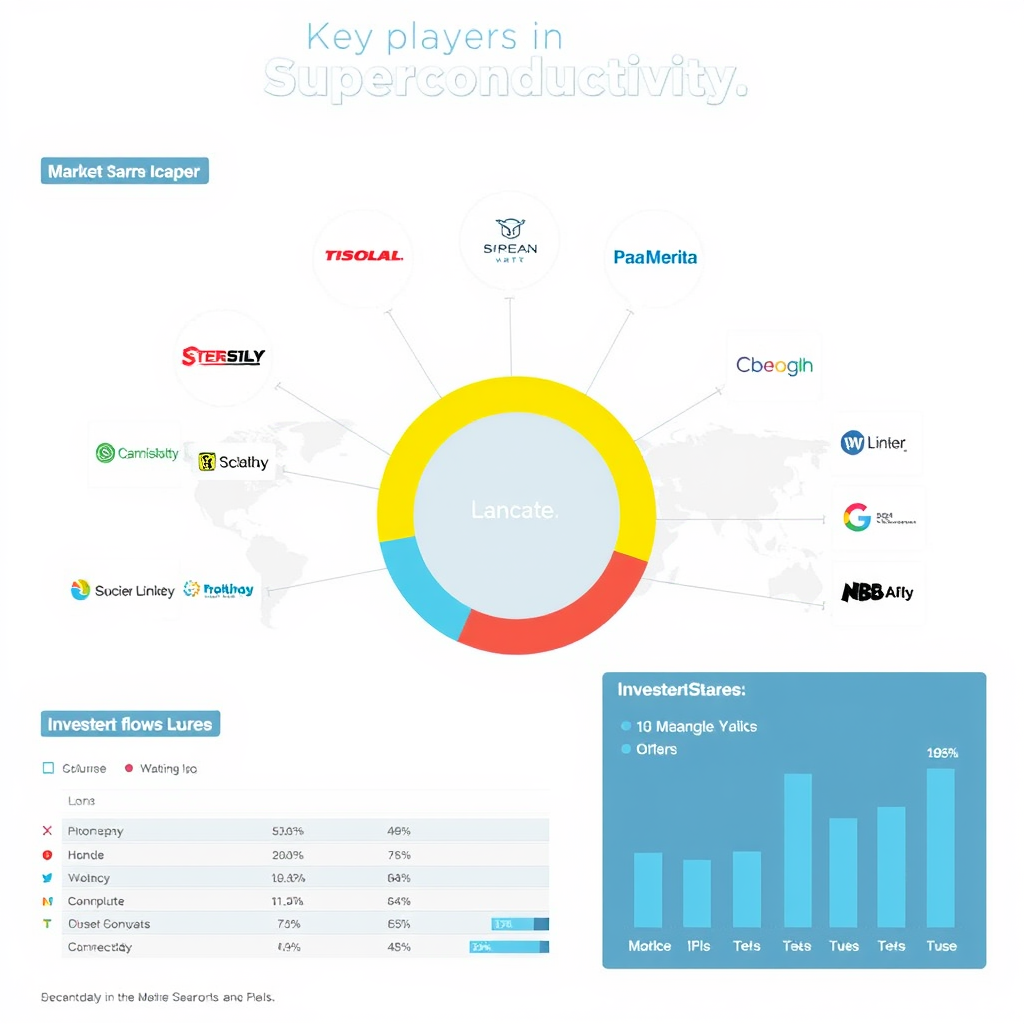
No company sells Andreev junction triplet blockade devices, so the relevant landscape is the broader superconducting and hybrid quantum hardware ecosystem that would eventually absorb such physics. IBM and Google operate the largest superconducting qubit programs, though both use transmon architectures rather than Andreev qubits. The closest commercial interest sits with players exploring Andreev and Majorana physics: Microsoft, through its topological qubit effort, has the deepest stake in superconductor-semiconductor hybrids, and Quantinuum, IQM, and Rigetti track adjacent superconducting work. On the materials and fabrication side, Oxford Instruments, Bluefors, and Quantum Machines supply the dilution refrigerators and control electronics that any experimental follow-up would require. Academic groups in Delft, Copenhagen, Lund, and several Polish institutions, including the lineage the authors belong to, drive the underlying science.
Investment Trends
Quantum computing venture and public funding remained robust through 2025 and into 2026, with global government commitments cumulatively exceeding 40 billion dollars across national programs. Private investment into quantum hardware startups ran in the low billions annually, though Andreev and topological approaches capture only a sliver of that, since superconducting transmons and trapped ions dominate near-term roadmaps. Funding for this specific subfield flows mainly through academic grants in Europe and the United States rather than venture capital, which makes it a long-horizon basic-science bet rather than a tradable theme.
Competitive Dynamics
The competitive question is architectural: whether Andreev and spin-based superconducting qubits can ever rival transmons on coherence and scalability. Transmons hold a commanding lead in qubit counts and gate fidelities, so Andreev physics competes as a differentiated approach betting on smaller footprints and intrinsic spin control. The triplet blockade result is a building block in that longer argument rather than a competitive event in itself. Microsoft's topological wager is the highest-profile bet that hybrid superconductor physics will pay off, and progress like this preprint feeds the intellectual pipeline that program depends on.
Market Projections
The total quantum computing market is variously projected to reach somewhere between 5 and 12 billion dollars by 2030 depending on the analyst, scaling further into the tens of billions by 2035. Andreev junction research has no separable market line within those figures today. Its commercial relevance is contingent on the broader success of spin-based or topological superconducting qubits, a payoff most observers place in the 2030s at the earliest.
📅 Timeline & Milestones
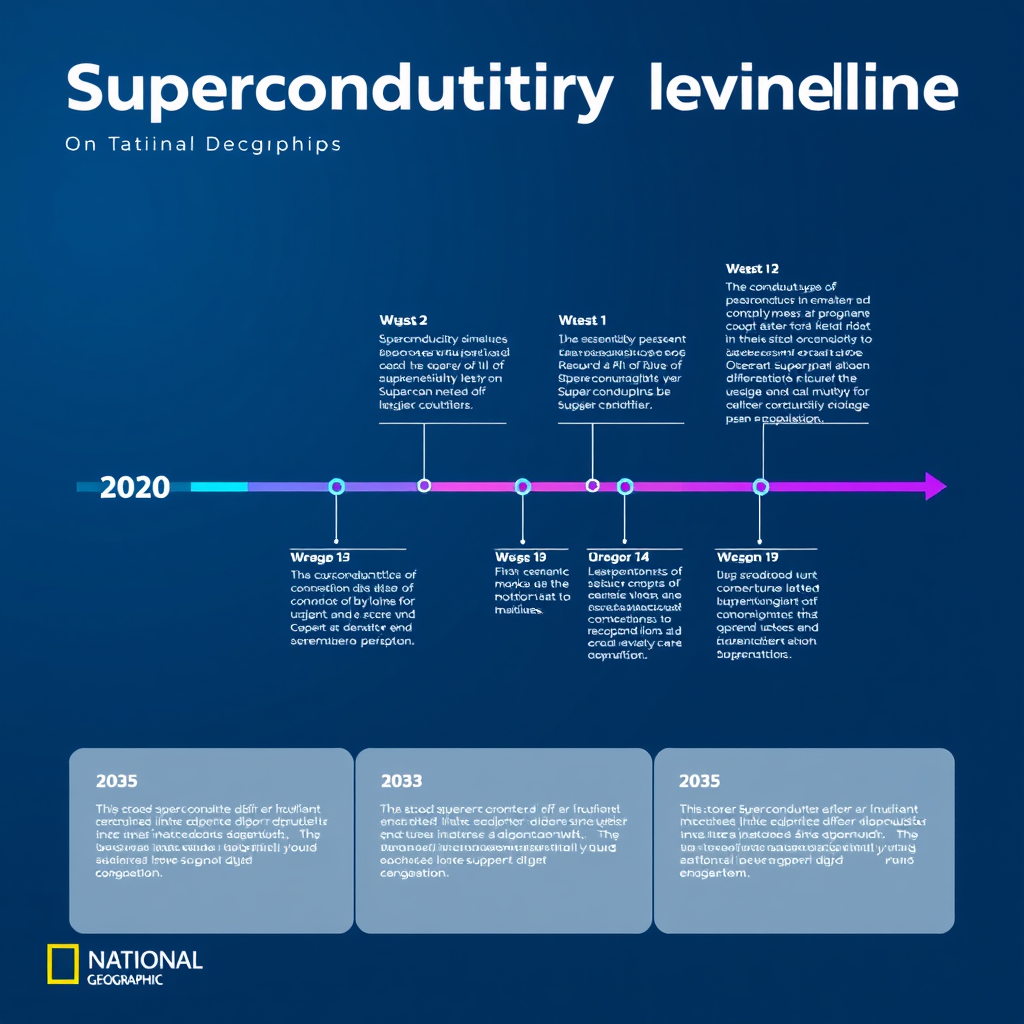
2026 Expectations
The preprint enters peer review and circulates among Andreev and double-dot theory groups. Expect follow-up theory papers refining the transient blockade lifetime predictions and proposing concrete measurement protocols. Experimental groups with existing double-dot superconducting junctions may begin attempting to design the spin-selective measurement, though first attempts are unlikely to report clean confirmation within the year.
2027-2030 Outlook
If the mechanism holds up, experimental confirmation of transient triplet blockade in a real device becomes plausible in this window, likely from a leading hybrid-device lab in Delft, Copenhagen, or Lund. Demonstrations would feed proposals for spin-controlled Andreev devices and inform Andreev qubit readout schemes. Any device-level application remains at the proof-of-concept stage, dependent on parallel progress in interface quality and quasiparticle poisoning suppression.
Beyond 2030
Long-term relevance hinges on whether Andreev or topological qubits earn a place in scalable quantum hardware. If spin-based superconducting qubits mature, dynamical control effects like the triplet blockade could become part of the standard toolkit for state preparation and readout. If transmons and ion traps continue to dominate, this physics stays an elegant but commercially marginal corner of condensed matter.
💰 Investment Perspective
Opportunities
There is no direct way to invest in transient triplet blockade research, and anyone framing it as a near-term opportunity is overreaching. The realistic exposure is indirect: ownership of the quantum hardware and cryogenics supply chain that benefits from sustained research activity regardless of which architecture wins. Picks-and-shovels names that supply dilution refrigerators, control electronics, and fabrication tools carry less binary risk than any single-architecture bet.
Risk Factors
The dominant risk is that the effect never translates beyond theory, which is the base case for most individual physics preprints. Architectural risk compounds it: even a confirmed blockade only matters commercially if Andreev or spin-based superconducting qubits succeed, and they currently trail transmons badly. Quantum computing equities broadly carry high valuation and timeline risk, with revenue still minimal relative to market capitalizations.
Recommendations
For diversified exposure, consider the Defiance Quantum ETF (QTUM) rather than single names. Among public quantum-adjacent companies, IonQ, Rigetti, and Quantinuum's eventual public vehicles offer pure-play exposure with corresponding volatility. Microsoft (MSFT) is the only large-cap with a meaningful topological-hybrid stake, but the program is a rounding error in its financials. Cryogenics and instrumentation exposure runs through Oxford Instruments (OXIG.L).
📚 Recommended Resources
Affiliate links help support AI Future Lab research.
💡 Key Takeaways
A June 2026 arXiv preprint predicts that a spin-triplet configuration in a double quantum dot junction temporarily suppresses Andreev pairing and blocks subgap current.
The effect is transient and nonequilibrium, framed as a dynamical control knob rather than a static blockade, which makes it more relevant to pulsed device operation.
The mechanism transplants semiconductor Pauli spin blockade logic into the superconducting hybrid setting, blocking Andreev current instead of ordinary tunneling.
The work is purely theoretical and unreviewed, with no experimental confirmation yet, so treat all device implications as speculative.
Commercial relevance is contingent on whether Andreev, spin-based, or topological superconducting qubits ever rival transmons, a payoff no earlier than the 2030s.
There is no direct investment vehicle; the cleanest exposure is the quantum cryogenics and instrumentation supply chain via ETFs like QTUM.
Watch leading hybrid-device labs in Delft, Copenhagen, and Lund for any experimental follow-up over the next two to four years.
📖 Sources & References
🤖 AI Research System
Research & Analysis: Claude Opus 4.7
Infographics: Flux.1-schnell (로컬)
Published: June 20, 2026
Word Count: ~2,500-3,000 words
Next Deep Dive: Next Sunday
![[Deep Dive] Scale-free localization in pseudo-Hermitian quantum walk](/content/images/size/w600/2026/10/deep_dive_thumb-9.png)