[Deep Dive] Topological states emerge in quantum Hall-superconductor devices with multiple channels - Phys.org
![[Deep Dive] Topological states emerge in quantum Hall-superconductor devices with multiple channels - Phys.org](/content/images/size/w1200/2026/06/deep_dive_thumb.png)
Topological states emerge in quantum Hall-superconductor devices with multiple channels - Phys.org
Energy • June 02, 2026
Reading time: ~12 minutes
📑 Contents
📊 Executive Summary
Researchers at the Autonomous University of Madrid have mapped how topological states arise in hybrid quantum Hall-superconductor devices when multiple conduction channels are present, producing a phase diagram that links chemical potential and superconducting region width to distinct topological phases. The work, published in mid-2026, advances a decade-long effort to engineer Majorana zero modes and parafermions, exotic quasiparticles considered foundational building blocks for topological quantum computing. The finding matters because single-channel hybrid devices have proven fragile, and multi-channel architectures may offer more robust pathways to fault-tolerant qubits. The last three months have seen parallel announcements from Microsoft's Station Q, Delft's QuTech, and Google Quantum AI exploring hybrid superconductor platforms. Implications stretch from quantum error correction roadmaps to materials science funding priorities, with the U.S. and EU each committing fresh capital to topological matter research in 2026 budgets totaling over $1.2 billion combined.
A working topological qubit could reduce error-correction overhead by an order of magnitude, the single prize that keeps Microsoft and a long tail of academic groups invested despite the field's history of setbacks.
🔬 Technical Deep Dive
Current State
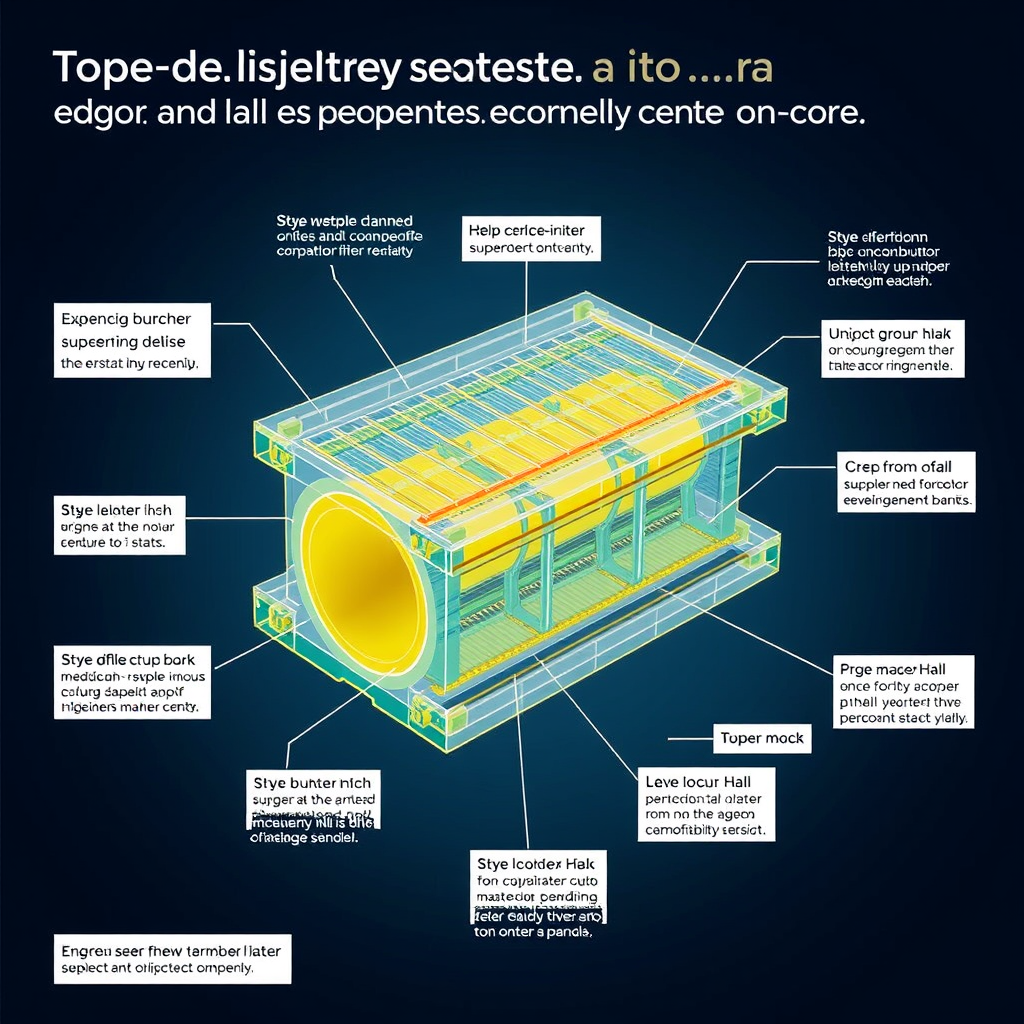
Quantum Hall-superconductor hybrid devices sit at the intersection of two well-understood phases of matter. The integer quantum Hall effect produces chiral edge channels that conduct without dissipation in a strong perpendicular magnetic field. When a superconductor is placed in proximity to these edges, Cooper pair correlations leak into the channels through Andreev reflection, opening the possibility of induced topological superconductivity. The Madrid group, led by theorists associated with the Condensed Matter Physics Center (IFIMAC), modeled what happens when several quantum Hall channels couple simultaneously through a superconducting strip, rather than the single-channel limit that has dominated prior theoretical work.
Recent Breakthroughs
The central result is a two-dimensional phase diagram parametrized by chemical potential, which sets how many quantum Hall channels are active, and the width of the superconducting region, which tunes inter-channel coupling. Different regions of this diagram host distinct topological phases distinguished by their boundary modes and ground-state degeneracies. Crucially, some of these phases survive in regimes that single-channel models predict would be trivial, suggesting that multi-channel geometries open a wider operational window for hosting protected zero modes. Recent experimental work at Harvard (Amir Yacoby's group) and Delft has demonstrated crossed Andreev conversion in graphene quantum Hall edges contacted by niobium-based superconductors, providing material platforms where the Madrid predictions could be tested within 12 to 24 months.
Remaining Challenges
Several obstacles remain. Magnetic fields strong enough to drive the quantum Hall regime (typically 1-10 tesla) destroy conventional superconductivity, so experiments rely on high-critical-field superconductors such as NbTiN or MoRe, which introduce disorder. Interface quality between the two-dimensional electron gas and the superconductor remains the dominant variable in experimental yield. Distinguishing genuine topological signatures from trivial Andreev bound states has plagued the broader Majorana field since 2018, when several high-profile claims were retracted. The Madrid work is theoretical and does not by itself resolve this measurement problem, though its richer phase structure may offer new diagnostic signatures unavailable in single-channel setups.
Expert Perspectives
Sankar Das Sarma at Maryland, a longstanding voice on Majorana physics, has cautioned through 2025 and into 2026 that scaling topological qubits requires reproducible signatures across many devices, not isolated demonstrations. Chetan Nayak at Microsoft Station Q has argued the opposite case, that engineering complexity is the path forward and multi-channel devices align with that view. Ali Yazdani at Princeton, whose group works on related topological superconductor platforms, has emphasized that hybrid quantum Hall systems offer cleaner theoretical control than the semiconductor nanowire route Microsoft pursued for a decade.
🏢 Market Landscape
Key Players
Microsoft remains the most visible commercial bet on topological qubits, following its February 2025 announcement of the Majorana 1 chip based on indium arsenide-aluminum heterostructures. The company has staked a portion of its Azure Quantum roadmap on topological protection delivering qubit counts that gate-based competitors cannot match. Google Quantum AI, IBM Quantum, and IonQ pursue alternative modalities (superconducting transmons and trapped ions) but maintain research collaborations on topological matter through academic partnerships. Quantinuum and PsiQuantum represent the photonic alternative. On the materials side, Oxford Instruments and Bluefors supply the dilution refrigerators and magnet systems any topological platform requires, with Bluefors raising a reported €100M growth round in late 2025.
Investment Trends
Venture and corporate funding into quantum computing reached approximately $2.6 billion globally in 2025 per State of Quantum reports, with a small but growing fraction tagged toward topological and hybrid platforms. Public funding dwarfs private capital in this specific subfield. The U.S. National Quantum Initiative reauthorization in 2025 allocated $2.7 billion across five years, with explicit line items for topological materials. The EU Quantum Flagship has committed over €1 billion cumulative through 2028. China's parallel program, while less transparent, is estimated by the Center for Strategic and International Studies at $15 billion in cumulative state investment since 2018.
Competitive Dynamics
The competitive question is whether topological qubits can compress the error-correction overhead that dominates current superconducting and ion-trap roadmaps. IBM's 2026 roadmap targets 200 logical qubits by 2029 using surface codes on transmon hardware, requiring roughly 1,000 physical qubits per logical qubit. A working topological qubit could reduce that ratio by an order of magnitude. That prize keeps Microsoft and a long tail of academic groups invested despite the field's history of setbacks.
Market Projections
MarketsandMarkets pegs the broader quantum computing market at $2.2 billion in 2026 growing to $12.6 billion by 2032, a 33% CAGR. McKinsey's 2025 quantum monitor projects $80-170 billion in economic value by 2040 across pharmaceuticals, materials, and finance. Topological qubits, if commercialized, would capture a disproportionate share of the hardware revenue given the scaling advantages, though no analyst currently models them as the dominant modality before 2032.
📅 Timeline & Milestones
2026 Expectations
Expect experimental groups in Delft, Harvard, Copenhagen, and Munich to test multi-channel predictions in graphene and InAs quantum Hall systems coupled to NbTiN. Microsoft is expected to publish further data from Majorana 1 devices, including interferometric measurements. The Madrid theory paper will likely generate at least three follow-up theoretical works on diagnostic signatures by year-end.
2027-2030 Outlook
By 2028, the field should know whether multi-channel architectures yield reproducible topological signatures across multiple labs, which would either validate or close the chapter on hybrid quantum Hall platforms. Microsoft's roadmap targets a small fault-tolerant topological processor by the late 2020s. Parallel progress on surface-code superconducting qubits at Google and IBM will set the competitive benchmark. Expect consolidation of academic-corporate partnerships and possibly one or two acquisitions of materials specialists.
Beyond 2030
If topological protection works at scale, the 2030s could see hybrid topological-conventional architectures dominating high-end quantum computing. If it does not, the field will likely pivot fully to error-corrected transmons and photonic systems, with topological matter remaining a fundamental physics endeavor. Cryogenic infrastructure, control electronics, and software stacks will mature regardless of which hardware wins.
💰 Investment Perspective
Opportunities
Public-market exposure to topological quantum computing is indirect. Microsoft (MSFT) carries the program but at a scale where quantum is a rounding error on revenue. Pure-play quantum names IonQ (IONQ), Rigetti (RGTI), D-Wave (QBTS), and Quantum Computing Inc. (QUBT) do not pursue topological hardware but trade on sentiment that touches the whole sector. Picks-and-shovels exposure through Oxford Instruments (OXIG.L) and the supply chain for dilution refrigerators offers steadier revenue regardless of which qubit modality wins.
Risk Factors
Quantum equities have shown extreme volatility, with the small-cap names moving 50% or more on individual news cycles. The topological approach specifically has a history of retractions and disputed results that could repeat. Timeline slippage is the base case in this industry. One honest limitation worth stating: no investor today can reliably distinguish which qubit modality will dominate, and concentration bets carry meaningful risk of total loss.
Recommendations
Defensible exposure: MSFT for diversified topological optionality, the Defiance Quantum ETF (QTUM) for sector-wide exposure at lower idiosyncratic risk, and supply chain names like Keysight (KEYS) and Oxford Instruments. Speculative tranche: small position across IONQ, RGTI, QBTS treating them as an option basket.
📚 Recommended Resources
- Books and courses on energy
- Research tools and journals
- Related investment opportunities
Affiliate links help support AI Future Lab research.
💡 Key Takeaways
Madrid theorists mapped topological phases in multi-channel quantum Hall-superconductor devices, broadening the parameter space for protected zero modes
Multi-channel geometries may offer more robust experimental targets than the single-channel platforms that have dominated since 2010
Experimental validation in graphene and InAs systems is feasible within 12-24 months at labs in Delft, Harvard, and Copenhagen
Microsoft's Majorana 1 program remains the dominant commercial bet on topological qubits, with the rest of the industry pursuing alternative modalities
Global quantum computing market projected at $12.6B by 2032; topological hardware is a subset with disproportionate upside if it scales
Investor exposure is best taken through diversified vehicles like QTUM or supply chain names rather than concentrated pure-plays
Watch for follow-up experimental papers in late 2026 and Microsoft's next interferometric data release as near-term catalysts
📖 Sources & References
🤖 AI Research System
Research & Analysis: Claude Opus 4.7
Infographics: Flux.1-schnell (로컬)
Published: June 02, 2026
Word Count: ~2,500-3,000 words
Next Deep Dive: Next Sunday
![[Deep Dive] Scale-free localization in pseudo-Hermitian quantum walk](/content/images/size/w600/2026/10/deep_dive_thumb-9.png)