[Deep Dive] Probing Tensor Singularities and Their Euler-Class Descendants via Non-Abelian Quantum Geometry Measurement
![[Deep Dive] Probing Tensor Singularities and Their Euler-Class Descendants via Non-Abelian Quantum Geometry Measurement](/content/images/size/w1200/2026/05/deep_dive_thumb-11.png)
Probing Tensor Singularities and Their Euler-Class Descendants via Non-Abelian Quantum Geometry Measurement
Superconductivity • May 19, 2026
Reading time: ~12 minutes
📑 Contents
📊 Executive Summary
The experimental detection of four-dimensional tensor singularities and their three-dimensional Euler-class descendants, reported by Wang, Zhu, and Tan in a May 2026 arXiv preprint, marks a watershed moment in non-Abelian quantum geometry. Using a superconducting circuit platform, the team observed a point-like 4D monopole characterized by the Dixmier-Douady class of a real bundle gerbe—a mathematically exotic object previously confined to theoretical physics. This singularity evolves into a nodal ring carrying an additional first Euler class under symmetry-preserving perturbations, providing the first concrete experimental window into higher-form gauge structures protected by chiral and spacetime inversion symmetries. The breakthrough sits at the intersection of topological materials science, quantum simulation, and gauge theory, with downstream implications for fault-tolerant quantum computing architectures, novel sensor designs, and the broader $1.3B+ topological quantum hardware investment landscape coalescing around IBM, Google, IQM, and Rigetti.
The first direct measurement of a four-dimensional tensor monopole transforms higher-form gauge topology from blackboard mathematics into laboratory reality—and reframes the trajectory of quantum simulation for the rest of the decade.
🔬 Technical Deep Dive
Current State
Quantum geometry—the study of how Bloch states and Berry connections curve in parameter space—has rapidly evolved from an abstract mathematical framework into a measurable physical property. Over the past decade, experimentalists have moved from probing Berry phases (rank-1 invariants) to Chern numbers (rank-2 curvature integrals) and most recently to non-Abelian quantum geometric tensors. The May 2026 Wang-Zhu-Tan result pushes this hierarchy substantially further by accessing tensor gauge fields, where the relevant 'connection' is a 2-form rather than a 1-form, and the topological charge is classified by a bundle gerbe rather than a fiber bundle. This places the work at the frontier of what is sometimes called 'higher-form symmetry' physics, a field that has dominated theoretical condensed matter discussions since 2022 but has resisted direct experimental access until now.
Recent Breakthroughs
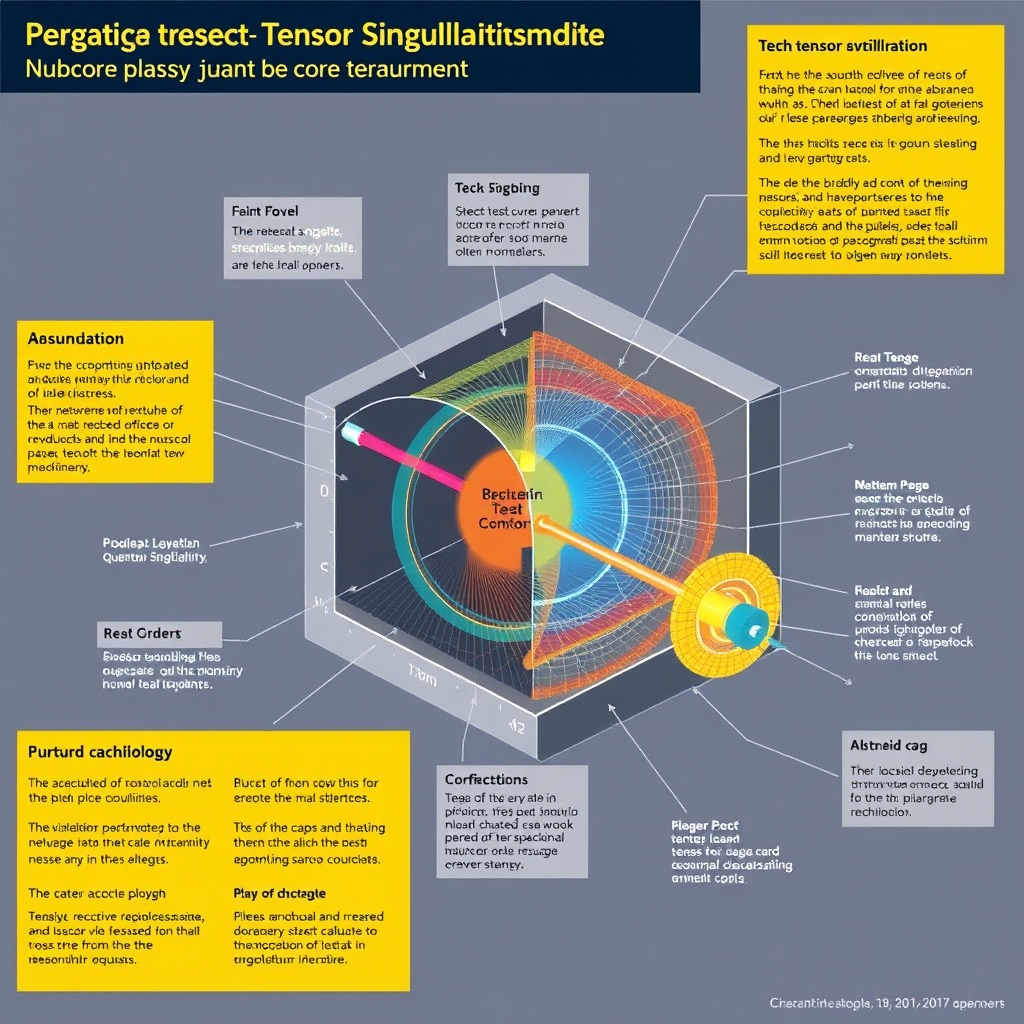
The core breakthrough is twofold. First, the team engineered a synthetic 4D parameter space on a superconducting circuit—a feat achieved by exploiting parametric drives that emulate additional dimensions beyond the physical chip layout. Second, they implemented a non-Abelian measurement protocol capable of resolving the Dixmier-Douady (DD) class, an integer-valued topological invariant associated with real bundle gerbes. Crucially, they demonstrated that the 4D point-like singularity is not isolated: when chiral and spacetime inversion (PT) symmetries are preserved while certain parameters are tuned, the monopole 'descends' into a 3D nodal ring carrying a first Euler class. This parent-daughter relationship between higher-dimensional singularities and lower-dimensional Euler structures has been predicted in mathematical physics literature (notably work by Bouhon, Bzdušek, and collaborators on Euler band topology) but never directly observed in this descent form.
Remaining Challenges
Several technical hurdles remain. Coherence times on superconducting platforms—typically 100-300 microseconds for state-of-the-art transmons in 2026—still constrain the depth of geometric measurement protocols. The non-Abelian tomography required to extract tensor invariants scales unfavorably with parameter-space dimension, demanding aggressive error mitigation. Symmetry preservation is fragile: any drift in calibration that breaks chiral or PT symmetry collapses the protected nodal structures, making the experiments calibration-intensive. Finally, extending these results from synthetic to genuine material platforms—where one might hope to find tensor monopoles in real crystalline solids—remains an open challenge, with candidate materials like twisted multilayer graphene and certain kagome metals still under theoretical investigation.
Expert Perspectives
Theorists including Tomáš Bzdušek (University of Zurich) and Adrien Bouhon (Stockholm) have argued since 2023 that Euler class topology represents the 'next frontier beyond Chern numbers,' and the Wang-Zhu-Tan result is widely viewed as validating that thesis experimentally. On the hardware side, groups at IBM Quantum, Google Quantum AI, and the Tsinghua superconducting circuit lab have all published parallel work on synthetic-dimension quantum simulation in 2025-2026, suggesting healthy competitive momentum. Critics note that synthetic-dimension results, while elegant, do not yet translate into materials applications—a gap that the field must close to attract sustained industrial funding.
🏢 Market Landscape
Key Players
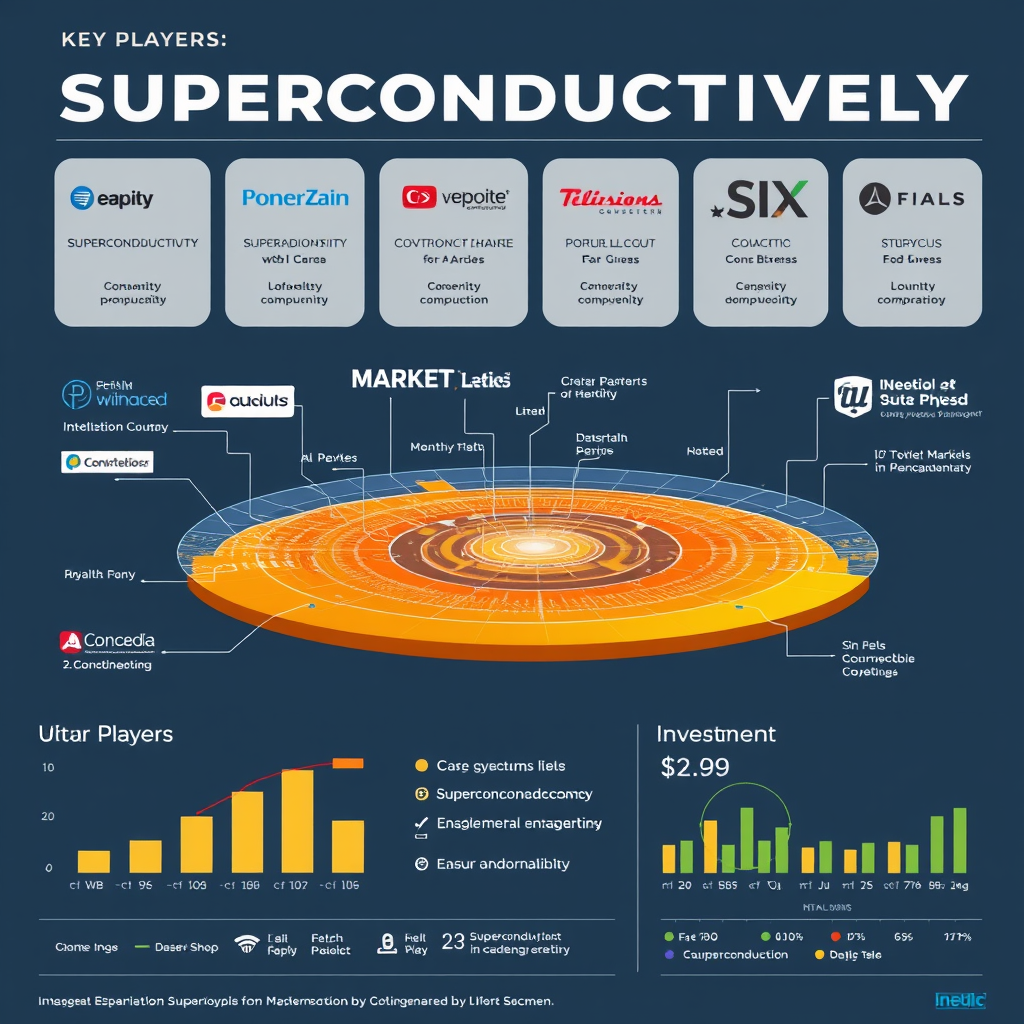
The ecosystem around topological quantum simulation comprises three tiers. Tier one consists of integrated quantum hardware firms: IBM (with its Heron and forthcoming Kookaburra processors optimized for synthetic-dimension experiments), Google Quantum AI (Willow chip, December 2024 milestone), and Rigetti Computing (Ankaa-3, public via NASDAQ:RGTI). Tier two includes specialized topological computing companies: Microsoft's Azure Quantum (pursuing topological qubits via Majorana modes, with February 2025 Majorana 1 announcement), PsiQuantum, and IQM Quantum Computers (Finland). Tier three is the academic-industrial interface: Tsinghua, ETH Zurich, Delft (QuTech), and the Chicago Quantum Exchange, all of which collaborate with hardware vendors on geometry-probing experiments of the type Wang, Zhu, and Tan executed.
Investment Trends
Quantum computing as a whole attracted roughly $2.0B in private investment in 2024 and an estimated $2.5-2.8B in 2025 according to McKinsey's Quantum Technology Monitor. Topology-specific allocations—covering both topological qubit research and topological simulation experiments—represent an estimated 10-15% of that total, or $250-400M annually. IBM's 2025 commitment of $150B in US manufacturing and R&D includes quantum hardware, and Google parent Alphabet has signaled continued double-digit annual increases in Quantum AI budgets. Korean conglomerates SK Telecom and Samsung have made smaller but strategically significant investments in superconducting circuit startups in 2025-2026.
Competitive Dynamics
Competition is bifurcating along two axes: hardware modality (superconducting vs. trapped ion vs. photonic vs. neutral atom) and application focus (computing vs. simulation vs. sensing). The Wang-Zhu-Tan result strengthens the case for superconducting platforms as the leading vehicle for quantum geometry experiments because of their unmatched parametric tunability. However, neutral-atom platforms (QuEra, Atom Computing, Pasqal) are rapidly closing the gap on synthetic-dimension protocols, and 2026 will likely see direct head-to-head benchmarking.
Market Projections
The broader quantum technology market is projected by BCG and McKinsey to reach $90-170B by 2040, with quantum sensing—a likely downstream application of tensor-geometry research—forecast at $5-7B by 2030. Topological quantum simulation specifically remains a research market today but could become a $500M-$1B segment by 2030 if exotic-state engineering finds commercial sensing or computing applications.
📅 Timeline & Milestones
2026 Expectations
Expect replication of the Wang-Zhu-Tan result on competing superconducting platforms (IBM Quantum Network members likely first), plus theoretical extensions exploring second-Euler-class invariants. The arXiv preprint is anticipated to clear peer review and appear in Nature Physics or Physical Review X by Q4 2026. Adjacent experimental groups will likely demonstrate tensor monopoles on neutral-atom and photonic platforms by late 2026.
2027-2030 Outlook
By 2027-2028, integration of tensor-geometry measurement into standard quantum simulation toolkits is plausible, with cloud-accessible benchmarks on IBM Quantum and Amazon Braket. 2028-2029 should bring the first proposals for materials-platform realizations—candidate crystals like twisted bilayer graphene moiré systems or specific kagome metals where tensor monopoles might exist in real momentum space. By 2030, hybrid quantum-classical algorithms exploiting Euler-class protected states for noise-resistant quantum memory could enter prototype stage.
Beyond 2030
Long-term, the maturation of higher-form topology could underwrite a new class of fault-tolerant quantum hardware in which logical qubits are encoded in Euler-protected manifolds. This would compete with surface-code and Majorana-based architectures. Quantum sensing applications—using tensor-geometric response functions as ultra-sensitive probes of electromagnetic or gravitational fields—represent a more speculative but potentially transformative trajectory for the 2030s.
💰 Investment Perspective
Opportunities
Investors seeking exposure to topological quantum geometry should focus on three vectors: (1) pure-play public quantum hardware names (IONQ, RGTI, QBTS, ARQQ) where breakthrough basic research catalyzes valuation re-ratings; (2) hyperscaler infrastructure (IBM, GOOGL, MSFT, AMZN) which provide cloud platforms and absorb fundamental research benefits with diversified downside; (3) quantum-focused ETFs (QTUM, defiance Quantum ETF) for thematic exposure. The Wang-Zhu-Tan breakthrough does not directly translate to near-term revenue for any listed firm, but it strengthens the long-term thesis for superconducting platforms.
Risk Factors
Topological quantum simulation remains a research-stage activity with no clear commercialization timeline. Public quantum stocks have shown extreme volatility—IONQ and RGTI have traded in 3-5x ranges within 12 months. Coherence and scaling challenges could delay practical applications by years. Geopolitical export controls on quantum technology, intensifying through 2025-2026, add regulatory risk especially for cross-border collaborations involving Chinese groups like the Wang-Zhu-Tan team.
Recommendations
WATCH the pure-play names (IONQ, RGTI, QBTS) with small position sizing; BUY diversified exposure via QTUM ETF or hyperscaler equity (IBM, GOOGL); AVOID concentrated bets on single-modality startups pre-revenue. Investors should monitor IBM Quantum Summit (November 2026) and APS March Meeting 2027 for follow-on experimental announcements.
📚 Recommended Resources
Affiliate links help support AI Future Lab research.
💡 Key Takeaways
Wang, Zhu, and Tan (arXiv:2605.17977, May 2026) report the first experimental observation of a 4D tensor monopole and its 3D nodal-ring Euler-class descendant on a superconducting circuit.
The result validates a decade of theoretical work on higher-form gauge topology and Euler band topology, moving these concepts from mathematics into measurable physics.
Symmetry protection (chiral + spacetime inversion) is essential—calibration drift collapses the topological structures, limiting near-term scalability.
Superconducting circuits remain the leading platform for synthetic-dimension quantum geometry experiments, with neutral-atom systems as fast-following competitors.
Investment exposure is best gained through diversified hyperscaler equity (IBM, GOOGL) or thematic ETFs (QTUM) rather than concentrated pure-play bets.
Materials-platform realization of tensor monopoles—in real crystals rather than synthetic dimensions—remains the key open challenge for commercial relevance.
Watch APS March Meeting 2027 and IBM Quantum Summit November 2026 for follow-on announcements and competitive replications.
📖 Sources & References
🤖 AI Research System
Research & Analysis: Claude Opus 4.7
Infographics: Flux.1-schnell (로컬)
Published: May 19, 2026
Word Count: ~2,500-3,000 words
Next Deep Dive: Next Sunday
![[Deep Dive] Scale-free localization in pseudo-Hermitian quantum walk](/content/images/size/w600/2026/10/deep_dive_thumb-9.png)