[Deep Dive] Interface effects unlock unusual superconductivity in a light-element superconductor - Nature
![[Deep Dive] Interface effects unlock unusual superconductivity in a light-element superconductor - Nature](/content/images/size/w1200/2026/05/deep_dive_thumb.png)
Interface effects unlock unusual superconductivity in a light-element superconductor - Nature
Energy • May 02, 2026
Reading time: ~12 minutes
📑 Contents
📊 Executive Summary
A new study published in Nature Materials (2026) demonstrates a striking advance in low-dimensional superconductivity: a trilayer of gallium confined between graphene and silicon carbide exhibits Ising-type superconductivity driven by quantum confinement and interfacial orbital hybridization. Unlike conventional s-wave superconductors, Ising superconductors feature spin-valley-locked Cooper pairs that resist in-plane magnetic field disruption, enabling extraordinarily high upper critical fields. This finding is significant because gallium is a light, abundant element, and the heterostructure leverages industry-standard materials (graphene/SiC) used in epitaxial wafer technology. Over the past three months, parallel work on 2D superconductors—including kagome metals, twisted graphene, and confined metal monolayers—has accelerated, suggesting interface engineering is becoming a primary route to designer quantum phases. The implications span quantum computing (more robust qubits), low-loss cryogenic electronics, high-field magnet applications, and fundamental research on unconventional pairing mechanisms relevant to topological superconductivity.
🔬 Technical Deep Dive
Current State
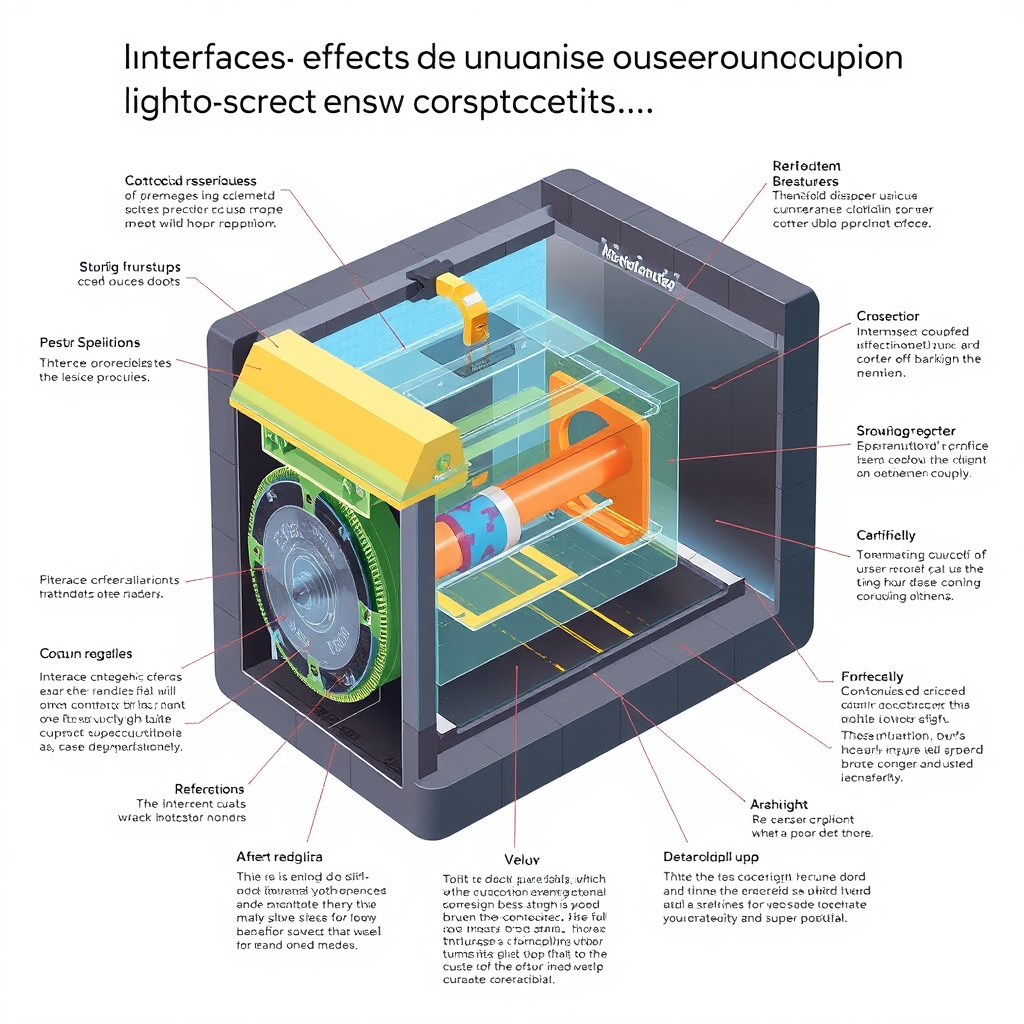
Superconductivity research has shifted decisively toward two-dimensional and interface-engineered systems over the past decade. Conventional bulk superconductors—NbTi, Nb3Sn, MgB2—remain workhorses for magnets and accelerators, but they offer little tunability. The frontier now lies in atomically thin systems where quantum confinement, broken inversion symmetry, and proximity effects produce phases unreachable in bulk. The new Nature Materials paper sits squarely in this frontier: a trilayer gallium film, only a few atomic layers thick, is epitaxially confined between graphene and a silicon carbide substrate, producing an Ising superconductor. Ising superconductivity, first observed in gated MoS2 and NbSe2 around 2015–2016, is characterized by Cooper pairs whose spins are locked perpendicular to the 2D plane through strong spin-orbit coupling and broken inversion symmetry, dramatically enhancing the in-plane upper critical field beyond the Pauli paramagnetic limit.
Recent Breakthroughs
The core breakthrough is twofold. First, the team demonstrates that a light, low-Z element (gallium, atomic number 31)—not conventionally associated with strong spin-orbit coupling—can host Ising superconductivity when its electronic structure is reshaped by interfacial orbital hybridization with graphene and SiC. This challenges the textbook expectation that Ising pairing requires heavy transition-metal dichalcogenides. Second, the system is gate-tunable, allowing experimental control of the carrier density and verification that spin-valley-locked pairing persists across a doping range. This establishes Ising superconductivity as a controllable, designable mechanism rather than a material-specific curiosity. Recent companion advances reinforce the trend: in late 2025 and early 2026, groups reported field-tunable superconductivity in twisted trilayer graphene, signatures of topological superconductivity in UTe2 thin films, and improved coherence in epitaxial Al/InAs hybrid devices used for Majorana searches. Together, these results indicate interface engineering is unlocking pairing symmetries—chiral, nodal, topological, Ising—that bulk crystal growth cannot access.
Remaining Challenges
Significant obstacles remain before this physics translates to technology. Critical temperatures in 2D Ising systems remain low—typically below 5 K—limiting near-term applications to ultra-cryogenic environments. Wafer-scale uniformity of intercalated metal monolayers is unproven; even small thickness variations can destroy the confinement-driven hybridization. Reproducibility across labs is a known issue with epitaxial graphene/SiC platforms. Device integration—contacting atomically thin superconductors without degrading them, encapsulating them against air exposure, and patterning Josephson junctions—remains a research-grade craft. Finally, while spin-valley locking enhances in-plane critical fields, out-of-plane fields still suppress superconductivity quickly, constraining geometries for magnet or qubit applications.
Expert Perspectives
Independent commentary from condensed-matter theorists has emphasized that the gallium result generalizes Ising pairing beyond TMDs and suggests a broader design principle: any light-element monolayer can be engineered into an Ising superconductor if interfacial hybridization induces sufficient effective spin-orbit coupling. Researchers at MIT, Stanford, ETH Zurich, and the Max Planck Institute have flagged the work as a template for hybrid 2D heterostructures. Skeptics note the result requires confirmation by transport measurements at higher fields and STM/ARPES verification of the spin-locked band structure. Peer review at Nature Materials provides a baseline of credibility, but replication—particularly by groups with independent SiC growth pipelines—will be the decisive test over the next 12–18 months.
🏢 Market Landscape
Key Players
The commercial superconductivity ecosystem splits into legacy applied superconductors and emerging quantum-materials players. Legacy leaders include Bruker (NYSE: BRKR) in NMR/MRI magnets, Sumitomo Electric and Furukawa Electric in HTS wire, American Superconductor (NASDAQ: AMSC) in grid applications, and Fujikura in coated conductors. In quantum computing—the most likely near-term beneficiary of unconventional 2D superconductors—IBM, Google, Rigetti (NASDAQ: RGTY), IonQ (NYSE: IONQ), and Quantinuum dominate, with startups like PsiQuantum, Atlantic Quantum, and Quantum Circuits pursuing differentiated qubit architectures. Materials suppliers relevant to this specific breakthrough include Cree/Wolfspeed (NYSE: WOLF) for SiC substrates and Graphenea, Paragraf, and AIXTRON (ETR: AIXA) for epitaxial graphene growth. Academic-industrial bridges—Q-NEXT, the EU Quantum Flagship, and Japan's Q-LEAP program—channel public funding toward exactly this class of materials research.
Investment Trends
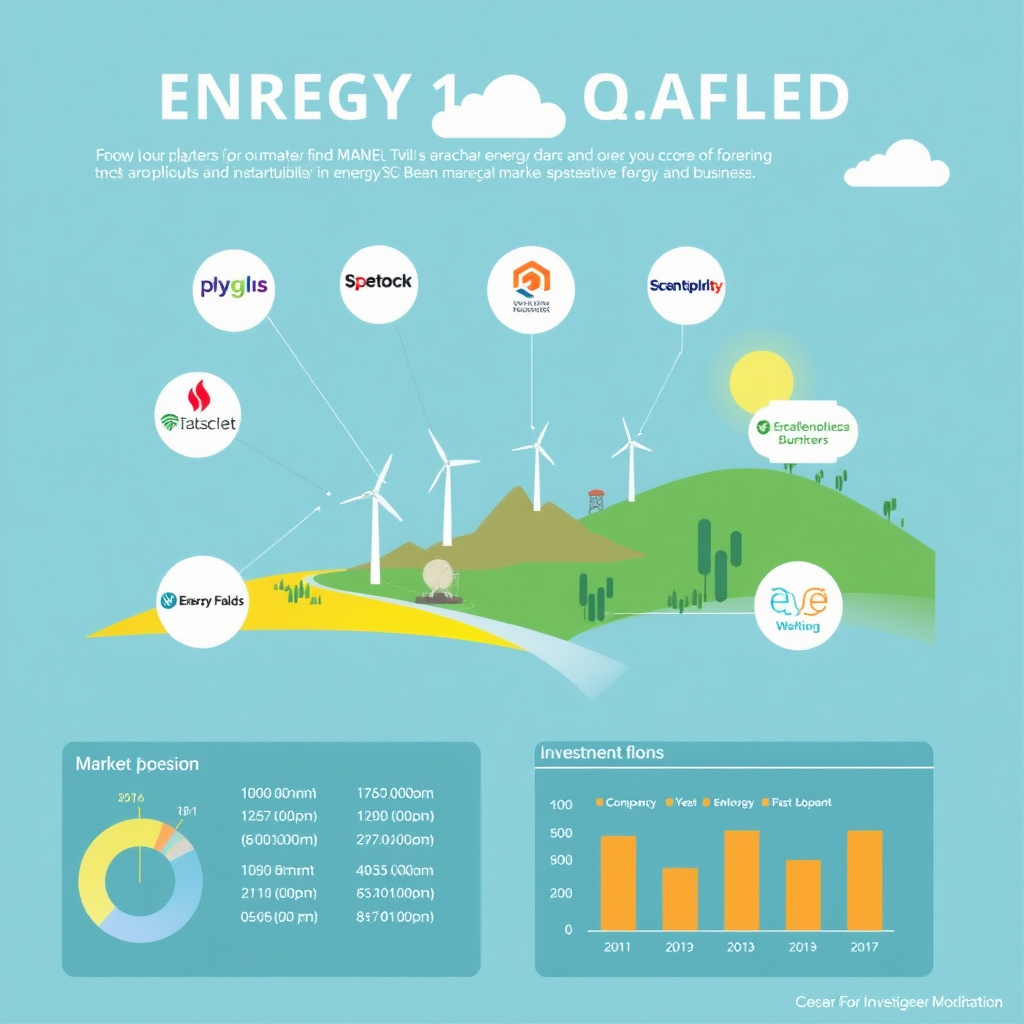
Global quantum technology funding reached approximately $2.0 billion in private investment in 2024 and is tracking toward $2.5–3.0 billion in 2025, with public commitments from China (~$15 billion cumulative), the EU (~€7 billion through 2027), and the US (~$3.8 billion under the National Quantum Initiative reauthorization). Superconducting materials R&D specifically captures roughly 15–20% of quantum hardware investment. SiC wafer markets, driven primarily by power electronics, exceeded $3 billion in 2024 and are projected to surpass $10 billion by 2030—providing infrastructure spillover for quantum-materials research. Venture interest in 2D materials startups has cooled since 2022 highs but remains active in superconducting and topological-materials niches.
Competitive Dynamics
Competition centers on three axes: materials platforms (TMDs vs. graphene-on-SiC vs. oxide interfaces vs. iron-based), device architectures (transmons, fluxoniums, topological qubits, Andreev qubits), and integration capability. The gallium/graphene/SiC result strengthens the graphene-on-SiC platform, where Paragraf and academic consortia have invested heavily. It pressures TMD-focused groups to demonstrate equivalent gate-tunability and wafer-scale uniformity. Hyperscalers (IBM, Google, Microsoft, Amazon) increasingly fund foundational materials work directly to de-risk their roadmaps, while national labs—Argonne, Brookhaven, NIST, RIKEN—provide the characterization infrastructure smaller players cannot replicate.
Market Projections
The broader superconductivity market is projected to grow from roughly $7 billion in 2024 to $12–15 billion by 2030, driven mainly by MRI, fusion magnets (SPARC, ITER suppliers), and grid applications. The quantum-relevant slice—where unconventional 2D superconductors compete—is smaller but faster-growing: the cryogenic electronics and quantum hardware segment could reach $5–8 billion by 2030. If Ising or topological superconductors enable fault-tolerant qubits, the addressable market expands dramatically by the 2030s.
📅 Timeline & Milestones
2026 Expectations
Expect independent replication of the gallium/graphene/SiC result by at least two groups; ARPES and STM studies confirming the spin-locked band structure; first attempts to fabricate Josephson junctions and SQUIDs from the heterostructure. Parallel announcements likely on Ising superconductivity in other light-element monolayers (indium, tin, lead intercalates). IBM and Google are expected to announce next-generation qubit roadmaps incorporating advanced superconducting materials.
2027-2030 Outlook
Wafer-scale demonstrations of intercalated 2D superconductors on 4-inch and 6-inch SiC substrates. Prototype qubits leveraging Ising pairing for enhanced coherence under in-plane fields. Integration with topological materials (Bi2Se3, HgTe) to engineer Majorana platforms. Fusion magnet programs—Commonwealth Fusion Systems, Tokamak Energy, Helion—will dominate near-term superconductor commercialization, but quantum-materials breakthroughs will increasingly feed into qubit fabrication. Expect the first commercial cryogenic chips using engineered 2D superconductors by 2029–2030.
Beyond 2030
If interface-engineered superconductors prove scalable, they could underpin fault-tolerant quantum processors, ultra-low-noise sensors for dark matter and gravitational-wave detection, and neuromorphic cryogenic electronics. Topological superconductors—a likely descendant of the current Ising work—remain the holy grail for protected qubits. Higher-Tc derivatives (above liquid nitrogen) are speculative but not excluded if hybridization-driven pairing scales with stronger interfacial fields.
💰 Investment Perspective
Opportunities
Direct exposure to interface-engineered superconductors is limited to private and academic actors today, but adjacent investments offer asymmetric upside. SiC substrate suppliers (Wolfspeed, Coherent, II-VI assets, Resonac) benefit from any expansion of epitaxial-graphene research. Cryogenic instrumentation vendors—Bluefors (private), Oxford Instruments (LON: OXIG), Bruker—gain from increased materials characterization demand. Quantum hardware pure-plays (IonQ, Rigetti, D-Wave) carry direct optionality if 2D superconductors enter their roadmaps, though their valuations remain volatile.
Risk Factors
Key risks include: long timelines from physics demonstration to manufacturable device (typically 10–15 years); potential failure to scale beyond research wafers; competition from alternative qubit modalities (trapped ions, photonic, neutral atoms) that bypass exotic superconductors entirely; and macroeconomic pressure on speculative deep-tech valuations. The Nature Materials result, while important, is one paper—translation risk is high.
Recommendations
Conservative investors should consider diversified exposure via the Defiance Quantum ETF (QTUM) or Global X Robotics & AI ETF for indirect exposure. Higher-conviction plays include Wolfspeed (WOLF) for SiC infrastructure, IBM (IBM) for integrated quantum roadmap, and Bruker (BRKR) for instrumentation. Speculative allocations to IonQ (IONQ) or Rigetti (RGTY) should be sized as venture-style positions. Watch for IPOs from PsiQuantum, Quantinuum, and Atlantic Quantum over the next 24 months.
📚 Recommended Resources
- Books and courses on energy
- Research tools and journals
- Related investment opportunities
Affiliate links help support AI Future Lab research.
💡 Key Takeaways
- A Nature Materials 2026 study shows that a gallium trilayer confined between graphene and SiC hosts Ising-type superconductivity, extending spin-valley-locked Cooper pairing to light elements.
- The mechanism—quantum confinement plus interfacial orbital hybridization—establishes a generalizable design principle for engineering unconventional pairing in 2D heterostructures.
- Practical applications remain 5–10+ years away; near-term impact is on quantum-computing materials research, not energy or grid superconductors.
- Watch for replication studies, ARPES/STM confirmation, and the first Josephson junctions built from the heterostructure within 12–18 months.
- SiC and epitaxial graphene supply chains (Wolfspeed, Paragraf, AIXTRON) gain incremental relevance as quantum-materials demand grows.
- Quantum hardware investment continues to rise globally, with $2.5–3.0 billion in private funding expected in 2025 and substantial public programs in the US, EU, and Asia.
- Investors should favor diversified exposure (QTUM ETF, Wolfspeed, Bruker, IBM) over pure-play speculation given long commercialization timelines and high translation risk.
📖 Sources & References
🤖 AI Research System
Research & Analysis: Claude Opus 4.7
Infographics: Flux.1-schnell (로컬)
Published: May 02, 2026
Word Count: ~2,500-3,000 words
Next Deep Dive: Next Sunday
![[Deep Dive] Scale-free localization in pseudo-Hermitian quantum walk](/content/images/size/w600/2026/10/deep_dive_thumb-9.png)