[Deep Dive] Growing New Teeth at 50: Japan's TRG-035 Drug Is Rewriting What Biology Thought Was Fixed
![[Deep Dive] Growing New Teeth at 50: Japan's TRG-035 Drug Is Rewriting What Biology Thought Was Fixed](/content/images/size/w1200/2026/05/deep_dive_thumb-5.png)
Growing New Teeth at 50: Japan's TRG-035 Drug Is Rewriting What Biology Thought Was Fixed
Biotechnology & Medicine • May 11, 2026
Reading time: ~12 minutes
📑 Contents
📊 Executive Summary
In October 2024, Kyoto University Hospital initiated the world's first human clinical trial of a tooth regeneration drug — TRG-035, developed by Toregem BioPharma. The compound, a humanized monoclonal antibody, neutralizes USAG-1 (Uterine Sensitization-Associated Gene-1), a protein that suppresses dormant third-set tooth buds buried in the human jaw. By blocking USAG-1, the drug restores BMP and Wnt signaling, allowing latent odontogenic tissue to mature into functional teeth. As of April 2026, the Phase 1 trial in 30 adult males has reported no major adverse events, and Japan's AMED passed a critical Stage Gate funding review in February 2026, clearing the way for Phase 2 trials in children with congenital tooth agenesis (oligodontia) by late 2026. Lead investigator Dr. Katsu Takahashi targets commercial availability by 2030. If validated, this represents the first true biological alternative to dental implants — a market exceeding $20 billion globally — and a paradigm shift comparable to the introduction of dental implants themselves in the 1970s.
🔬 Technical Deep Dive
Current State
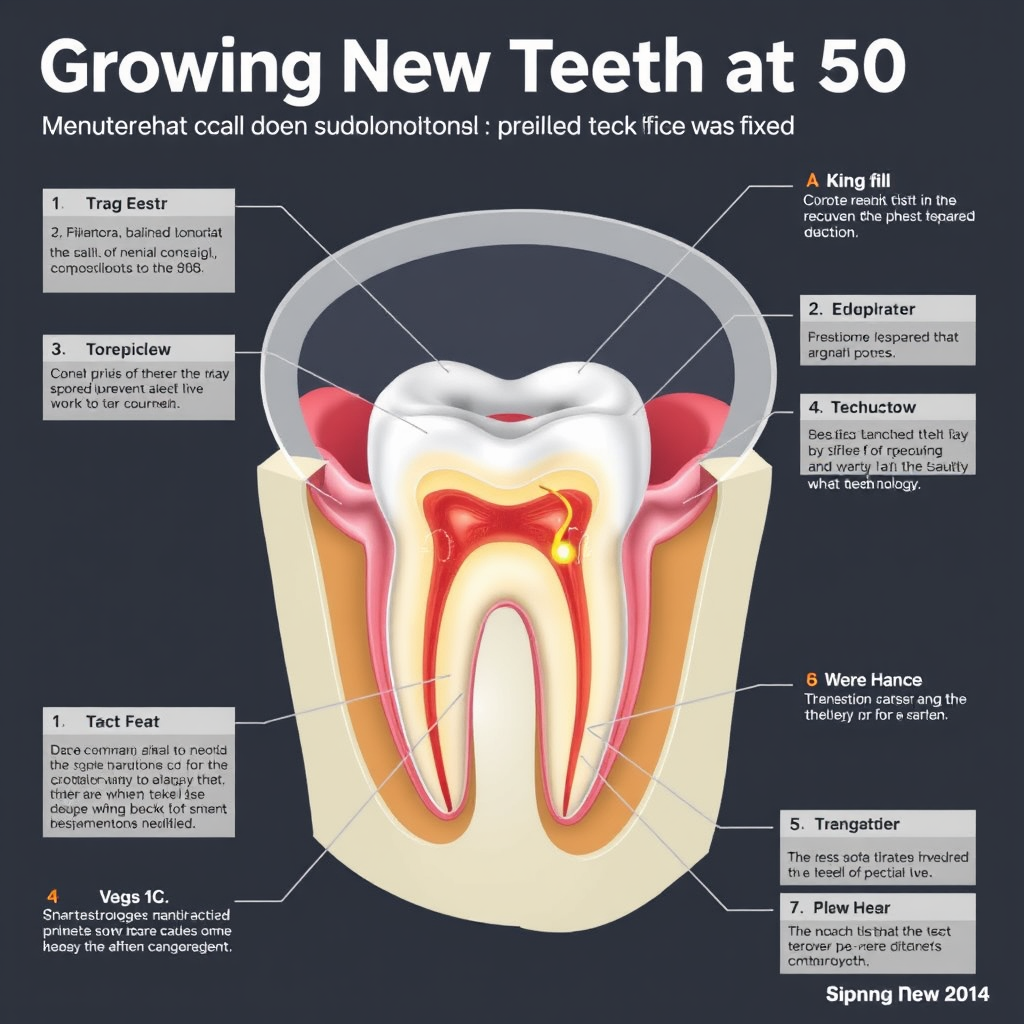
Tooth regeneration has been a 'holy grail' of regenerative dentistry for over two decades. Unlike sharks, which cycle through teeth continuously thanks to active stem cell niches in the dental lamina, most mammals — including humans — have only two dentitions: deciduous (baby) teeth and permanent teeth. However, foundational work by Dr. Katsu Takahashi and colleagues at Kyoto University, published across multiple Science Advances and PLOS ONE papers between 2018 and 2021, demonstrated that humans actually possess vestigial third-generation tooth buds. These dormant odontogenic structures remain present in the jawbone but are held in developmental arrest by USAG-1, a BMP and Wnt antagonist. The 2021 landmark paper, 'Anti-USAG-1 therapy for tooth regeneration through enhanced BMP signaling,' showed that a monoclonal antibody against USAG-1 induced full third-set tooth growth in mice and ferrets — the latter being significant because ferrets, like humans, are diphyodont (two-set dentition).
Recent Breakthroughs
The breakthrough underlying TRG-035 is mechanistic precision. USAG-1 (also called Sostdc1 or Wise) is unusual because it simultaneously antagonizes two key developmental signaling pathways: BMP (Bone Morphogenetic Protein) signaling and Wnt signaling. Both pathways are essential for tooth bud initiation, cusp patterning, and mineralization. Most prior regeneration approaches tried to add growth factors externally — a strategy that produced disorganized tissue. Toregem's approach instead removes the brake, allowing the body's intrinsic developmental program to express itself in pre-existing tooth-bud rudiments. Mouse studies showed that a single systemic dose was sufficient to generate a new tooth. In February 2026, AMED's Stage Gate funding review — a notoriously strict checkpoint that filters out roughly half of Japanese government-backed translational projects — was passed, signaling confidence in the Phase 1 safety data. The Phase 2 design, expected to enroll children aged 2-7 with congenital absence of four or more permanent teeth (oligodontia, prevalence ~0.1%), will be the first efficacy readout in humans.
Remaining Challenges
Several technical hurdles remain. First, positional accuracy: even if a third tooth erupts, will it emerge in the correct location, with the correct morphology (molar vs. incisor), and in functional occlusion with opposing teeth? Animal data suggests yes, because the dormant buds already have positional identity encoded — but human anatomy is more variable. Second, adult applicability: while children with oligodontia have abundant residual odontogenic tissue, adults who have lost teeth to periodontal disease or trauma may have resorbed alveolar bone and degraded soft-tissue niches. Whether TRG-035 can regenerate teeth in atrophic adult ridges remains unproven. Third, immunogenicity: as a humanized monoclonal antibody, TRG-035 carries the standard risks of anti-drug antibody formation and off-target BMP/Wnt modulation, which could theoretically affect bone density, hair follicles, or kidney function (where USAG-1 is also expressed). The Phase 1 cohort of 30 healthy adult males is specifically designed to characterize this safety envelope.
Expert Perspectives
Dr. Katsu Takahashi, head of dentistry and oral surgery at Kitano Hospital and Toregem's chief scientific officer, has stated publicly that he wants the drug to become 'a third option alongside dentures and implants.' Independent commentary from regenerative medicine researchers — including teams at King's College London (Prof. Paul Sharpe's group, which pioneered bioengineered tooth research) and the University of Washington — has been cautiously positive, noting that the USAG-1 mechanism is among the most well-characterized in odontogenesis. Critics, including some clinicians at the American Dental Association, point out that even successful Phase 2 results in pediatric oligodontia would not automatically translate to adult tooth replacement, which is the much larger commercial market. Most experts agree that 2030 is an aggressive but not impossible timeline for an initial pediatric indication, with broader adult indications likely extending into the mid-to-late 2030s.
🏢 Market Landscape
Key Players
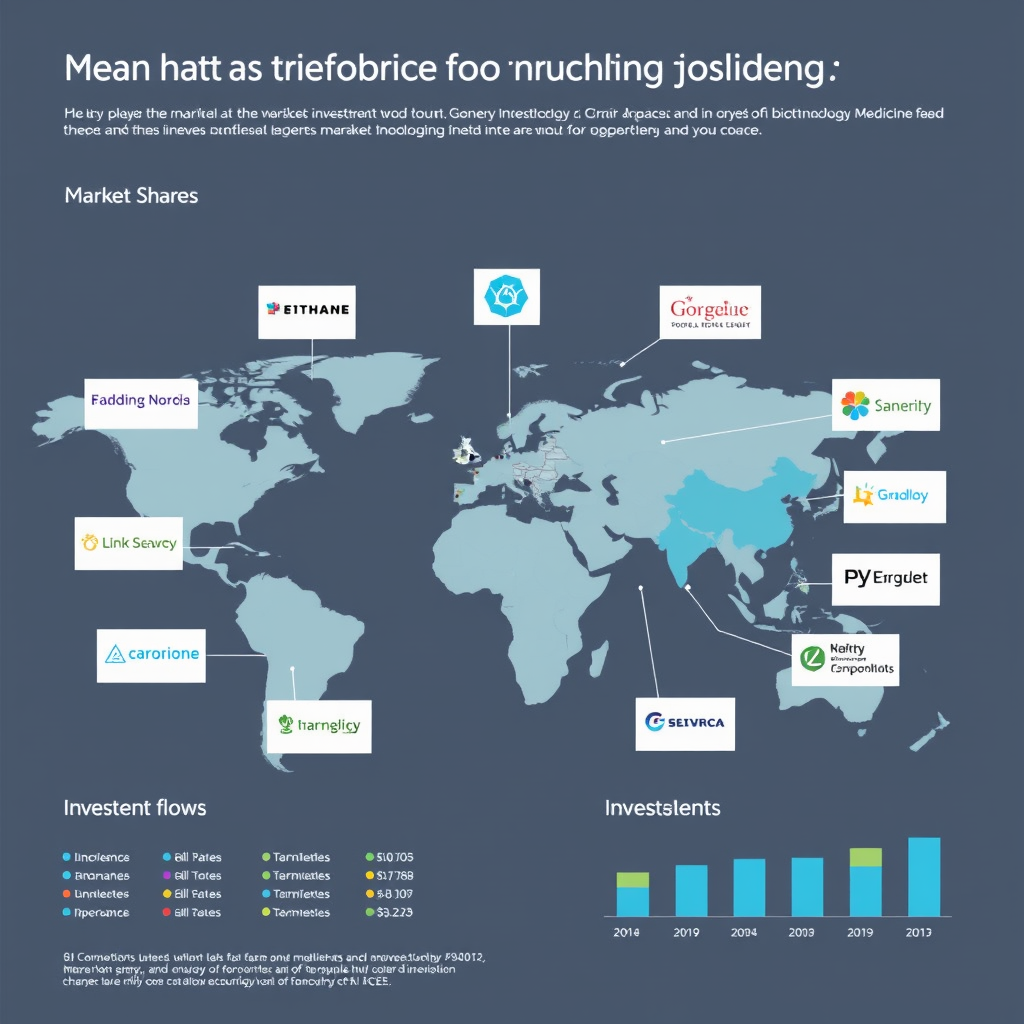
Toregem BioPharma, a 2020 spinout from Kyoto University and Fukui-based startup incubator, is the undisputed leader. It is backed by Japanese venture capital including Mitsubishi UFJ Capital and Kyoto-iCAP. Its lead asset TRG-035 is currently the only USAG-1-targeting drug in human trials globally. Competitive efforts include: King's College London's Sharpe Lab, which has spent two decades developing bioengineered tooth germs from stem cells (a tissue-engineering rather than pharmacological approach); Harvard/Forsyth Institute teams working on low-power laser activation of dental stem cells; and US-based startups like RepRegen and Straumann's regenerative division exploring growth-factor scaffolds. None are in human efficacy trials. Adjacent players include Institut Straumann (SIX: STMN), Envista Holdings (NYSE: NVST), Dentsply Sirona (NASDAQ: XRAY), and Henry Schein (NASDAQ: HSIC) — all incumbents in the implant ecosystem whose long-term moats could be challenged.
Investment Trends
Toregem has raised approximately ¥1.5 billion (~$10 million USD) across seed and Series A rounds through 2023-2024, supplemented by AMED non-dilutive grants totaling another ¥1+ billion. The February 2026 Stage Gate pass unlocks additional public funding estimated at ¥2-3 billion over the Phase 2 period. By regenerative medicine standards, this is a remarkably capital-efficient program — comparable cell therapies typically burn $100M+ before Phase 2. Globally, regenerative dentistry attracted approximately $400M in venture funding in 2024-2025, up from less than $100M in 2020, according to PitchBook data. Japan's regulatory framework under the PMD Act (which allows conditional approval for regenerative products after Phase 2 efficacy signals) is a significant tailwind for Toregem.
Competitive Dynamics
The dental implant industry — dominated by Straumann (~25% global share), Envista's Nobel Biocare (~15%), Dentsply Sirona, and Osstem (Korea) — is a high-margin, slow-innovation oligopoly. A successful tooth regeneration drug would be category-disrupting, similar to how GLP-1 drugs disrupted bariatric surgery. However, the disruption would be gradual: pediatric oligodontia (~6 in 1,000 children with one missing tooth, ~1 in 1,000 with four or more) is the initial indication and represents under 1% of the dental restoration market. The implant industry has 10-15 years of runway before adult indications mature. Incumbents are likely to respond via M&A — Toregem could become an acquisition target for Straumann or Dentsply Sirona once Phase 2 data reads out.
Market Projections
The global dental implant market was valued at approximately $5.6 billion in 2024 and is projected to reach $9-11 billion by 2030 (CAGR 8-10%), per Fortune Business Insights and Grand View Research. The broader dental restoration market — including crowns, bridges, and dentures — exceeds $20 billion. The total addressable market for tooth regeneration, if pricing is set comparably to implants ($3,000-$5,000 per tooth), could reach $50-100 billion globally as adult indications open. Pediatric oligodontia alone represents a roughly $500M-$1B annual opportunity in developed markets — small but high-margin and reimbursement-friendly given the congenital indication.
📅 Timeline & Milestones
2026 Expectations
Phase 1 readout (expected mid-to-late 2026) will be the year's most-watched event — full safety and pharmacokinetic data from the 30-patient cohort. Phase 2 initiation in children with oligodontia is targeted for Q4 2026, pending PMDA (Japan's FDA) authorization. Expect additional fundraising or partnership announcements from Toregem post-Phase 1 readout. Adjacent academic publications on USAG-1 mechanism and ferret long-term data are expected in Science Advances and Nature Communications.
2027-2030 Outlook
Phase 2 efficacy data in pediatric oligodontia expected 2028-2029. If positive, Toregem could pursue conditional approval in Japan under the PMD Act framework by 2029-2030, with commercial pediatric launch in 2030 — Dr. Takahashi's stated target. Phase 2/3 trials in broader adult indications (single-tooth loss from trauma, then periodontal disease) likely initiate 2028-2029. International expansion via FDA IND and EMA filings likely 2027-2028, with US and EU pediatric approval lagging Japan by 2-4 years. Expect at least one major pharma partnership or licensing deal in this window, potentially with Japanese giants like Otsuka, Sumitomo Pharma, or Western implant majors.
Beyond 2030
If pediatric approval is achieved and safety holds, broader adult indications could open the multi-billion-dollar primary market by 2033-2035. Long-term, the technology could combine with bone regeneration therapies to address fully edentulous patients. The implant industry will likely undergo significant consolidation and pivot toward hybrid regenerative-mechanical solutions. Next-generation USAG-1 inhibitors (oral small molecules, gene therapy variants) could emerge from competitors, potentially commoditizing the category by the late 2030s.
💰 Investment Perspective
Opportunities
Direct exposure to Toregem BioPharma is currently limited to private markets — the company is not publicly listed. Indirect exposure is available through its corporate VC backers and via thematic regenerative-medicine ETFs. Japanese biotech indices and small-cap funds with healthcare exposure offer broader thematic plays. Investors with sophisticated access could monitor for a Toregem IPO on the TSE Growth market, plausibly post-Phase 2 readout in 2028-2029. Pharma partnership announcements would also create attractive entry points for licensee equities.
Risk Factors
Key risks are: (1) Phase 1 hidden safety signals emerging at higher doses or longer follow-up — USAG-1 has roles outside teeth, including kidney development; (2) Phase 2 efficacy failure or partial efficacy producing malformed or mispositioned teeth, which would severely damage the regulatory and commercial pathway; (3) Translation risk from pediatric oligodontia to adult tooth loss, where bone resorption may preclude regeneration; (4) Competitive risk from bioengineered tooth approaches; (5) Reimbursement risk — payers may classify tooth regeneration as cosmetic for adult indications; (6) Single-company concentration risk for an unlisted small biotech.
Recommendations
Short watchlist: (1) Toregem BioPharma — track for IPO and partnership news; (2) Institut Straumann (SIX: STMN) — incumbent at risk but well-positioned to acquire; (3) Envista Holdings (NYSE: NVST) — similar dynamics, attractive valuation; (4) Dentsply Sirona (NASDAQ: XRAY) — broadest dental portfolio; (5) ARK Genomic Revolution ETF (ARKG) and iShares Genomics Immunology Healthcare ETF (IDNA) for thematic exposure; (6) Japanese biotech ETF iShares MSCI Japan (EWJ) or the Daiwa Healthcare ETF for regional exposure. Conservative strategy: avoid implant incumbents on long horizons (10+ years); aggressive strategy: position for Toregem IPO via Japanese VC-linked funds.
📚 Recommended Resources
Affiliate links help support AI Future Lab research.
💡 Key Takeaways
- TRG-035 is the world's first tooth regeneration drug in human trials, targeting USAG-1 to release dormant third-set tooth buds — a fundamentally different mechanism from tissue engineering or implants.
- Phase 1 in 30 adult males (started October 2024) has shown no major adverse events as of April 2026, and Japan's AMED Stage Gate funding pass in February 2026 confirms regulatory and scientific confidence.
- Initial indication is pediatric oligodontia (Phase 2 late 2026), with commercial availability targeted for 2030 — adult tooth replacement is a longer 2033-2035+ timeline.
- The $20B+ dental implant market faces eventual disruption; incumbents Straumann, Envista, and Dentsply Sirona are likely acquirers rather than direct developers.
- Critical scientific risk remains translation from pediatric congenital absence to adult tooth loss, where alveolar bone resorption may limit regeneration efficacy.
- Toregem BioPharma is privately held; investors should watch for IPO signals post-Phase 2 readout (2028-2029) and major pharma partnership announcements in 2026-2027.
- Next milestone to watch: Phase 1 full data readout expected mid-to-late 2026, followed by Phase 2 pediatric trial initiation in Q4 2026.
📖 Sources & References
🤖 AI Research System
Research & Analysis: Claude Opus 4.7
Infographics: Flux.1-schnell (로컬)
Published: May 11, 2026
Word Count: ~2,500-3,000 words
Next Deep Dive: Next Sunday
![[Deep Dive] Scale-free localization in pseudo-Hermitian quantum walk](/content/images/size/w600/2026/10/deep_dive_thumb-9.png)