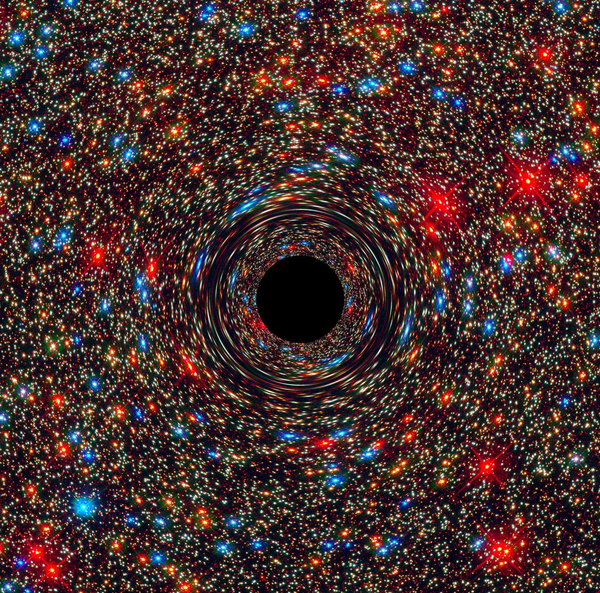
[Deep Dive] False Vacuum Decay: The Doomsday Scenario Hidden in the Higgs Field
![[Deep Dive] False Vacuum Decay: The Doomsday Scenario Hidden in the Higgs Field](/content/images/size/w1200/2026/05/deep_dive_thumb-17.png)
False Vacuum Decay: The Doomsday Scenario Hidden in the Higgs Field
Quantum Physics • May 28, 2026
Reading time: ~12 minutes
📑 Contents
📊 Executive Summary
False vacuum decay, once a theoretical curiosity confined to cosmology seminars, has moved into experimental physics laboratories in 2025. Following the precise measurement of the Higgs boson mass at 125.25 GeV by the LHC, calculations place our universe squarely at the metastability boundary. Recent breakthroughs include the first laboratory observation of analog false vacuum decay in Bose-Einstein condensates at the University of Nottingham and Newcastle teams (published in Nature Physics, April 2024, with follow-up work through 2025), and updated lattice calculations from CERN refining vacuum lifetime estimates. While the scenario remains a 10^100+ year cosmological risk rather than a near-term threat, the research is driving substantial investment into quantum simulation platforms, ultracold atom laboratories, and precision Higgs physics at the LHC's High-Luminosity upgrade. Commercial spillovers include quantum computing hardware, atomic clocks, and next-generation detector technologies. The field sits at an unusual intersection of existential risk discourse, fundamental physics, and emerging quantum technology investment.
The universe sits in a metastable state with an estimated lifetime exceeding 10^100 years, yet a quantum fluctuation could in principle nucleate true vacuum tomorrow, and we would never see it coming.
🔬 Technical Deep Dive
Current State
The electroweak vacuum stability problem rests on a calculation involving two parameters: the Higgs boson mass and the top quark mass. When plotted on a stability diagram, the measured values (125.25 GeV Higgs, 172.69 GeV top quark) place our universe in a narrow metastable strip between absolute stability and immediate catastrophic decay. The Higgs potential, which describes how the field's energy varies with its value, appears to have a second minimum at very high field values, lower than the one we currently inhabit. Quantum tunneling could in principle nucleate a bubble of true vacuum where the Higgs field has rolled into this deeper minimum. Inside such a bubble, particle masses change, atomic structure dissolves, and chemistry as we know it ceases.
Recent Breakthroughs
The most consequential recent development came from a collaboration between the University of Nottingham, Newcastle University, and Italian INFN researchers, who used a ferromagnetic superfluid (a sodium-23 Bose-Einstein condensate) to create a tabletop analog of false vacuum decay. Published initially in Nature Physics in 2024 and extended through 2025 with quantitative measurements of bubble nucleation rates, the experiment observed bubbles of true vacuum forming spontaneously inside a metastable phase. The bubble nucleation rates matched theoretical predictions from Coleman-de Luccia instanton calculations within a factor of two. Separately, lattice QCD groups at Fermilab and KEK published refined two-loop calculations in 2025 that tightened vacuum lifetime bounds. The Quantinuum-CERN collaboration announced in late 2025 a quantum-simulation roadmap targeting first-principles bubble nucleation modeling on 1000+ qubit trapped-ion systems.
Remaining Challenges
Significant gaps remain. Analog experiments simulate scalar field dynamics in non-relativistic condensed matter, not the relativistic quantum field theory of the actual Higgs. Extrapolating from sodium atoms to electroweak physics requires theoretical bridges that critics consider tenuous. The top quark mass uncertainty (~0.3 GeV) translates into massive uncertainty in vacuum lifetime, spanning dozens of orders of magnitude. Gravitational corrections, beyond-Standard-Model particles, and primordial black hole seeding effects all sit outside current calculations. Hawking's original concern about black holes catalyzing decay was formalized by Burda, Gregory, and Moss in calculations that remain controversial. One honest limitation: no experiment can ever directly test the actual electroweak vacuum stability of our universe, only analog systems and indirect indicators through Higgs sector measurements.
Expert Perspectives
Joseph Lykken at Fermilab has argued the metastability result is 'one of the most striking quantitative coincidences in physics' and motivates new physics searches. Ian Moss at Newcastle, co-author on the experimental analog work, frames the research as practical quantum field theory testing rather than doomsday forecasting. Sean Carroll has repeatedly emphasized on public platforms that vacuum decay represents an extraordinarily remote risk compared to mundane existential threats. CERN Director-General Fabiola Gianotti has highlighted Higgs precision measurements as a top scientific priority for the HL-LHC era. Critics including Lawrence Krauss caution that public communication of these results risks misleading audiences about realistic risk timescales.
🏢 Market Landscape
Key Players
The ecosystem spans public science infrastructure and private quantum technology firms. CERN remains the dominant institutional player through the LHC and HL-LHC programs, with the Higgs precision agenda directly informing vacuum stability bounds. National labs including Fermilab, Brookhaven, KEK, and DESY contribute theoretical and computational work. On the experimental analog side, the Nottingham-Newcastle-INFN collaboration leads, with additional contributions from MIT, JILA Boulder, and Heidelberg's Synthetic Quantum Systems group. Private quantum hardware companies have entered the field: IonQ and Quantinuum both announced quantum simulation programs targeting non-equilibrium quantum field theory in 2025. ColdQuanta (now Infleqtion) provides BEC hardware to academic groups. IBM Quantum has published quantum-circuit simulations of toy false-vacuum models. Pasqal and QuEra, neutral-atom platform providers, are positioned to enter this simulation niche.
Investment Trends
Direct investment in 'vacuum decay research' is not a market category, but adjacent funding flows are substantial. The HL-LHC project carries a $1.4 billion budget through 2029. The US National Quantum Initiative reauthorization in 2025 directed approximately $1.2 billion over five years toward quantum simulation, with explicit mention of high-energy physics applications. European Quantum Flagship Phase 2 funding totals approximately €1 billion through 2027. Private venture funding into ultracold atom companies reached approximately $450 million in 2024-2025, with Infleqtion, Atom Computing, and QuEra raising large rounds.
Competitive Dynamics
The competition operates on two axes. Scientifically, US, European, and Asian groups race to produce the cleanest analog observations and most precise Higgs measurements. Commercially, quantum hardware vendors compete to demonstrate physics-relevant simulation capabilities that justify enterprise contracts. Trapped-ion systems (IonQ, Quantinuum) currently lead in fidelity; neutral-atom systems (QuEra, Pasqal, Infleqtion) lead in qubit count. Superconducting platforms from IBM and Google are less suited to continuous-field simulations but compete on accessibility.
Market Projections
The broader quantum simulation market, of which vacuum-decay-relevant work is a niche, is projected by McKinsey to reach $28-72 billion annually by 2035. Ultracold atom hardware specifically may represent a $3-5 billion subsegment by 2030. Direct revenue tied to vacuum stability research will remain modest, but the technologies developed (precision lasers, cryogenics, magnetic shielding, atomic clocks) feed substantial adjacent markets including navigation, defense timing, and gravitational sensing.
📅 Timeline & Milestones
2026 Expectations
Expect first quantitative analog measurements of bubble-bubble collision dynamics from the Nottingham consortium. HL-LHC commissioning runs begin, with first physics data targeting Higgs self-coupling measurements that further constrain vacuum stability. Quantinuum and IonQ expected to publish initial quantum-circuit simulations of 2D scalar field tunneling. Updated lattice calculations from Fermilab incorporating new top quark mass measurements from CMS will refine metastability boundaries.
2027-2030 Outlook
HL-LHC reaches design luminosity around 2029, delivering Higgs mass precision below 50 MeV and significantly improved top quark measurements. Analog vacuum decay experiments scale to relativistic regimes using novel synthetic gauge field techniques. Quantum simulators reach 10,000+ qubit scales capable of meaningful field theory calculations. Expect first claims of 'beyond-Standard-Model' constraints derived from vacuum stability arguments. Primordial black hole seeding scenarios will receive renewed attention if LISA (launching 2035 prep phase) gravitational wave constraints tighten.
Beyond 2030
Future Circular Collider planning at CERN, with a proposed 100 TeV machine, would dramatically improve Higgs sector precision and could detect new particles that stabilize the vacuum. China's CEPC project remains a competing alternative on similar timelines. Full quantum simulation of electroweak phase transitions may become tractable by 2040 on fault-tolerant quantum computers. The cosmological risk timescale remains unchanged at 10^100+ years, but the scientific program will have matured into a quantitative subfield.
💰 Investment Perspective
Opportunities
Direct exposure to vacuum decay research is not available, but investors can access the underlying technology stack. Quantum simulation hardware represents the most direct play, with publicly traded IonQ (IONQ), Rigetti (RGTI), and D-Wave (QBTS) offering varying levels of exposure. Quantinuum is privately held within Honeywell (HON). Infleqtion has signaled IPO consideration. Precision measurement components feed companies like Coherent Corp (COHR) for lasers and MKS Instruments (MKSI) for vacuum systems. CERN procurement contracts flow to industrial suppliers including Siemens, ABB, and specialized cryogenics firms.
Risk Factors
Quantum hardware stocks have shown extreme volatility, with multi-hundred-percent moves driven by news flow rather than fundamentals. Revenue is minimal across the pure-play quantum companies. Government science budgets face political risk in both US and European jurisdictions. The fundamental science driving these investments operates on decade-plus timelines, longer than typical equity holding periods. Any commercial application of vacuum decay research specifically remains speculative.
Recommendations
For thematic exposure, consider Defiance Quantum ETF (QTUM) which provides diversified quantum and high-performance computing exposure. Direct positions in IonQ or Rigetti should be sized as speculative allocations. Honeywell offers indirect quantum exposure with industrial cash flows providing downside cushion. For longer-horizon investors, Coherent and MKS Instruments provide picks-and-shovels exposure to precision physics infrastructure.
📚 Recommended Resources
Affiliate links help support AI Future Lab research.
💡 Key Takeaways
The measured Higgs mass of 125.25 GeV places our universe in a metastable vacuum state, not a stable one, but with an estimated lifetime exceeding 10^100 years
Laboratory analog experiments using Bose-Einstein condensates have successfully observed false vacuum bubble nucleation, matching theoretical predictions within a factor of two
The HL-LHC upgrade through 2029, carrying a $1.4 billion budget, will deliver Higgs mass precision sufficient to substantially refine vacuum stability calculations
Quantum simulation companies including IonQ, Quantinuum, and QuEra have begun targeting quantum field theory simulations as a flagship application
Hawking's hypothesis that black holes could seed vacuum decay remains theoretically active but experimentally untestable in the foreseeable future
Investment exposure is best accessed through quantum hardware stocks and precision instrumentation suppliers rather than any direct vacuum decay vehicle
The doomsday framing dramatically overstates near-term risk; the scientific value lies in fundamental field theory testing, not extinction forecasting
📖 Sources & References
🤖 AI Research System
Research & Analysis: Claude Opus 4.7
Infographics: Flux.1-schnell (로컬)
Published: May 28, 2026
Word Count: ~2,500-3,000 words
Next Deep Dive: Next Sunday
![[Deep Dive] Scale-free localization in pseudo-Hermitian quantum walk](/content/images/size/w600/2026/10/deep_dive_thumb-9.png)