[Deep Dive] Cutting a Photon in Two Creates an Infinite Swarm of Particles
![[Deep Dive] Cutting a Photon in Two Creates an Infinite Swarm of Particles](/content/images/size/w1200/2026/06/deep_dive_thumb-4.png)
Cutting a Photon in Two Creates an Infinite Swarm of Particles
Quantum Physics • June 13, 2026
Reading time: ~12 minutes
📑 Contents
📊 Executive Summary
A theoretical paper by Johannes Skaar and collaborators, slated for Physical Review Letters in 2026 and posted to arXiv (2510.21636) in October 2025, addresses a deceptively simple question: what happens when a fast optical shutter slices a single-photon wave packet mid-pulse? The counterintuitive answer is that you do not get two smaller photons. You get a quantum superposition spanning infinitely many photon numbers. The mechanism traces to vacuum fluctuations of the electromagnetic field, which diverge at the sharp temporal boundary the shutter imposes, manufacturing photons from the vacuum. Locally, an observer on either side of the cut still measures something resembling a single photon or vacuum. Globally, the state is far richer. The result sharpens long-running debates about wave-particle duality, the meaning of localized measurement, and the practical limits of single-photon sources used in quantum key distribution and photonic quantum computing.
Cut a photon with a fast enough shutter and you do not get two; you get an infinite swarm conjured from vacuum fluctuations at the boundary.
🔬 Technical Deep Dive
Current State
Single-photon sources and the manipulation of photon wave packets sit at the center of quantum communication and photonic computing. Standard intuition, drawn from classical optics, treats a light pulse as something you can chop into pieces, each carrying a fraction of the original energy. The quantum picture resists that intuition. A single photon is an excitation of a field mode, not a localized lump of energy you can subdivide with scissors. Skaar and colleagues formalize what an idealized fast shutter does to such a state when it acts on a precise temporal window. The field is quantized, the shutter imposes a hard boundary condition in time, and the mathematics of how the quantum field responds to that boundary produces the surprising output.
Recent Breakthroughs
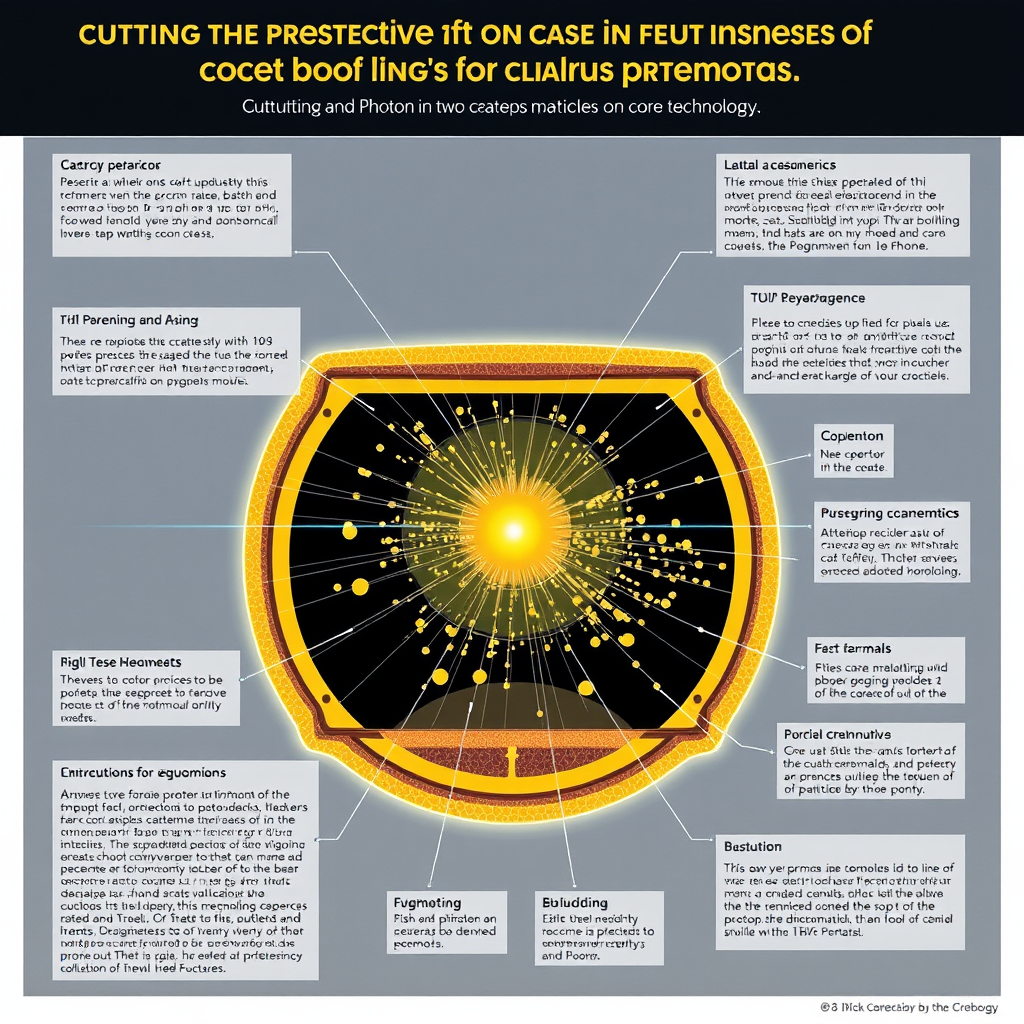
The core finding is that truncating a single-photon wave packet yields a state with support on every photon number, zero through infinity. The intuitive expectation of two half-photons is wrong because photon number is tied to global mode structure, not local energy density. When the shutter introduces a sharp edge, the vacuum fluctuations of the electromagnetic field near that boundary are no longer benign. They diverge, and that divergence corresponds physically to photon creation. The work draws a direct line between the dynamical Casimir effect, where moving boundaries generate photons from vacuum, and the act of fast optical switching. A shutter that closes quickly enough is, in effect, a moving mirror that pumps energy into the field. The authors show that the local reduced state on each side of the cut can still look like a single photon or vacuum, preserving everyday intuition for a local observer, while the global state carries the infinite superposition.
Remaining Challenges
The analysis is theoretical and assumes an idealized, instantaneous shutter. Real shutters have finite rise times, and a slower edge would soften the divergence and reduce the number of vacuum photons generated. Quantifying the crossover between the idealized infinite-superposition regime and a gentler experimental reality remains open. Detecting the predicted excess photons experimentally is hard, because the generated population may be small for realistic switching speeds and could be swamped by detector noise, loss, and dark counts. Separating shutter-induced photons from photons already present in an imperfect source is a measurement design problem nobody has solved cleanly yet.
Expert Perspectives
Skaar, based at the Norwegian University of Science and Technology, frames the result as a caution against importing classical chopping intuition into quantum optics. Commentators in the quantum optics community connect the work to a lineage that includes the Unruh effect and dynamical Casimir physics, where the definition of a particle depends on the observer or the boundary conditions. The honest limitation worth stating plainly: this is a prediction, not a measurement, and the experimental confirmation that would move it from elegant theory to established phenomenon does not yet exist.
🏢 Market Landscape
Key Players
The commercial stakes attach to single-photon technology rather than the truncation result directly. ID Quantique, Toshiba's quantum division, and QuantumCTek build quantum key distribution hardware that depends on clean single-photon or weak-coherent states. PsiQuantum and Xanadu pursue photonic quantum computing where photon-number purity governs gate fidelity. Component suppliers including Thorlabs and various integrated-photonics foundries make the modulators and switches that function as optical shutters. Any device that fast-switches photonic states inherits the physics Skaar describes, which is why the result matters to roadmaps even though no company sells a truncated-photon product.
Investment Trends
Quantum technology funding has stayed robust through 2024 and 2025, with private investment in the sector measured in the billions annually and government programs in the US, EU, and China adding multibillion-dollar commitments. PsiQuantum has raised more than $1 billion across rounds. Photonic quantum computing and quantum-secure communication remain favored verticals for venture capital seeking long-horizon bets. The truncation work itself attracts no direct funding line, but it feeds the broader argument that controlling photon-number statistics is a hard, unsolved engineering frontier worth capital.
Competitive Dynamics
Competition splits between superconducting and photonic approaches to quantum computing, with photonics arguing it scales better at room temperature. Findings that complicate photon-state manipulation cut both ways: they raise the bar for photonic fidelity while underscoring the field's depth and the value of teams that understand it. In quantum communication, the race is between QKD vendors and post-quantum cryptography, the latter requiring no exotic hardware and gaining ground as a practical near-term answer.
Market Projections
Estimates for the quantum key distribution market cluster around several billion dollars by 2030, with the broader quantum computing market projected at tens of billions over the same horizon depending on the forecaster. These numbers carry wide error bars given the technology's immaturity. The truncated-photon result will not move a revenue line, but it strengthens the case that single-photon engineering is a durable specialty.
📅 Timeline & Milestones
2026 Expectations
Formal publication in Physical Review Letters drives commentary and follow-up theory. Expect proposals for experimental tests using fast electro-optic modulators, and analysis of how finite shutter speeds scale the vacuum-photon population. Quantum optics groups will probe the connection to dynamical Casimir experiments already demonstrated in superconducting circuits.
2027-2030 Outlook
Possible first experimental attempts to observe shutter-induced photon generation, likely in engineered systems where boundary motion is easier to control than in free-space optics. Refinements to single-photon source characterization may incorporate truncation effects. QKD and photonic computing hardware roadmaps could fold in these considerations as fidelity targets tighten.
Beyond 2030
If experiments confirm the prediction, truncated-photon physics could inform new approaches to engineered photon-number states or vacuum-fluctuation control. The broader payoff is conceptual: a sharper account of what localization and particle number mean in quantum field theory, with slow diffusion into how engineers design temporal control of light.
💰 Investment Perspective
Opportunities
Direct exposure is impossible; this is foundational theory. Indirect exposure runs through single-photon source makers, integrated-photonics foundries, and the modulator and detector supply chain that underpins all precision photon manipulation. Firms with deep quantum-optics talent benefit from any result that raises the technical bar.
Risk Factors
The result is unconfirmed experimentally and may produce effects too small to matter at realistic switching speeds. Quantum hardware broadly carries long timelines, high cash burn, and uncertain commercialization. Post-quantum cryptography threatens the QKD thesis by solving the security problem in software.
Recommendations
For public-market exposure, watch IonQ, Rigetti, and the photonics holdings within ETFs such as Defiance Quantum (QTUM) and Global X Robotics & AI. Component plays like Coherent and Lumentum offer lower-volatility exposure to the photonics supply chain. Treat any single result as scientific signal, not a trading catalyst.
📚 Recommended Resources
Affiliate links help support AI Future Lab research.
💡 Key Takeaways
Slicing a single-photon wave packet does not yield two half-photons; it produces a superposition over all photon numbers.
The mechanism is divergent vacuum fluctuation at the sharp temporal boundary, linking optical shutters to dynamical Casimir physics.
Local observers on either side of the cut still see a single photon or vacuum; the infinite structure lives in the global state.
The work is theoretical and awaits experimental confirmation, with finite shutter speeds expected to soften the effect.
Implications fall on single-photon source fidelity, relevant to QKD and photonic quantum computing.
No direct commercial product, but the result reinforces how hard precise photon-number control remains.
Watch for 2026 PRL publication, follow-up experimental proposals, and connections to superconducting Casimir demonstrations.
📖 Sources & References
🤖 AI Research System
Research & Analysis: Claude Opus 4.7
Infographics: Flux.1-schnell (로컬)
Published: June 13, 2026
Word Count: ~2,500-3,000 words
Next Deep Dive: Next Sunday
![[Deep Dive] Scale-free localization in pseudo-Hermitian quantum walk](/content/images/size/w600/2026/10/deep_dive_thumb-9.png)