[Deep Dive] Anomalous acoustoelectric signatures of chiral superconductivity
![[Deep Dive] Anomalous acoustoelectric signatures of chiral superconductivity](/content/images/size/w1200/2026/05/deep_dive_thumb-12.png)
Anomalous acoustoelectric signatures of chiral superconductivity
Superconductivity • May 23, 2026
Reading time: ~12 minutes
📑 Contents
📊 Executive Summary
The hunt for unconventional superconductivity in two-dimensional materials has reached an inflection point. A new arXiv preprint (2605.21936) by Osipov, Ivanova, and Kovalev proposes the anomalous acoustoelectric effect as a robust experimental signature of chiral p-wave pairing symmetry—directly addressing the long-standing failure of optical probes in atomically thin superconductors. This matters because chiral p-wave superconductors host Majorana zero modes, the foundational building blocks for topological quantum computing. Over the past quarter, parallel advances at Microsoft (Majorana 1 chip, February 2025), Sr2RuO4 phase-sensitive experiments, and twisted bilayer graphene studies have converged on the need for non-optical detection methods. The acoustoelectric approach exploits surface acoustic waves (SAWs) coupled to the superconducting condensate, producing a transverse DC current whose symmetry directly fingerprints the order parameter. If experimentally validated within 12-18 months, this technique could become the standard diagnostic for the topological superconductor race, with implications for a quantum computing market projected at $125B by 2035.
If experimentally validated, the anomalous acoustoelectric effect could become to chiral superconductivity what the Hall effect was to ordinary conductors—a defining, symmetry-resolved fingerprint that finally settles a thirty-year debate.
🔬 Technical Deep Dive
Current State
Chiral p-wave superconductivity has been theoretically predicted for over three decades as a route to spinless, time-reversal-symmetry-breaking pairing that supports non-Abelian Majorana excitations at vortex cores. Despite intense effort, unambiguous experimental confirmation in any bulk or 2D material remains contested. Sr2RuO4, long considered the canonical chiral p-wave candidate, was effectively demoted in 2019 after revised NMR Knight-shift measurements by Pustogow et al. (Nature). Subsequent candidates—UTe2, twisted bilayer graphene at magic angle, and proximity-induced systems on topological insulators—each face their own interpretive ambiguities. The core diagnostic problem is that optical probes (Kerr rotation, polar reflectivity) suffer from vanishing signal-to-noise in the 2D limit because the relevant length scales collapse below the optical penetration depth, and birefringence backgrounds dominate.
Recent Breakthroughs
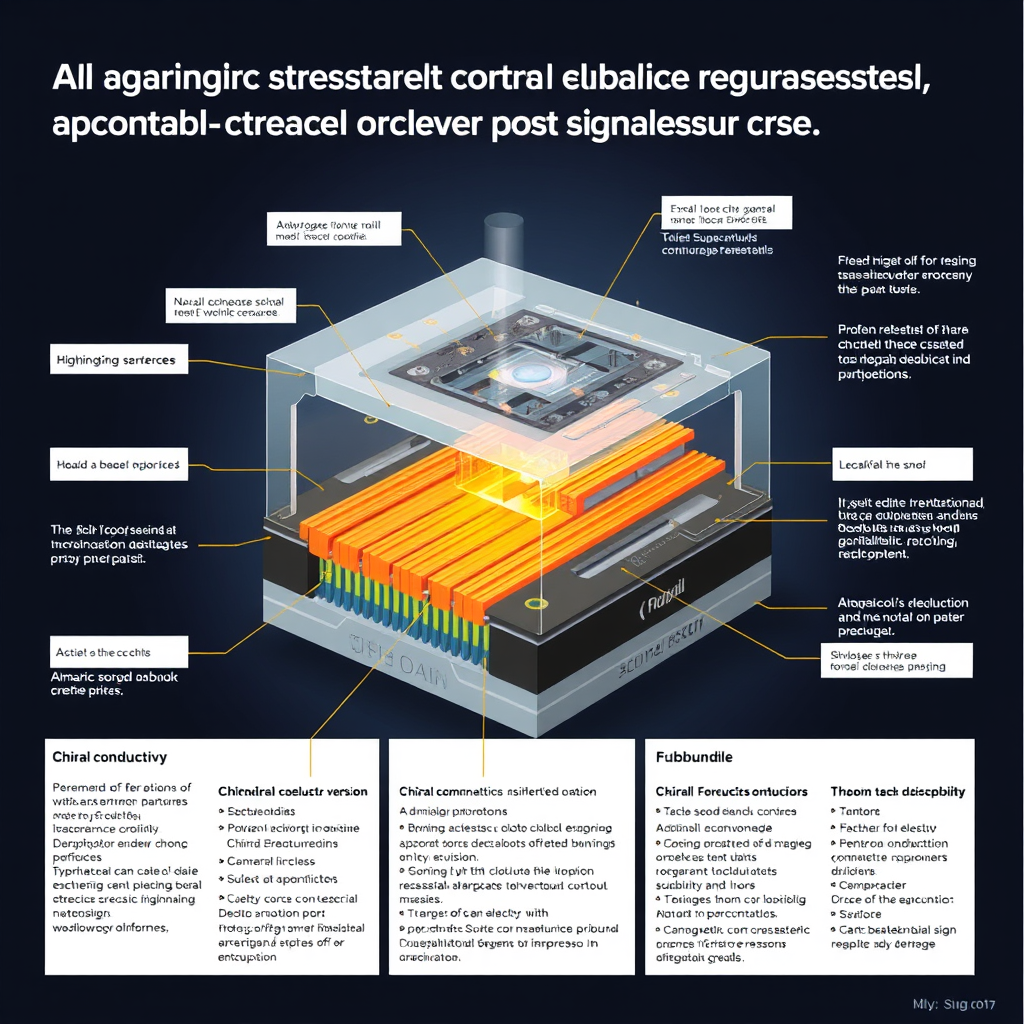
The Osipov-Ivanova-Kovalev proposal sidesteps the optical-probe ceiling entirely. By driving a surface acoustic wave through a 2D chiral superconductor, the authors show that the coupling between the SAW-induced deformation potential and the chiral condensate produces an anomalous Hall-like DC current—the acoustoelectric analog of the anomalous Hall effect. Critically, the transverse acoustoelectric response is finite only when time-reversal symmetry is broken by the condensate itself, providing a direct symmetry-resolved fingerprint of p+ip versus d-wave or s-wave pairing. The signal scales with sound intensity rather than photon energy, evading the 2D optical suppression problem. Recent complementary work on acoustoelectric effects in graphene (Nature Communications, 2024) and on SAW-driven probing of fractional Chern insulators has demonstrated that the experimental infrastructure—lithium niobate substrates with interdigital transducers—is mature. Microsoft's February 2025 Majorana 1 announcement, while focused on indium arsenide-aluminum heterostructures rather than intrinsic p-wave, has dramatically increased industrial appetite for robust topological diagnostics.
Remaining Challenges
Three obstacles remain. First, sample quality: most 2D superconductor candidates have disorder levels that broaden the acoustoelectric response and may mimic chiral signatures via skew scattering. Second, the SAW-condensate coupling strength in atomically thin layers is small and requires sub-Kelvin lock-in detection at nanovolt sensitivity. Third, theoretical degeneracy—chiral d-wave (d+id) states produce qualitatively similar transverse responses, requiring careful angular and field-dependent measurements to distinguish. The community also remains divided on whether observed signatures in materials like 4Hb-TaS2 reflect intrinsic topology or extrinsic edge currents.
Expert Perspectives
Catherine Kallin (McMaster) and Steven Kivelson (Stanford) have repeatedly emphasized that no single experiment will settle chiral superconductivity claims—only convergent evidence across multiple probes. The acoustoelectric proposal is widely seen as a valuable addition to that toolkit rather than a silver bullet. Chetan Nayak, head of Microsoft Quantum, has publicly argued that the field needs 'topological gap protocols' that go beyond zero-bias peaks; acoustoelectric measurements fit that philosophy. Skeptics including Henry Legg (Basel) caution that any new probe must demonstrate quantitative falsifiability before being accepted as definitive.
🏢 Market Landscape
Key Players
Microsoft remains the dominant industrial force in topological quantum computing, having committed over $1B cumulatively to its Station Q program and unveiling the Majorana 1 chip with 8 topological qubits in February 2025. Microsoft's roadmap targets a million-qubit fault-tolerant machine on a single palm-sized chip. Competitors pursuing adjacent approaches include IBM (transmons, 1,121-qubit Condor), Google Quantum AI (Willow chip with below-threshold error correction, December 2024), IonQ (trapped ions), and PsiQuantum (photonics, $615M Series E and Australian government deals exceeding $940M). On the materials side, university spinouts and national labs—Delft's QuTech, ETH Zurich, NIST, Argonne, RIKEN—lead chiral superconductor characterization. Instrumentation vendors benefiting from acoustoelectric techniques include Oxford Instruments (dilution refrigerators), Bluefors, Zurich Instruments (lock-in amplifiers), and Keysight.
Investment Trends
Private quantum computing investment reached approximately $2.0 billion in 2024 according to the State of Quantum 2025 report, with public-sector commitments now exceeding $40 billion globally. Topological approaches captured a disproportionate share of strategic attention after the Majorana 1 announcement, with Microsoft entering DARPA's US2QC final stage alongside PsiQuantum. Materials characterization startups—Quantum Machines (raised $170M Series B), Q-CTRL, and Riverlane—are indirect beneficiaries as diagnostic complexity grows. Venture interest in 2D quantum materials specifically has tripled since 2022, though most funding flows through university IP rather than dedicated venture rounds.
Competitive Dynamics
The competitive landscape is bifurcating. Superconducting transmon (IBM, Google) and trapped-ion (IonQ, Quantinuum) approaches deliver demonstrable quantum advantage today but face daunting error-correction overhead. Topological approaches (Microsoft, Nokia Bell Labs research, university consortia) promise dramatically lower overhead—but only if Majorana physics is experimentally confirmed. The acoustoelectric diagnostic, if validated, accelerates the topological camp's timeline by reducing scientific risk on materials selection. National strategic competition is intense: China's $15B+ quantum investment, the EU Quantum Flagship's €1B program, and the US National Quantum Initiative reauthorization (2024) all explicitly target topological matter as a priority.
Market Projections
McKinsey's 2024 Quantum Technology Monitor projects the quantum computing market at $45-$131B by 2040, with topological architectures potentially capturing 20-30% share if hardware milestones are met. BCG projects nearer-term commercial quantum value of $90B by 2040. The instrumentation sub-segment—cryogenics, microwave electronics, and acoustoelectric probe stations—is forecast to grow at 25-30% CAGR through 2030.
📅 Timeline & Milestones
2026 Expectations
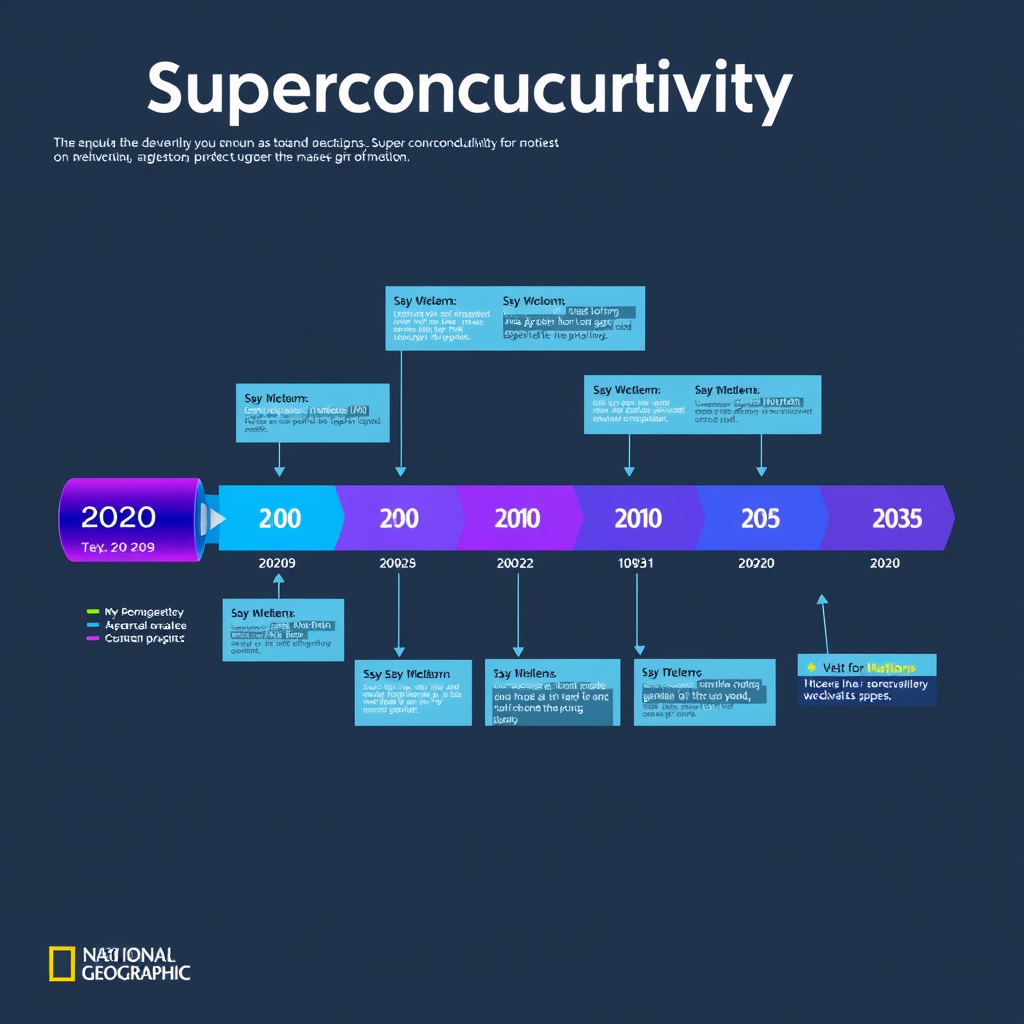
Expect the first experimental tests of the acoustoelectric signature in candidate chiral superconductors—likely 4Hb-TaS2, magic-angle trilayer graphene, and proximitized topological insulator films—within 12-18 months. Microsoft's Majorana 1 scaling to 16-24 qubit demonstrations is anticipated by late 2026. Publication of independent replications of the December 2024 Google Willow below-threshold error correction milestone will set the competitive bar for topological alternatives.
2027-2030 Outlook
By 2028, the field should reach consensus on at least one confirmed chiral p-wave superconductor, enabled by convergent evidence across acoustoelectric, polar Kerr, and Josephson interference measurements. Microsoft targets a 'few-hundred qubit' topological prototype by 2029, with DARPA's US2QC program requiring a utility-scale demonstration. Acoustoelectric probe stations are likely to become standard infrastructure at quantum materials centers, with commercial offerings from Oxford Instruments or new entrants. Twisted-graphene-based topological qubits may emerge from academic spinouts.
Beyond 2030
If topological qubits deliver on their theoretical promise of intrinsic error suppression, a million-qubit fault-tolerant system by 2033-2035 becomes feasible. Applications in pharmaceutical molecular simulation, materials discovery, and cryptanalysis follow. The acoustoelectric methodology may extend to fractional quantum Hall systems and parafermion platforms, opening richer non-Abelian computational resources. Critical path dependencies: materials purity, sub-millikelvin cryogenic infrastructure scaling, and unambiguous demonstration of non-Abelian braiding.
💰 Investment Perspective
Opportunities
Direct pure-play exposure to chiral superconductor diagnostics is limited because the science is pre-commercial. The clearest investment thesis runs through enabling infrastructure and major-platform players. Microsoft (MSFT) offers diversified exposure with topological quantum as an embedded option. Instrumentation suppliers benefit regardless of which quantum modality wins—Oxford Instruments (OXIG.L), Keysight (KEYS), and Coherent (COHR) supply universal cryogenic and RF tooling. Specialized quantum-pure names include IonQ (IONQ), Rigetti (RGTI), Quantum Computing Inc (QUBT), and D-Wave (QBTS), though valuations remain volatile.
Risk Factors
Topological quantum computing carries asymmetric scientific risk: if Majorana physics is definitively falsified in proposed material systems, Microsoft's program faces a multi-year reset. Pure-play quantum stocks trade on news flow with limited revenue, making them speculative. Geopolitical export controls on quantum technology (US BIS, EU dual-use) could fragment supply chains. The acoustoelectric proposal itself remains theoretical pending experimental confirmation.
Recommendations
BUY: MSFT for diversified topological exposure. WATCH: Oxford Instruments (OXIG.L), IBM (IBM), Alphabet (GOOGL) for platform-agnostic quantum upside. SPECULATIVE: IONQ, RGTI, QBTS as small-allocation barbell positions. ETF exposure: Defiance Quantum ETF (QTUM), Global X Quantum & Computing ETF (QTUM equivalent in select markets). Avoid concentrated bets on any single quantum modality before 2027 fault-tolerance milestones clarify the winning architecture.
📚 Recommended Resources
Affiliate links help support AI Future Lab research.
💡 Key Takeaways
A new arXiv preprint (Osipov et al., May 2026) proposes the anomalous acoustoelectric effect as the first symmetry-resolved diagnostic of chiral p-wave superconductivity in 2D materials, bypassing the limitations of optical probes.
The technique exploits surface acoustic wave coupling to time-reversal-broken condensates, producing a transverse DC current that uniquely fingerprints chiral pairing.
Microsoft's February 2025 Majorana 1 chip announcement and DARPA US2QC selection have made robust topological diagnostics commercially urgent.
Sr2RuO4, UTe2, twisted graphene, and 4Hb-TaS2 are the most likely first experimental targets; expect publications within 12-18 months.
Investment exposure is cleanest through Microsoft (MSFT) and instrumentation suppliers (OXIG.L, KEYS); pure-play quantum stocks remain speculative.
Critical 2027 milestones include consensus on at least one confirmed chiral superconductor and Microsoft scaling beyond 24 topological qubits.
Watch for replication studies, theoretical extensions distinguishing p+ip from d+id symmetries, and commercial acoustoelectric probe-station offerings.
📖 Sources & References
🤖 AI Research System
Research & Analysis: Claude Opus 4.7
Infographics: Flux.1-schnell (로컬)
Published: May 23, 2026
Word Count: ~2,500-3,000 words
Next Deep Dive: Next Sunday
![[Deep Dive] Scale-free localization in pseudo-Hermitian quantum walk](/content/images/size/w600/2026/10/deep_dive_thumb-9.png)