[Deep Dive] 1/3 Fractional and Gapless Integer Quantum Anomalous Hall States in Rhombohedral Graphene
![[Deep Dive] 1/3 Fractional and Gapless Integer Quantum Anomalous Hall States in Rhombohedral Graphene](/content/images/size/w1200/2026/06/deep_dive_thumb-2.png)
1/3 Fractional and Gapless Integer Quantum Anomalous Hall States in Rhombohedral Graphene
Nanoscience • June 07, 2026
Reading time: ~12 minutes
📑 Contents
📊 Executive Summary
The discovery of the 1/3 fractional quantum anomalous Hall (FQAH) state in rhombohedral graphene, reported by Butler, Han, DiFabbio and collaborators in June 2026, closes a conspicuous gap in the moiré FQAH literature. Until now, the 1/3 state, considered the most robust filling in conventional fractional quantum Hall systems, had eluded observation in both twisted MoTe2 and rhombohedral n-layer graphene aligned to hexagonal boron nitride (RnG/hBN). Alongside the 1/3 state, the team identified gapless integer quantum anomalous Hall behavior, suggesting unusual compressible topological phases coexist with quantized transport. The result strengthens the case for graphene-based platforms as testbeds for non-Abelian anyons and topological qubits, intensifying competition with twisted semiconductor moiré systems. Implications extend across condensed matter physics, quantum computing roadmaps at Microsoft and Google, and exfoliated 2D materials supply chains, where boron nitride crystal purity remains a binding constraint on reproducibility.
The 1/3 state, the most robust and fundamental state in conventional fractional quantum Hall systems, was missing in either FQAH system until now.
🔬 Technical Deep Dive
Current State
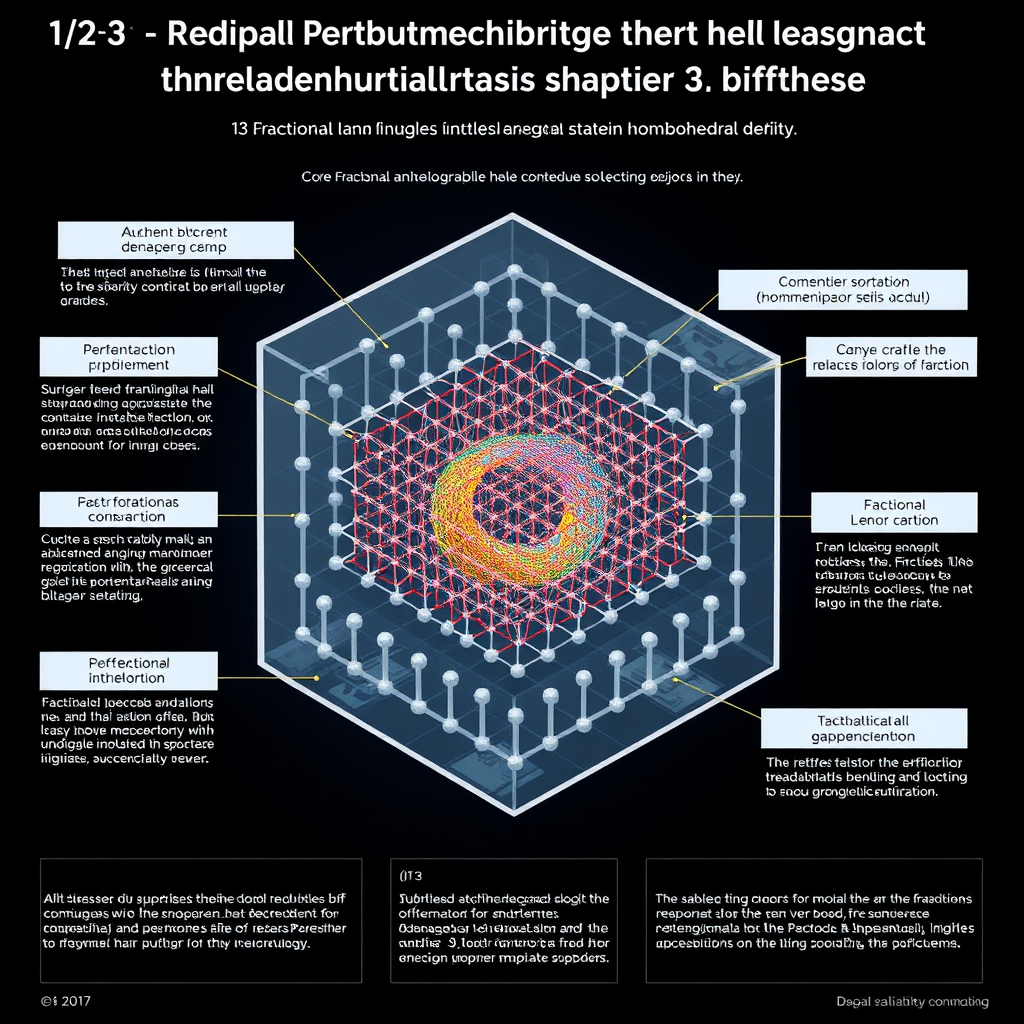
Rhombohedral graphene stacks, where successive layers are offset in an ABC pattern rather than the more common Bernal ABA arrangement, host remarkably flat low-energy bands. When aligned within roughly one degree to a hexagonal boron nitride substrate, a moiré superlattice forms that imprints a topological character on those flat bands. Strong Coulomb interactions within nearly dispersionless bands generate correlated insulating states; topology turns them into anomalous Hall phases that quantize without any applied magnetic field. Through 2024 and 2025, groups at MIT, Berkeley, Stanford, Washington, and Cornell mapped a partial Jain sequence at fillings 2/3, 3/5, 4/7, and 4/9, yet the foundational 1/3 state remained absent.
Recent Breakthroughs
The June 2026 arXiv preprint from the Long Ju group at MIT, with Butler and Han as lead authors, reports observation of the 1/3 FQAH state in rhombohedral pentalayer and hexalayer graphene aligned to hBN. The team also documents a gapless integer quantum anomalous Hall regime, where Hall conductance appears quantized while longitudinal resistance stays finite, indicating coexistence of edge transport with bulk compressibility. This combination was not predicted by the simplest Chern band models and points to either composite Fermi liquid behavior adjacent to the 1/3 gap or a previously unrecognized topological metal. The result follows Han et al.'s 2023 Nature paper that first established FQAH in pentalayer graphene and extends it to the most theoretically central filling.
Remaining Challenges
Sample yield remains the dominant obstacle. Successful devices require nearly defect-free rhombohedral stacking over micron scales, single-crystal hBN from the Taniguchi-Watanabe group at NIMS in Japan, and sub-degree alignment achieved through trial and error. Reported yields across academic labs sit below 5 percent of fabricated devices. Operating temperatures under 500 millikelvin demand dilution refrigerators, restricting any near-term technological application. One honest limitation: the preprint has not yet undergone peer review, and independent replication by groups at Berkeley or Washington has not been published as of writing.
Expert Perspectives
Long Ju (MIT), Xiaodong Xu (University of Washington), and Tingxin Li (Shanghai Jiao Tong) have framed FQAH platforms as the most promising route to non-Abelian anyons outside of fractional quantum Hall systems in GaAs. Ashvin Vishwanath at Harvard and Senthil Todadri at MIT have published theoretical work arguing rhombohedral graphene can host even-denominator states relevant to topological quantum computation. Skeptics, including some researchers connected to Microsoft Station Q, note that braiding operations at sub-kelvin temperatures in micron-scale graphene devices face engineering hurdles distinct from those in semiconductor heterostructures.
🏢 Market Landscape
Key Players
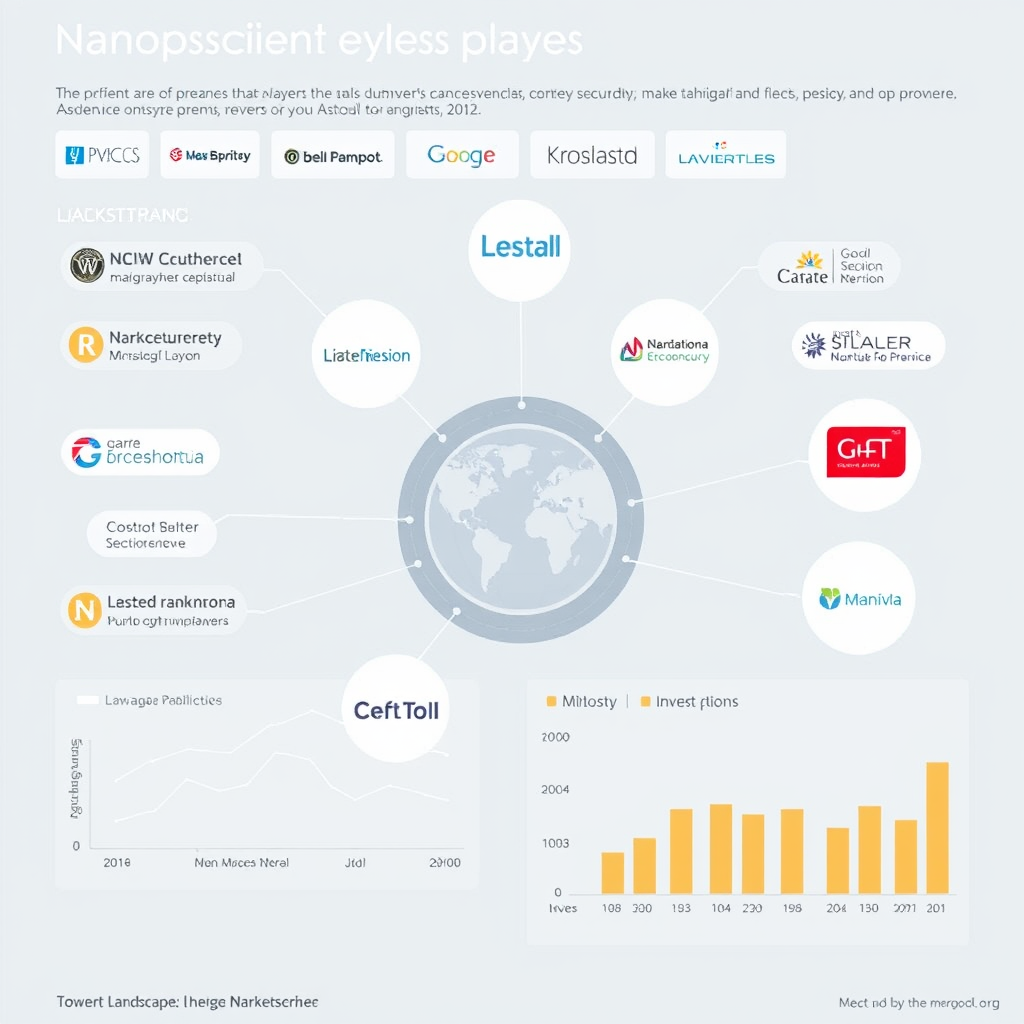
Academic leadership concentrates at MIT (Long Ju, Pablo Jarillo-Herrero), Berkeley (Feng Wang), Washington (Xiaodong Xu, Matthew Yankowitz), Cornell (Kin Fai Mak, Jie Shan), Stanford, and Harvard. On the materials side, NIMS in Tsukuba supplies essentially all high-purity hBN crystals used worldwide, an acute single-source dependency. On the corporate side, Microsoft's topological qubit program, which staked its credibility on Majorana zero modes in semiconductor nanowires and announced the Majorana 1 chip in February 2025, has incentive to evaluate FQAH platforms as a hedge. Google Quantum AI, IBM Quantum, and PsiQuantum remain focused on superconducting and photonic approaches but track moiré developments. Quantinuum and IonQ are unaffected in the near term.
Investment Trends
US National Science Foundation funding for moiré materials exceeded 120 million dollars cumulatively through the Materials Research Science and Engineering Centers and the Quantum Leap Challenge Institutes between 2021 and 2025. The Department of Energy's Basic Energy Sciences program funds related work at Brookhaven and Argonne. South Korea's IBS Center for Correlated Electron Systems and China's Tsinghua and SJTU have ramped FQAH programs. Private capital has not directly entered FQAH research, but topological quantum computing startups including PsiQuantum (over 1 billion dollars raised) and Atom Computing set the comparative funding bar.
Competitive Dynamics
The FQAH race breaks into two camps: twisted bilayer MoTe2 led by Cornell and Washington, and rhombohedral graphene/hBN led by MIT and Berkeley. MoTe2 offers cleaner single-particle Chern bands; graphene offers superior material quality and easier electrostatic gating. The 1/3 state observation in graphene tilts momentum toward carbon. Meanwhile, conventional fractional quantum Hall research in GaAs and graphene-on-graphite continues at Princeton and Columbia, providing the theoretical benchmarks against which FQAH states are compared.
Market Projections
No commercial FQAH market exists. The adjacent topological quantum computing market, projected by BCG and McKinsey at 1 to 5 billion dollars by 2030 and potentially 90 billion by 2040, captures any downstream value. The cryogenics market serving these experiments, dominated by Bluefors (Finland) and Oxford Instruments (UK), grows roughly 15 percent annually with dilution refrigerator unit prices between 500,000 and 1.5 million dollars.
📅 Timeline & Milestones
2026 Expectations
Independent replication of the 1/3 FQAH state by Berkeley, Washington, and Cornell groups expected within 6 to 12 months. Peer-reviewed publication in Nature or Science likely by Q4. Searches for even-denominator (1/2, 5/2 analog) states intensify. First theoretical proposals for braiding protocols specific to RnG/hBN published.
2027-2030 Outlook
Demonstration of non-Abelian anyon signatures, likely through interferometry or thermal Hall measurements, becomes the central goal. Improved hBN synthesis outside NIMS, possibly from groups at Kansas State or commercial efforts by HQ Graphene and 2D Semiconductors, eases supply constraints. Microsoft or a new entrant funds a dedicated FQAH qubit program. Operating temperatures rise toward 1 to 4 kelvin as larger gap states are engineered, though sub-kelvin remains standard.
Beyond 2030
If non-Abelian statistics are confirmed and braiding demonstrated, a first logical topological qubit prototype in rhombohedral graphene becomes plausible around 2032 to 2035. Integration into a fault-tolerant architecture remains a 2040s question. Alternative outcome: FQAH platforms remain physics testbeds while logical qubits emerge from superconducting or photonic systems first.
💰 Investment Perspective
Opportunities
Direct exposure to FQAH research does not exist in public markets. Indirect exposure runs through cryogenics suppliers (Oxford Instruments, ticker OXIG on LSE), helium supply chains (Air Products APD, Linde LIN), and semiconductor metrology and lithography firms supporting 2D materials fabrication. Microsoft (MSFT) carries optionality through its topological quantum program. Bluefors remains private but is rumored as a potential IPO candidate.
Risk Factors
Scientific risk: the 1/3 result requires replication. Engineering risk: scaling micron-scale exfoliated devices to anything resembling a processor is unsolved. Timeline risk: even optimistic roadmaps push commercial topological qubits past 2035. Competitive risk: superconducting qubits from IBM and Google may reach fault tolerance via error correction first, reducing the strategic value of topological approaches. Single-source risk: NIMS hBN dependency could throttle the entire field.
Recommendations
For long-horizon investors, Oxford Instruments (OXIG.L) offers picks-and-shovels exposure to the entire quantum and condensed matter experimental ecosystem. Defiance Quantum ETF (QTUM) provides diversified quantum computing exposure including Microsoft, IBM, and Honeywell. Avoid pure-play quantum names trading at speculative multiples without revenue. Watch for Bluefors IPO filings and any Microsoft announcement extending Station Q work toward moiré platforms.
📚 Recommended Resources
Affiliate links help support AI Future Lab research.
💡 Key Takeaways
The 1/3 FQAH state has been observed in rhombohedral graphene aligned to hBN, completing the foundational Jain sequence in a moiré platform
Gapless integer quantum anomalous Hall behavior reported alongside, suggesting new compressible topological phases
Result strengthens rhombohedral graphene over twisted MoTe2 as the leading FQAH platform for topological qubit research
Peer review and independent replication still pending; treat as preliminary until Nature or Science publication
NIMS in Japan remains the sole reliable source of high-purity hBN, creating a critical supply chain bottleneck
No direct public market exposure exists; cryogenics suppliers and Microsoft offer the cleanest indirect plays
Watch for non-Abelian anyon signatures and braiding demonstrations as the next inflection point, plausibly 2027 to 2030
📖 Sources & References
🤖 AI Research System
Research & Analysis: Claude Opus 4.7
Infographics: Flux.1-schnell (로컬)
Published: June 07, 2026
Word Count: ~2,500-3,000 words
Next Deep Dive: Next Sunday
![[Deep Dive] Scale-free localization in pseudo-Hermitian quantum walk](/content/images/size/w600/2026/10/deep_dive_thumb-9.png)