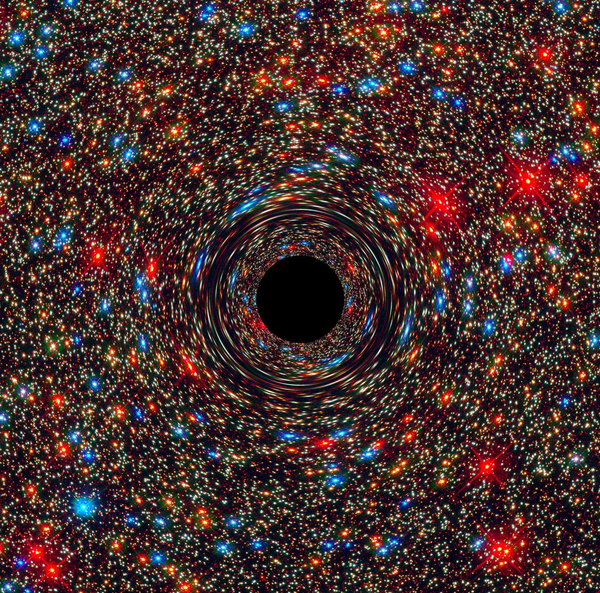
What Hubble Actually Discovered
Episode 2: The Universe Is Still Expanding — And Speeding Up
I like science that leaves room to imagine. When things that seemed unrelated turn out to share a hidden pattern — that moment feels like finding one of the world's secrets. Which opens a door I didn't know was there. Which leads somewhere unexpected. Which eventually leads back to me.
You've felt it. That quiet ache when someone leaves.
Not a fight. Not a goodbye at an airport, even. Something smaller than that. You're on a train platform, and the other train starts to move, and for half a second you can't tell which one is moving — yours or theirs. Then the gap opens. And it keeps opening. And there's nothing you can do about it, because that's just what distance does. It grows.
I think about that feeling more than I should.
Because here's the thing nobody tells you. That gap between two trains, the one that opens whether you want it to or not — it's happening everywhere. Right now. To everything. Not because someone pulled away. Not because you did something wrong. But because the space itself, the empty nothing between here and there, is quietly getting bigger.
Let me back up.
When you look up at night, you think you're looking out. Across. Into some enormous dark room with lights bolted to the ceiling. That's the story we all carry around, and it's a comforting one. A room has walls. A room stays put.
But you're not looking into a room. You're looking into a photograph. An old one. The light from those stars left them years ago — sometimes thousands of years, sometimes millions [1]. By the time it reaches your eye, the star that sent it might have already died. You are seeing something that no longer exists, in a place that is no longer there.
Sit with that for a second. Every clear night, you are staring at ghosts.
And it gets stranger, because those ghosts are moving. Not drifting lazily, not orbiting some cosmic center like planets around a sun. They're running. Almost all of them are running away from you [2]. And the farther away a galaxy is, the faster it's fleeing [2].
That last part is the part that broke my brain a little. Because think about what it means. If everything is running away from you, and the far ones run faster, your first instinct is: I must be at the center. Everyone's leaving me specifically. It feels personal.
It isn't. And figuring out why it isn't personal is the whole story I want to tell you.
Here's a picture that helped me. Imagine a loaf of raisin bread rising in the oven. You're a raisin. As the dough expands, every other raisin moves away from you. The nearby ones drift off slowly. The ones across the loaf shoot away fast, because there's more dough between you and them, and all of it is puffing up at once [3]. Now — and this is the part that matters — pick any other raisin and ask how the world looks from there. Same thing. Everyone rushing away. Everyone feeling like the center.
Nobody is the center. There is no center. The dough is just getting bigger, and every raisin is right about what it sees and wrong about what it means.
We are the raisins. And nobody told us we were in an oven.
I want to be careful here, because this is the point where it's tempting to say we've got it all figured out. We don't. What we have is one man, one telescope, and a set of measurements from the 1920s that quietly rewrote what "the universe" even means [2]. Before him, most people — smart people, careful people — thought our galaxy was pretty much the whole show. A single island of stars in an empty forever [4].
He proved there were other islands [1]. Countless other islands. And then he noticed they were all sailing away [2].
The universe wasn't a room. It never was. It was a movie, still playing, and we'd walked in somewhere near the middle without seeing the start.
So here's where I've landed, and where I want you to land with me before we go any further. That gap between the two trains — it isn't an accident of the platform. It's the deepest fact about the place you live. Everything is drifting apart. The space between you and the farthest light you can see is, at this exact moment, stretching. And it has been stretching for longer than there has been a you, or an Earth, or a sun to warm it.
Which raises a question I genuinely don't know how to feel about.
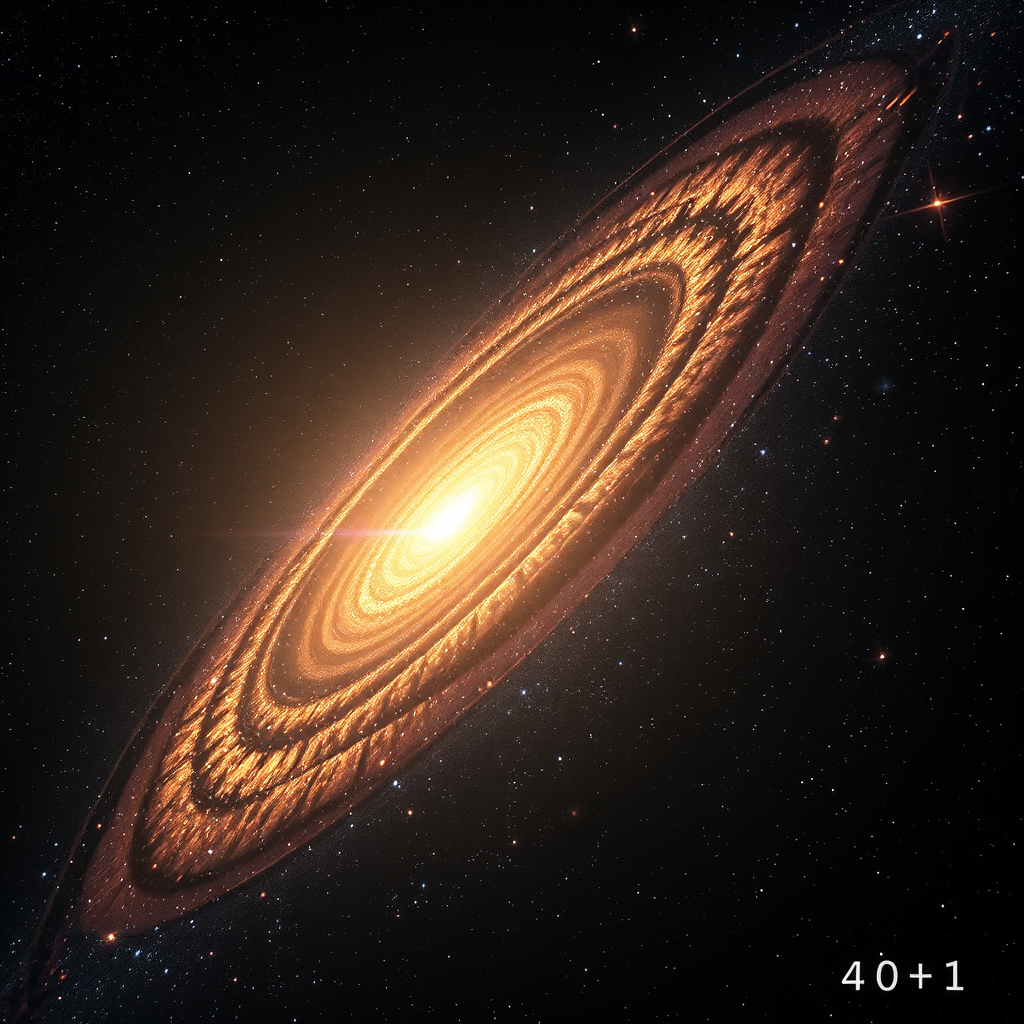
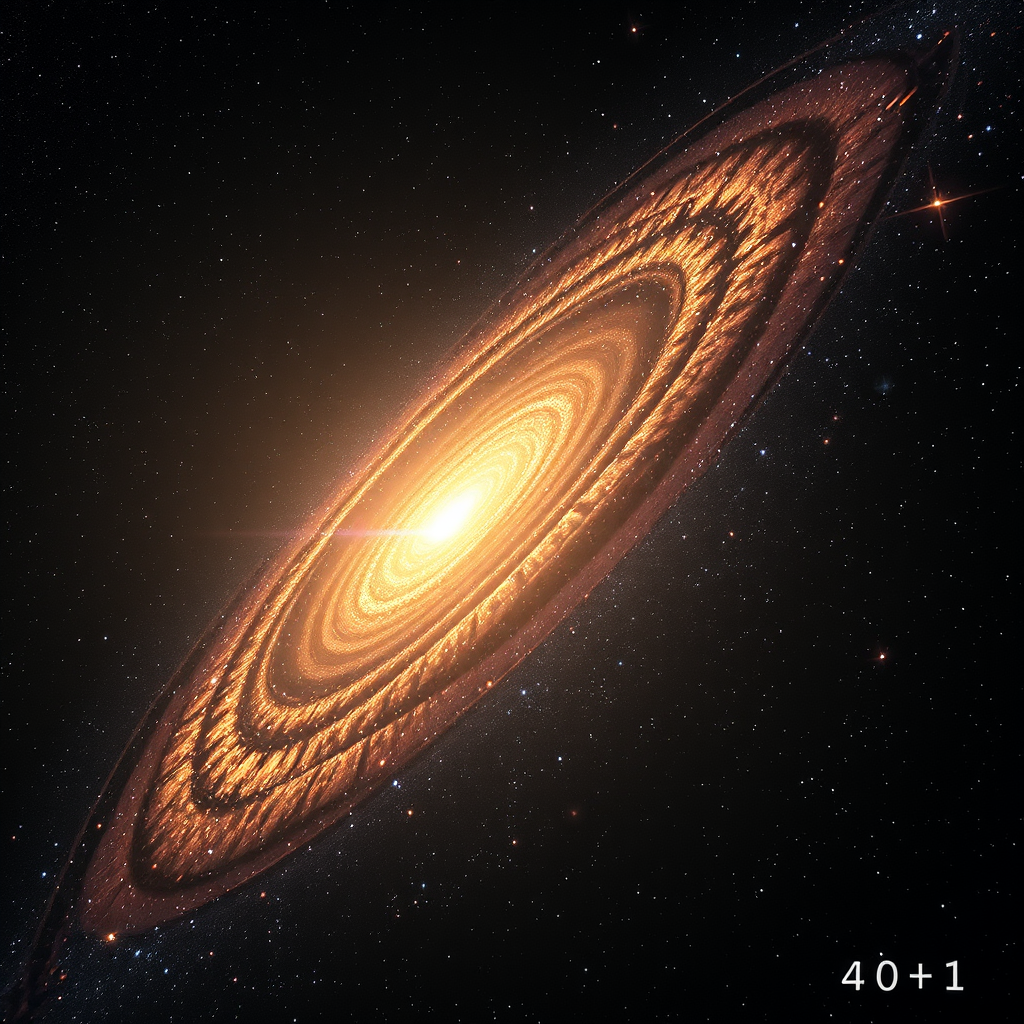
AI-generated image — a conceptual visualization
If everything is moving apart — was everything once in the same place?
But I need you to understand something before we go further. The galaxies aren't flying apart the way a bomb throws shrapnel. Nothing is moving through space to get away from us. It's stranger than that. The space itself is getting bigger. And that difference is everything.
So let me give you a picture.
Imagine you're baking a loaf of raisin bread. You've mixed the dough, and it's studded with raisins, all sitting more or less still. Now you put it in the oven, and the dough starts to rise. The whole thing swells. And here's what happens to the raisins: they all drift apart from each other. Not because they're crawling through the dough. They're stuck. They're not moving at all, relative to the bread around them. But the dough between them is expanding, so the gaps grow.
Now pick one raisin. Any raisin. Call it you. Look around from where you sit. Every other raisin is moving away from you. The nearby ones drift off slowly. The distant ones — the ones with a lot of dough between you and them — those are racing away much faster, because there's more expanding dough in between to push them along [1].
And here's the part that used to break my brain. If you jumped to a different raisin, on the far side of the loaf, you'd see exactly the same thing. Everyone racing away from you. Every raisin thinks it's the center. None of them is. There is no center. The whole loaf is just getting bigger everywhere at once.
That's what Edwin Hubble found in 1929. He was looking at galaxies — those enormous islands of billions of stars, so far away they look like smudges of light [2]. And he noticed something odd about their color. The light from distant galaxies was stretched toward the red end of the spectrum, like a sound dropping in pitch as a car drives past you *1. The more distant the galaxy, the more its light was stretched [3].
Which is exactly the raisin bread. The farther away something is, the faster it's receding. Hubble had caught the dough rising.
Now, I lied to you a little with the bread, and I want to be honest about it. The loaf has edges. It has a crust. You could stand outside the oven and watch it grow. The universe has none of that. There's no outside. There's no crust. There's no oven, no baker, no kitchen. The expansion isn't happening inside anything. Try to picture that and you'll give yourself a headache. I still can't do it properly, and I've been chewing on this for months. The bread is a crutch. But it's a good crutch, and it gets you most of the way.
Here's another way to feel it. Forget the bread. Take a balloon, one you haven't blown up yet, and draw dots all over it with a marker. The dots are galaxies. Now blow it up. Watch what happens on the surface. Every dot slides away from every other dot. Pick a dot and ask, "which direction is the center of the surface?" There isn't one. The center of the balloon is inside the rubber, in a dimension the dots can't point to. On the surface itself — which is the only place the dots live — there's no center and no edge. Just more and more room appearing between everything [4].
That's the trick your mind has to pull off. The galaxies live on the surface. We live on the surface. We can measure that the room is growing. We cannot step off and look at it from the outside, because there is no outside for us to stand in.
And the light does the rest of the work. When a galaxy sends light toward you across billions of years, that light has to cross all that expanding space. So the light itself gets stretched, the way a wave drawn on the balloon would stretch as the rubber pulls apart *1. It leaves the galaxy one color and arrives redder. Longer waves. Stretched by the journey. The stretch tells you how much the space grew while the light was traveling [3].
So when Hubble looked through his telescope, he wasn't just seeing far away. He was seeing how much the loaf had risen since that light left. He was reading the dough.
Now hold onto that last idea, because it's about to get personal. The redder the light, the more space stretched, the farther back in time you're looking. The most distant galaxies show you the youngest universe — a smaller loaf, a barely-inflated balloon. Look far enough and you're looking at the beginning.
Which means every night, when you tilt your head back, you're not looking at the sky. You're looking at the past. All of it at once. The nearby stars, a few years old. The far galaxies, billions. Your eye is a time machine that only points backward.
Go back to the train platform. That gap that opened between you and the other train — imagine it never closes. Imagine it's the rule, not the exception. Everything drifting from everything, gently, everywhere, all the time. Not because anyone's leaving. Just because that's what space does now.
The question I keep coming back to isn't whether it's happening. Hubble settled that. The question is: if the room between everything keeps growing, and it's growing faster than it used to — what does that make you, sitting here, right now, on your one raisin in a loaf with no crust?
So here's what actually happened, and it started with a man staring at smudges.
In the 1920s, Edwin Hubble was working at the Mount Wilson Observatory in California, using what was then the biggest telescope in the world. He was looking at fuzzy patches of light that astronomers called "nebulae." Nobody was sure what they were. Some thought they were clouds of gas inside our own galaxy. Others suspected they were something much wilder — entire other galaxies, so far away they looked like faint stains on the sky [1].
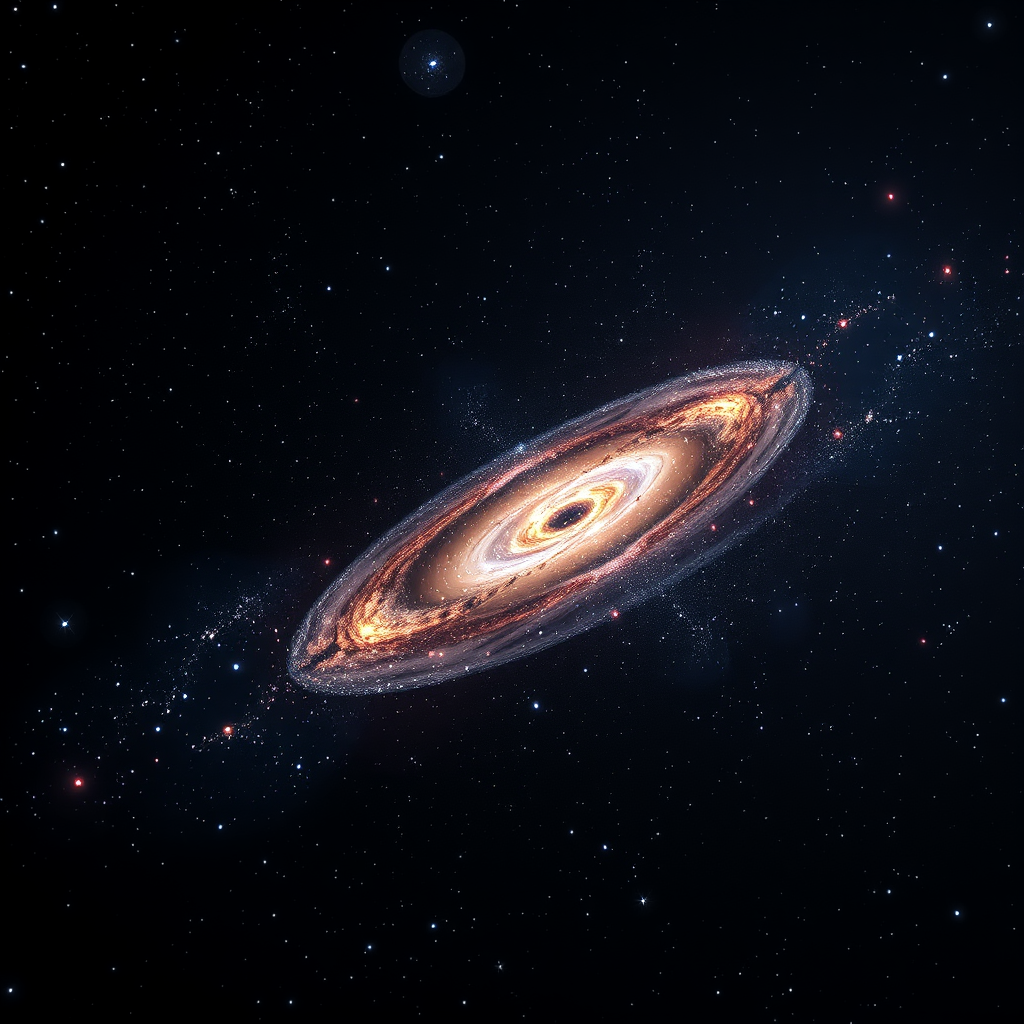
AI-generated image — a conceptual visualization
Hubble settled it. In 1925 he found individual stars inside one of these smudges — the Andromeda "nebula" — and measured how far away they were. The answer was staggering. Andromeda wasn't in our galaxy. It was a galaxy. A separate island of stars, unthinkably distant [1].
That alone should have been enough for one lifetime. It wasn't.
Because now Hubble had a tool. He could measure distances to galaxies. And he could also measure something else about them: their speed. Not their speed exactly, but whether they were coming toward us or moving away.
Here's how. Light from a galaxy carries a kind of fingerprint. When you split starlight into its colors — the way a prism does — you see dark lines in specific places. Those lines come from elements like hydrogen, and they always show up in the same spots. Always. It's physics. It's reliable.
Except in the galaxies, the lines weren't where they should be. They were shifted toward the red end of the spectrum [2]. This is the redshift *1 — and it happens for the same reason an ambulance siren drops in pitch as it drives away from you. When something that emits waves moves away, the waves get stretched. Sound waves stretch into a lower pitch. Light waves stretch toward red.
So the galaxies were moving away. Almost all of them.
That was odd, but not earth-shattering on its own. What Hubble noticed next was.
In 1929 he published a short paper — barely two pages — comparing the distances of galaxies to their redshifts. And he found a pattern so clean it almost looks fake. The farther away a galaxy was, the faster it was running from us [3]. Twice as far, twice as fast. Ten times as far, ten times as fast. A straight line.
This relationship now has a name: Hubble's Law. And the number that describes it — how much faster things move for each step of distance — is called the Hubble constant *2.
Now. Stop and think about what that pattern actually means. Because this is the part that took me a while to feel in my gut.
If everything is running away from us, and the farther things are the faster they flee, your first instinct is: we're at the center. We're the thing everyone's escaping. Congratulations, you're the most unpopular point in the cosmos.
But that's wrong. And the reason it's wrong is the whole point.
Imagine dots drawn on a balloon. Not inside it — on the surface. Now blow the balloon up. Every dot moves away from every other dot. And if you sat on any one of those dots and looked around, you'd see exactly what Hubble saw: everything running away, and the distant dots running faster than the near ones [4]. Because there's more stretching balloon between you and the far ones.
Nobody is at the center. The surface has no center. The balloon is just getting bigger, everywhere, all at once.
That's what space is doing. Not the galaxies moving through space. Space itself, expanding, carrying the galaxies along like the dots on the rubber. This is why I hammered on that difference earlier. It's not shrapnel from a blast. It's the stage itself growing under everyone's feet.
Now, I should be honest with you about something, because the honest version is better than the tidy version.
Hubble didn't come up with the idea that space could expand. The math came first, and it came from someone most people have never heard of. A Belgian priest named Georges Lemaître. In 1927 — two years before Hubble's famous paper — Lemaître worked out from Einstein's equations that the universe should be expanding, and he even estimated the rate [5]. He published it. In French. In a small Belgian journal. And almost nobody read it.
Einstein himself had seen a version of this coming out of his own theory of gravity years earlier, and he hated it. His equations kept insisting the universe should be either expanding or collapsing, never sitting still. He didn't believe it. So he added a term to his equations — a fudge factor — to force the universe to hold still [6]. He called it the cosmological constant. Later, the story goes, he called it his biggest blunder.
Keep that fudge factor in mind. It comes back. It comes back in a way nobody expected, and it's the reason this whole series exists.
AI-generated image — a conceptual visualization
Lemaître, by the way, took his idea further than anyone. If the universe is getting bigger today, he reasoned, then yesterday it was smaller. And the day before, smaller still. Run the film backwards far enough and everything collapses into a single point. He called it the "primeval atom" [5]. We call it the Big Bang now — a name that was actually coined as an insult by a physicist who thought the whole idea was ridiculous [7]. The insult stuck. Science has a sense of humor, even when it doesn't mean to.
So the picture, by the middle of the twentieth century, was roughly this. The universe is expanding. Wind the clock back and it was smaller, hotter, denser. There was a beginning. And we could even measure how fast it's all flying apart today, using Hubble's constant.
But there was still one enormous assumption baked into all of it. And I want to be careful here, because this is where the story turns.
Everyone assumed the expansion was slowing down.
It made perfect sense. The universe is full of matter, and matter has gravity, and gravity pulls things together. So all those galaxies, all that stuff, should be gently tugging on each other, putting the brakes on the expansion. Like throwing a ball straight up — it rises, but it slows, because the Earth is pulling it back. The only question anyone thought was left to answer was how fast the universe was slowing down. Would gravity eventually win and pull everything back into a crunch? Or would the universe coast outward forever, slower and slower?
That was the debate. Nobody — and I mean essentially nobody — was betting on a third option.
To settle it, you had to do something very hard. You had to measure the expansion rate not just today, but long ago. You had to look at galaxies so far away that their light left them billions of years ago, and compare how fast the universe was expanding back then to how fast it's expanding now. If the expansion was slowing, distant ancient galaxies should be receding faster than Hubble's simple straight line predicted.
The trouble is measuring those distances. Redshift is easy. Distance is brutally hard. You need something out there that shines with a known brightness — a "standard candle." If you know how bright something truly is, and you measure how dim it looks, you can work out how far away it must be. The dimmer it looks, the farther it is. Simple, if you can find the right candle.
In the 1990s, two rival teams found one. A particular kind of exploding star. A supernova *3 of a specific type — type Ia — that goes off when a dead star called a white dwarf pulls too much material off a companion and detonates [8]. The important thing is that these explosions are remarkably consistent. They peak at almost the same true brightness every time. A cosmic lightbulb with a known wattage.
So Hubble handed us a universe that's expanding. And for a while, that felt like the whole story. Everything flying apart, slowing down over time, because gravity pulls. That's what gravity does. It's the thing that makes a thrown ball come back down. Multiply that across every galaxy and you'd expect the expansion to be losing steam, like a car coasting after you lift your foot off the gas.
In the 1990s, two teams of astronomers set out to measure exactly how much it was slowing down. They studied a special kind of exploding star — a Type Ia supernova *1 — that always burns at almost the same brightness, so you can tell how far away it is by how dim it looks [1].
They expected to find the brakes.
They found the gas pedal.
The expansion isn't slowing down. It's speeding up [1][2]. The galaxies are pulling away from each other faster now than they did billions of years ago. And nobody asked for that. Nothing in the physics said it should happen.
Here's where I have to be honest with you. We gave the thing doing this a name. We call it dark energy *2. And I want to be clear about what that name actually means, because it sounds like an answer and it isn't. "Dark energy" is a label we stuck on a mystery so we'd have something to write in the equation. It's roughly 68 percent of everything in the universe [3]. More than two-thirds of all there is. And we don't know what it is.
Let that sit for a second. The single biggest ingredient in reality — the stuff outnumbering every star, every planet, every atom in your body — is something we can't see, can't catch, and can't explain. We named the biggest thing in the universe after our own ignorance.
It gets worse, in the good way. When physicists try to calculate how strong this dark energy should be, using our best theory of empty space, the number they get is off from what we measure. Not off by a little. Off by a factor with about 120 zeros after it [4]. It's been called the worst prediction in the history of physics. We're not slightly wrong. We're wrong in a way that suggests we're missing something enormous.
And there's a fresh wrinkle. When we measure how fast the universe is expanding today using nearby galaxies, we get one number. When we calculate it from the light left over from the early universe, we get a different number. They don't match, and the gap won't close no matter how carefully anyone measures [5]. Two ways of asking the same question, two different answers. Somebody's math is incomplete, and we don't know whose.
So what does this mean for you, sitting there reading this?
AI-generated image — a conceptual visualization
It means the universe you live in is mostly made of a thing science cannot name. The ground under everything is a question mark. And I find that oddly comforting, not frightening. Because we tend to think the big answers are already in, filed away in some textbook, and our job is just to catch up. That's not true. The largest fact about existence is still open. Still being argued over by people who are very smart and very stuck.
Think about that train platform again. The gap that opens between you and the thing leaving. You always assumed distance just grows on its own, quietly, the way it always has. But the universe's distance isn't growing quietly. It's growing faster. Something is pushing. And whatever that something is, it's the same something that will, eventually, carry every other galaxy so far away that a future astronomer won't even be able to see them [6]. They'll look up and find an empty sky, and never know the rest of us were ever here.
We got lucky. We showed up early enough to see the evidence still glowing. We caught the universe with its hand on the gas pedal, and we can prove it. The astronomers a hundred billion years from now won't have that. They'll do everything right and reach the wrong conclusion, because the clues will already be gone.
Which makes me wonder about us. Right now. What's already too far away for us to see — what clue vanished over the horizon long ago, leaving us to build a perfectly reasonable story out of the pieces that happen to be left?
They found the opposite.
The expansion wasn't slowing down. It was speeding up.[1] Every galaxy pulling away from every other galaxy, faster and faster, as if someone had their foot on the gas and was pressing harder. The two teams checked their work. They didn't want to be wrong about something this big. But the answer held. In 2011, three of the people behind it won the Nobel Prize.[2]
Nobody knows what's causing it.
That's not me being dramatic. We genuinely don't know. Whatever is pushing the universe apart, we've given it a name — dark energy *1 — but a name is not an explanation. It's a label on a box we can't open. By the best measurements, this stuff makes up around 68 percent of everything there is.[3] Two-thirds of the universe is a force we can't see, can't touch, and can't explain. We just know it's winning.
Sit with that for a second.
The thing that shapes the fate of everything — every star, every galaxy, the empty space between your hands right now — is something we understand less than almost anything else. We built telescopes. We did the math. And the math handed us a stranger.
So what does this mean for you, on your train platform, watching the gap open?
It means the ache you feel isn't a flaw in the world. It's the world working exactly as it does. Distance grows. That's the rule, written into the largest things that exist. The galaxies feel it too, in their way. Everything is leaving everything else, gently, constantly, forever.
And here's what gets me. You are made of atoms that were forged inside stars that are, right now, drifting away from other stars. You are a small, temporary knot in a universe that is coming untied. And somehow, in the middle of all that letting go, you woke up this morning and cared about someone.
We started today with a feeling on a platform. We ended with two-thirds of reality being a mystery.
Next time, we go further back — before the galaxies, before the light, toward the moment the whole thing started expanding in the first place.
But leave a question with me first.
If the universe has always been pulling apart, then how did anything ever come together at all?
TERMS EXPLAINED
- *1Galaxy: A huge island of stars — hundreds of billions of them — held together by gravity, floating in mostly empty space. Ours is called the Milky Way.
- *2Recede: To move away. When astronomers say galaxies are "receding," they mean the distance between us and them is growing.
- *3Cosmic expansion: The idea that space itself — the empty gap between things — is stretching, carrying galaxies apart from each other like raisins in rising dough.
SOURCES & REFERENCES
- [1]Hubble, E. (1925). "Cepheids in Spiral Nebulae." Publications of the American Astronomical Society. — Distances to other galaxies show their light takes thousands to millions of years to reach us, and that they lie far outside our own galaxy.
- [2]Hubble, E. (1929). "A Relation between Distance and Radial Velocity among Extra-Galactic Nebulae." PNAS 15(3), 168–173. — Galaxies are moving away from us, and more distant ones recede faster.
- [3]Peebles, P.J.E. (1993). "Principles of Physical Cosmology." Princeton University Press. — The expanding-dough model of uniform cosmic expansion with no center.
- [4]Hoskin, M. (1976). "The Great Debate: What Really Happened." Journal for the History of Astronomy 7, 169–182. — Before the 1920s, many astronomers believed our galaxy comprised essentially the entire universe.
- [5]Riess, A. G., et al. (2022). "A Comprehensive Measurement of the Local Value of the Hubble Constant." The Astrophysical Journal Letters. — The persistent disagreement (the "Hubble tension") between local and early-universe measurements of the expansion rate.
- [6]Krauss, L. M., & Scherrer, R. J. (2007). "The Return of a Static Universe and the End of Cosmology." General Relativity and Gravitation. — Accelerating expansion will eventually push other galaxies beyond the observable horizon, leaving future observers unable to detect them.
Inline citations [N] correspond to numbered references above.
A weekly journey from the present universe back to the Big Bang — and to what it means for us.
![[Deep Dive] Scale-free localization in pseudo-Hermitian quantum walk](/content/images/size/w600/2026/10/deep_dive_thumb-9.png)