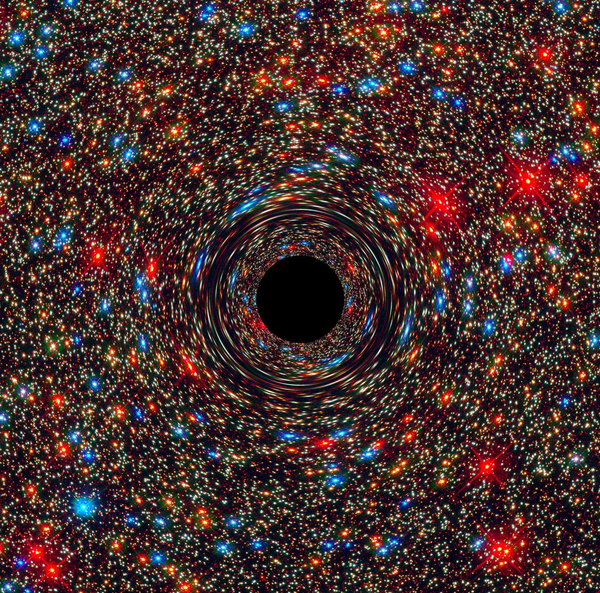
The Cosmic Web: 500 Billion Galaxies, One Structure
Episode 3: Why Do Galaxies Form a Cosmic Web?
I like science that leaves room to imagine. When things that seemed unrelated turn out to share a hidden pattern — that moment feels like finding one of the world's secrets. Which opens a door I didn't know was there. Which leads somewhere unexpected. Which eventually leads back to me.
You've seen it in your kitchen sink.
Not the dishes. The foam. Pull the plug, let the water drain, and look at what's left clinging to the steel. Bubbles pressed against bubbles. Thin silver walls where two of them meet. Thicker knots where three or four come together. And inside each bubble, nothing at all — just air, sitting in a pocket that the soap built around it.
Nobody designed that. You squirted detergent into hot water and swirled a sponge around. The pattern arrived on its own.
Now hold that picture in your head, because I want to show you where else it turns up.
Dry lake beds crack into it. Mud loses its water, shrinks, and splits into plates with dark seams between them. Leaves do a version of it — veins branching into veins, feeding a green surface with nothing much happening in the middle of each little panel. The rind of a slice of sourdough. The fine web of frost that grows across a car windshield overnight. Lightreflecting off the bottom of a swimming pool, shivering across the tiles in a net of bright lines.
You have looked at this shape your entire life. You have probably never asked why you keep running into it.
Here is the part that got under my skin and would not leave.
The universe does it too.
Not metaphorically. Not "sort of, if you squint." When astronomers map where galaxies actually sit — not one galaxy, not a thousand, but millions of them plotted as dots in three-dimensional space — the dots do not scatter randomly like sand thrown at a wall. They line up. They form long filaments, thread-like strands hundreds of millions of light years long [1]. Where filaments cross, you get dense knots stuffed with thousands of galaxies packed together [1]. And between all of it, there are vast rounded emptinesses where almost nothing lives at all — the largest of them stretching over 300 million light years across, with barely a galaxy inside [2].
Bubbles. Walls. Knots. Voids.
The soap in your sink and the largest structure ever mapped are wearing the same face.
The cosmic web: filaments linking clusters, voids between them. A conceptual visualization.
I want to be careful here, because this is exactly the point where somebody starts talking about how the universe is a brain, or a great cosmic organism, or how everything is connected, man. That is not what this is. Soap foam is not conscious. Neither is a dried-up lake bed. The resemblance is real, but it is not mystical — it is mathematical, and honestly that makes it stranger, not less strange.
Because think about what has to be true for this to happen.
The pattern in your sink is made by surface tension acting over centimeters, in seconds, on water. The pattern in the sky is made by gravity acting over billions of light years, across nearly fourteen billion years, on dark matter [3] — stuff we cannot see, cannot touch, and cannot catch in any detector we have built so far, which is a sentence that should bother you more than it does. Different force. Different material. Different scale by something like twenty-four orders of magnitude. And out comes the same architecture.
That is either a coincidence so large it insults the word, or it is telling us something about how patterns get made when you leave matter alone with a simple rule and enough time.
I think it is the second one.
And here is the thing that actually keeps me up. You are inside the pattern. Right now. Our galaxy sits on the edge of a filament, part of a flow of matter that has been draining toward denser regions since before the Earth existed [4]. You are not looking at the foam from outside the sink. You are a molecule in one of the walls, trying to work out the shape of the whole thing from a single point, using light that took billions of years to arrive.
Nobody handed us a photograph. There is no outside vantage point, no cosmic drone shot. Everything we know about the shape of the universe at its largest scale, we figured out from the inside, by patient people plotting dots on a chart and noticing the dots refused to be random.
So the question I want to sit with, before we go anywhere near an explanation:
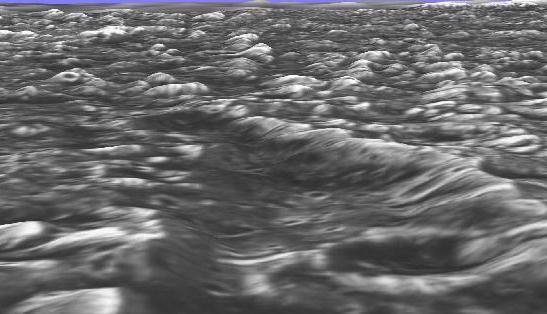
📷 The Hills of Ganymede Credit: — NASA/ESA (NASA APOD, Public Domain)
Why should emptiness have a shape?
Now do the same thing to the sky.
Map every galaxy you can find. Not the pretty ones — all of them, hundreds of thousands, plotted as single dots at their real distances. That's what the big galaxy surveys did, and when the dots came in, nobody was expecting foam. But foam is what showed up. Sheets of galaxies. Threads of galaxies. Dense knots where the threads cross. And between them, gaping round pockets with almost nothing inside [1]. Astronomers call the whole thing the cosmic web *1, and the empty pockets voids *2, and the voids take up most of the volume of the universe — one survey found them filling around six-tenths of space, with a typical one running about a hundred and fifty million light years across [2].
So the universe is mostly the inside of a bubble. Everything you've ever heard of lives on the soap film.
Here's the part that took me a week to stop thinking about. Foam has a reason to look like that. Surface tension, air pressure, the geometry of how bubbles pack. The universe has none of those. There's no soap in space. There's no skin holding anything in. There's only gravity, which pulls, and never pushes, and has no opinion about aesthetics.
So how do you get walls and threads and knots out of a force that just pulls things together?
You'd think gravity makes balls. Drop a marble, it falls. Squeeze a cloud of gas, it becomes a star — round. Ask anyone to guess what a lumpy universe becomes after fourteen billion years of pulling and they'll say: a bunch of lumps. Bigger lumps. Round ones.
That guess is wrong, and the reason it's wrong is the whole story.
Think about a lump of dough. Not a perfect sphere — real dough, slightly longer one way than the other, slightly flatter one way than another. Nothing in the universe starts perfectly round. Now start squeezing it from every direction at once, evenly.
Which axis collapses first? The shortest one. It has the least distance to travel. So the dough doesn't shrink into a ball. It goes flat first. It becomes a pancake.
Keep squeezing. The pancake still has two directions left, and one of them is shorter. That one goes next. The pancake pulls itself into a rope.
Keep squeezing. The rope has one direction left. It collapses too. Now you have a knot.
Pancake, then noodle, then meatball. A Soviet physicist named Yakov Zel'dovich worked this out on paper in 1970, decades before anyone had the survey data to check it [3]. Cosmology's least appetizing three-course meal, and the universe serves it everywhere, all the time, at scales of hundreds of millions of light years.
Now stop imagining one lump of dough and imagine the early universe: a nearly smooth soup, with faint ripples in it. Faint is doing a lot of work in that sentence. We can measure those original ripples in the oldest light there is, and the dense spots were denser than the thin spots by about one part in a hundred thousand [4]. Take a bathtub of water and add a single drop. That's the lumpiness gravity had to work with.
But gravity is patient and it compounds. A slightly dense patch pulls a little harder. Pulling harder makes it denser. Denser pulls harder still. Over billions of years, that runaway turns a one-in-a-hundred-thousand whisper into everything you see.
And every patch that collapses does the pancake-noodle-meatball routine. Millions of them, overlapping, all at once. The pancakes become walls. Where two walls intersect, you get athread. Where threads intersect, you get a cluster — the thickest knots in the web, where thousands of galaxies pile into the same neighborhood [5].
And the voids? Nobody dug them out. They're just the places that started a hair less dense than average and lost. Matter drained out of them, downhill toward the walls, and kept draining, and the emptiness grew because everything left. A void isn't a hole in the universe. It's the shadow left behind by everything that ran away.
Which brings me back to your sink, and to the thing that actually unsettles me.
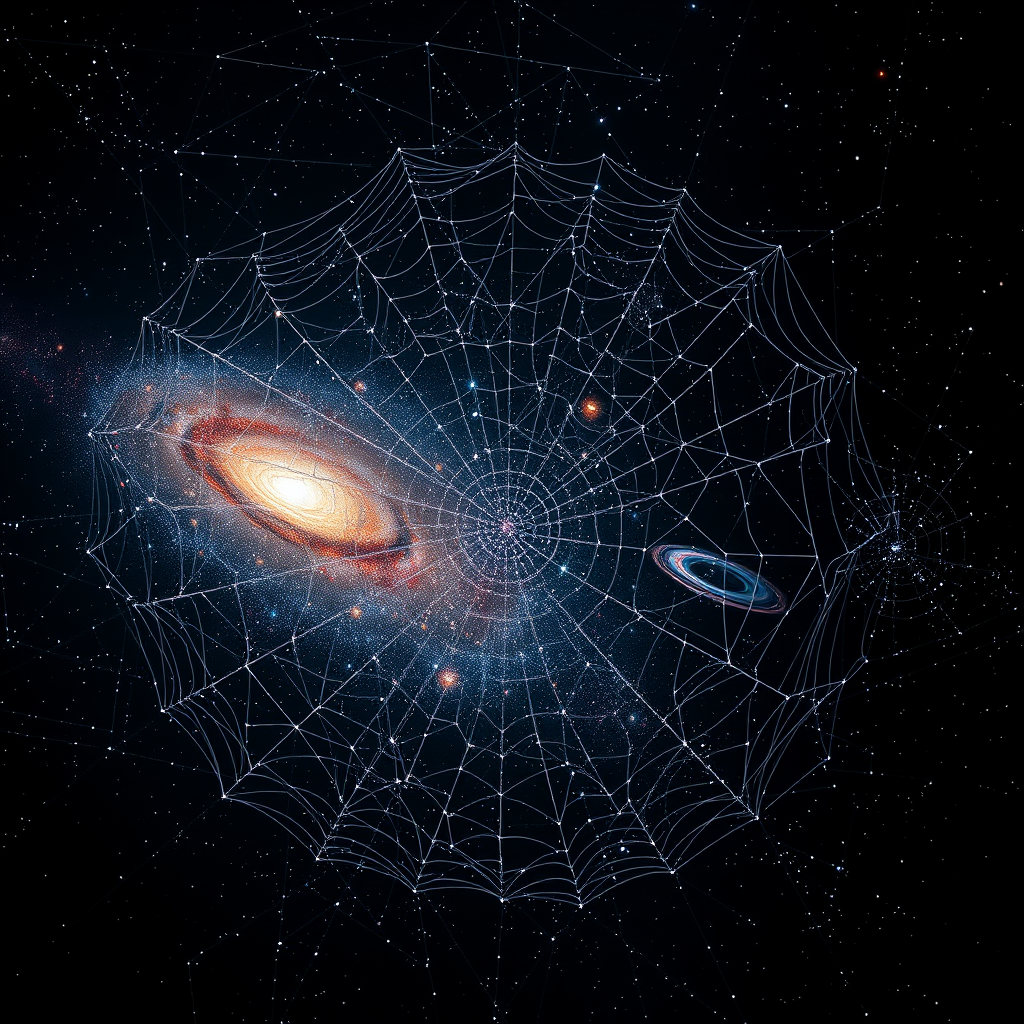
AI-generated image — a conceptual visualization
The foam in your sink and the foam in the sky are made by completely different rules. One is surface tension in a film of soap molecules a few thousandths of a millimeter thick. The other is gravity acting on dark matter *3 across distances that light takes a hundred million years to cross. Different physics, different scales, nothing in common — twenty-five orders of magnitude apart, which is the difference between the width of a hair and the width of the Milky Way, and then some.
And they look the same.
Both are what you get when a nearly uniform thing collapses under pressure that comes from every direction at once. The pattern isn't about soap. It's not about gravity either. It's about what happens to almost-smooth stuff when it has to fall somewhere, and the shortest direction always wins.
Physicists put this on the record in the most literal way possible. Someone ran a computer simulation of dark matter in an expanding universe, and someone else compared it, statistically, to the structure of foam. The numbers matched well enough that the comparison stuck [6]. Your dishwater is running the same algorithm as the sky. It just finishes faster.
I keep coming back to a small, stupid thought. When you look at the cosmic web, you're not looking at things. You're looking at the leftovers of a collapse — the places matter got stranded on its way down. The Milky Way isn't sitting somewhere. It's stuck somewhere. Snagged on a filament, in a slow fall that started before there were atoms and hasn't stopped.
You are on the soap film. Everyone you love is on the soap film. Every star anyone has ever named, every photograph ever taken of anything, all of it is smeared across a wall of foam surrounding an emptiness that is bigger than the wall by a wide margin.
So here's what I can't settle. If the pattern doesn't care what it's made of — if soap and dark matter arrive at the same shape without consulting each other — then how much of what we call the structure of the universe is actually about the universe?
And how much of it is just what falling looks like?
So why?
Foam in a sink makes sense. Soap films want to shrink, air pockets want to stay whole, and the geometry sorts itself out in seconds. But galaxies aren't bubbles. There's no soap out there. There's no surface tension holding the walls up. Just gravity, which only pulls, and a universe that's been flying apart for 13.8 billion years.
And yet the sink comparison isn't mine. It came from the people who found the thing.
In 1986, Valérie de Lapparent, Margaret Geller and John Huchra published a paper called "A Slice of the Universe" [2]. They had measured redshifts *2 for about 1,100 galaxies in a narrow strip of sky — a wedge, like a slice of pie, going out about 700 million light years. Redshift is how you get distance: light from a galaxy moving away from you gets stretched toward the red end of the spectrum, and the faster it recedes, the farther away it is. Measure the stretch, get the distance. Plot the dot.
They expected the dots to look roughly random, with some clumping. What they got looked like something else entirely. The galaxies sat on the edges of enormous empty bubbles. Geller has described it ever since as looking like a slice through the suds in your kitchen sink [2]. The voids were around 100 million light years across. The galaxies were on the skins.
This was, at the time, extremely annoying. Nobody had predicted bubbles.
Except one person had, sort of, sixteen years earlier, and he'd done it with a piece of mathematics so simple it looks like cheating.
Yakov Zel'dovich was a Soviet physicist who had worked on nuclear weapons and then turned to cosmology, which he seemed to find more interesting. In 1970 he published an approximation for how matter collapses under its own gravity[3]. The idea: don't try to solve the full gravitational problem, which is hideous. Instead, take every particle of matter in the young universe and ask where it was going to drift. Then let it keep drifting in a straight line, as if nothing were pulling on it anymore. Freeze the initial push and extrapolate.
That sounds too crude to work. It works.
Here's why. The early universe was almost perfectly smooth, but not quite. There were tiny lumps — regions about one part in a hundred thousand denser than average [4]. That number is not a rounding error, it's the whole story, and we'll get to where it came from in a later episode. For now: slightly denser regions pull slightly harder. Matter starts falling toward them.
But nothing in nature is a perfect sphere. Every lump is a little longer in one direction than another. And when a lopsided blob collapses, it doesn't shrink evenly. It collapses fastest along its shortest axis. First it flattens into a sheet. Then the sheet drains along its next-shortest axis into a filament. Then the filament drains into a knot.
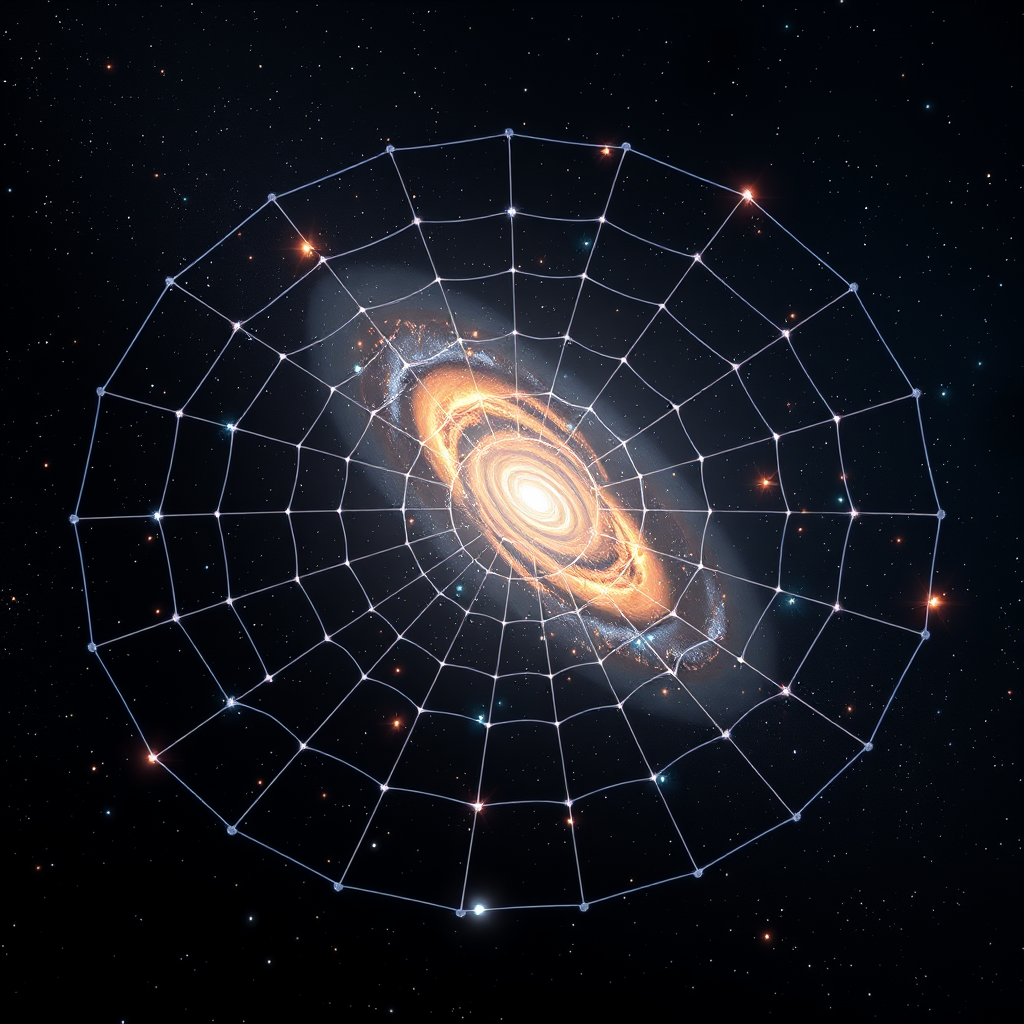
AI-generated image — a conceptual visualization
Sheet, then thread, then knot. Zel'dovich called the sheets "pancakes" [3]. Whatever you think of the branding, this is the skeleton of everything you see when you map the sky. The web isn't a web that was built. It's a web that fell.
And the empty spaces are just as inevitable. If matter leaves a region, the region gets emptier. Underdense patches drain themselves. They expand — not because anything is pushing them, but because everything around them is pulling away. Voids grow because voids lose [5].
So there's your soap film. It isn't surface tension. It's the arithmetic of collapse along three unequal axes, running for billions of years.
But knowing the shape isn't the same as knowing the ingredients, and here the story gets stranger.
Run the simulation with only the matter you can see — stars, gas, the stuff that emits light — and the web doesn't form. Not in time. Gravity is too weak and the expansion is too fast. You'd get a universe that's still nearly smooth, with a few sad clumps. Not this.
To get the real thing, you need roughly five times more matter than you can see [6]. Matter that has mass, feels gravity, and does absolutely nothing else. It doesn't glow. It doesn't absorb. It doesn't reflect. You could be standing in a wind of it right now and never know. Physicists call it dark matter *3, which is a bad name because it isn't dark, it's transparent — dark implies it blocks light, and it doesn't. Light goes straight through it, and through you, and out the other side.
Dark matter is the scaffolding. It began falling first, because it had a head start: while ordinary matter was still a hot plasma, sloshing around and pushed back by its own radiation pressure, dark matter felt nothing but gravity and simply got on with it [6]. It built the filaments. Ordinary gas, when it finally cooled enough to move freely, fell into structures that were already there. Galaxies are what happens when gas lands in a hole that dark matter dug.
The test of all this is not elegance. It's whether you can build the universe on a computer and get the right picture out.
In 2005, Volker Springel and the Virgo Consortium ran the Millennium Simulation [7]. Ten billion particles, each one representing about a billion suns' worth of dark matter, in a cube 2 billion light years on a side. Start it just after the Big Bang, with the tiny density ripples we actually measure in the cosmic microwave background. Apply gravity. Apply the expansion of space. Press go.
What came out looked like the sky. Filaments. Sheets. Clusters at the intersections. Voids in between, the right size, in the right proportion [7]. Springel and his colleagues could compare their simulated galaxy counts to the real surveys and the statistics matched — not vaguely, but quantitatively, across a range of scales.
Nobody put the web into that simulation. Nobody drew a filament. The only inputs were the initial ripples, the amount of dark matter, the amount of ordinary matter, the expansion rate, and Newton's law of gravity with Einstein's corrections. The web came out on its own, the way the foam comes out of your sink.
That's the part I keep turning over. The simulation didn't reproduce the universe because someone reverse-engineered the answer. It reproduced the universe because the ingredient list is short and the physics is old.
The simulations have since gotten better and meaner. The Illustris and IllustrisTNG projects added the messy parts — gas cooling, stars forming, supernovae exploding, black holes blasting energy back out into their surroundings [8]. That matters, because a filament isn't just gravity, it's also gas being heated and shoved around. TNG produced galaxies with realistic shapes and colours sitting in a realistic web [8]. The EAGLE simulation, run by a team including Joop Schaye and Richard Bower, did something similar and got a galaxy population that matched observed masses and sizes across cosmic time [9].
There's a phrase in this field that captures what's going on: hierarchical structure formation *4. Small things form first, then merge into bigger things. Little dark matter clumps collapse early, fall together into bigger clumps, and those slide along the filaments into clusters. The filaments are the roads. Watch a simulation in fast-forward and you see galaxies visibly sliding down the threads toward the junctions, like water finding a drain.
That's not a metaphor for the observations. It's what the observations show. Galaxies at the dense knots of the web are systematically different from galaxies in the middle of nowhere — redder, older, more likely to have stopped forming stars [10]. Environment shapes what a galaxy becomes. Where you sit in the web determines what you are.
And the filaments themselves are not empty tubes. For years there was a genuinely embarrassing problem: add up all the ordinary matter in stars, gas and galaxies in the nearby universe, and roughly a third to a half of it was missing [11]. Not dark matter — ordinary atoms. We knew how many there should be, because the cosmic microwave background and the abundance of light elements both tell us the total. They just weren't showing up anywhere we looked.
The suspicion was that they were strung out along the filaments as thin, hot, almost invisible gas — the warm-hot intergalactic medium. Too diffuse to glow much, too hot to absorb in the usual ways. In 2018, Nicastro and colleagues reported detecting it, seeing the gas by the shadows it casts in the X-ray light of a distant quasar [11]. Other groups found it by stacking images of thousands of galaxy pairs and looking for a faint bridge of heated gas in between [12]. The missing atoms were in the web. They'd been hiding in the walls the whole time.
So the picture holds together, and it holds together across wildly different measurements: galaxy surveys, X-ray shadows, computer simulations, the microwave background. Four completely different ways of looking, all agreeing on the same architecture.
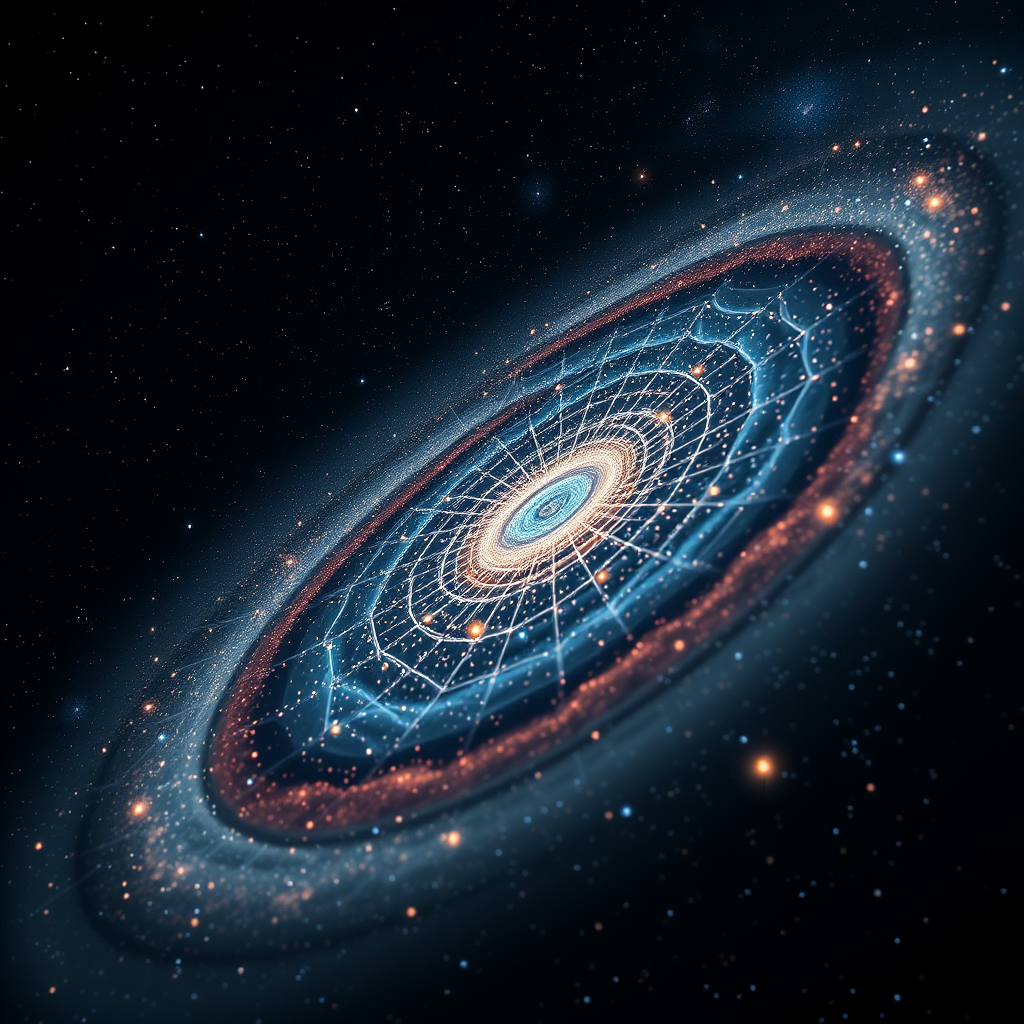
AI-generated image — a conceptual visualization
Now, the honest part.
We do not know what dark matter is. We have never caught a particle of it. Experiments have been running for decades — vats of liquid xenon buried under mountains, waiting for a single atom to be nudged by something invisible passing through [13]. They keep not finding it. Each experiment gets more sensitive and each one comes back empty, which has ruled out large territories of possibility without pointing at what's left.
There are alternatives. Some physicists argue that instead of adding invisible matter, we should modify gravity itself — that Newton's law might be slightly wrong at very low accelerations [14]. Modified Newtonian Dynamics, MOND, does a genuinely good job at explaining how individual galaxies rotate, better in some ways than dark matter does [14]. What it has struggled with is exactly the thing we've been talking about: the large-scale web, the growth of structure from those tiny early ripples, and observations like the Bullet Cluster, where two galaxy clusters collided and the mass appears to have sailed straight through, separated from the visible gas [15].
That's the state of it. A model that predicts the shape of the universe with real precision, built on a substance we cannot identify, and a rival that explains small scales beautifully and large scales poorly. Anyone who tells you this is settled is selling something.
There's one more piece, and it's the one that unsettles me most.
The web is not growing forever. About five billion years ago, the expansion of the universe stopped slowing down and started speeding up [16]. Something is pushing space apart faster and faster. We call it dark energy, which is a name that means "we have no idea," and it now accounts for about 68 percent of everything [17].
For the web, this is a death sentence. Gravity built the filaments by pulling matter together across enormous distances. Accelerating expansion breaks that. The stretching of space between distant structures outpaces the pull between them. Filaments that would have merged never will. The web is, essentially, finished being built. Simulations of the far future show the structures we can see today drifting apart, each cluster left isolated, the connections between them stretched to nothing [18].
We are looking at the cosmic web at the one moment in cosmic history when it is fully assembled and still visible. Earlier, it hadn't formed. Later, it will be pulled out of view.
Which raises a thought that Lawrence Krauss and Robert Scherrer made in a paper in 2007 [19]: astronomers in the very distant future will look out and see nothing beyond their own galaxy. No other galaxies. No web. No evidence of expansion. They will conclude, reasonably and carefully, that they live in a single island of stars in a static void — and they will be completely wrong, with no way of knowing it.
Which makes you wonder what's already gone from our sky.
Here's theHere's the part nobody puts on the poster.
We can draw the web. We can simulate the web on a supercomputer and get something that looks unnervingly like the real sky [2]. What we cannot do is tell you what most of it is made of.
The scaffolding isn't galaxies. Galaxies are the glitter on top. Underneath is dark matter *2 — stuff that has mass, pulls on things, and otherwise refuses to interact with anything you could build a detector out of. It doesn't glow. It doesn't block light. It just sits there being heavy. And there's roughly five times more of it than everything made of atoms [3].
We have named it. Naming is not knowing. Experiments have been hunting for a dark matter particle underground for forty years, in old mines and under mountains, and so far the result is a very precise description of what it isn't [4].
Then there's the thing pulling the holes open. The voids in the foam aren't just empty — they're growing, because the whole universe is expanding faster over time, driven by something we call dark energy *3. It's about 68 percent of the total energy budget [3]. That's the majority shareholder in reality, and we have no idea who they are.
So: the shape of the cosmic web is set mostly by two ingredients we can't identify. It's a bit like reconstructing a recipe when you can taste the dish perfectly but the two main ingredients are unlabeled jars.
It gets more uncomfortable. For decades, we couldn't even find all the ordinary matter — the protons and neutrons, the stuff we understand. Add up all the stars and gas clouds and galaxies and you come up short by roughly half of what the early universe says should exist [5]. The leading answer is that the missing atoms are strung along the filaments themselves as thin, million-degree gas, too hot to shine in visible light and too diffuse to show up easily *4. Recent observations have found a lot of it [6]. Not all of it. The books still don't quite balance.
And there are cracks in the picture at both ends of the ruler. On the largest scales, two different ways of measuring how clumpy the universe is — one from the afterglow of the Big Bang, one from how galaxies bend light today — don't quite agree. The disagreement is small. It has stubbornly refused to go away [7]. Either something is off in our measurements, or something is off in the story.
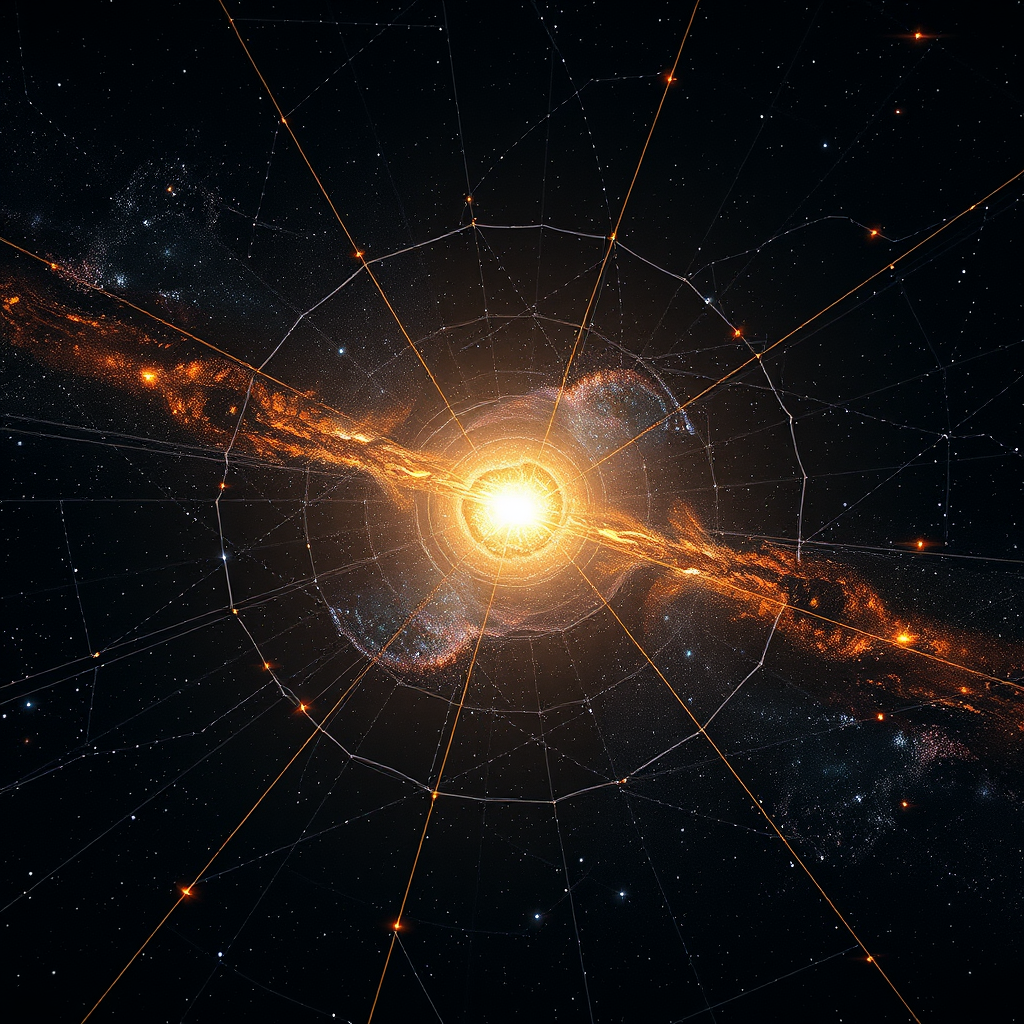
AI-generated image — a conceptual visualization
On the smallest scales, simulations of dark matter predict more little satellite galaxies around the Milky Way than we can find, and predict them denser at their centers than they appear to be [8]. Maybe they're there and too faint to see. Maybe ordinary matter blows them apart from the inside with supernovae. Maybe dark matter is stranger than we think.
And underneath all of it sits the deepest gap. The web grew from tiny density ripples in the infant universe — some regions a hundred-thousandth denser than others [9]. Those ripples had to come from somewhere. The best idea is inflation *5: a fraction of a second where space stretched at an absurd rate and blew microscopic quantum jitters up to cosmic size. It fits the data beautifully. It is also, at the moment, a framework rather than a specific theory, and the direct evidence for it hasn't arrived [10].
Which leaves you here. Living inside a structure whose shape we can map to stunning precision, whose ingredients we mostly can't name, seeded by an event we can't yet prove happened.
Science usually gets described as a pile of answers. From where I'm sitting, it looks more like a very well-organized list of things we're still confused about.
If the largest structure you belong to was built by forces we've never held in our hands — what else is holding you up that you haven't noticed yet?
So where are you in all this?
Not in a void. You'd know, in a way — the night sky would be emptier, the nearest neighbors farther off. You're on one of the walls. The Milky Way sits inside a filament, part of a flow of galaxies about 500 million light-years across that researchers named Laniakea, and everything in it is sliding toward a common gravitational low point [3]. You're not orbiting it. You're falling toward it. Have been your whole life, at roughly 600 kilometers a second, which is fast enough to cross the United States in eight seconds and slow enough that nothing about your Tuesday will change.
That's the part that gets me. You are a passenger on a piece of foam. The wall you live on was drawn by matter you cannot see, according to a pattern nobody designed, and you will arrive nowhere in particular during the entire history of your species.
But here's the turn.
The web didn't start as a web. Gravity is patient but it isn't creative — it can only amplify what's already there. Something had to be uneven first.
Run the clock backwards far enough and the foam smooths out. The filaments unbraid. The voids fill in. You get a universe that is almost perfectly the same everywhere — hot, dense, featureless soup. Almost. Because when we look at the oldest light there is, the glow left over from when that soup finally cooled, we find it isn't smooth. It's mottled. Patches hotter and colder than average by about one part in a hundred thousand [4].
That's the whole seed. A rounding error in the early universe.
Gravity took those faint lumps and spent 13.8 billion years leaning on them. Slightly denser regions pulled in a little more. Having pulled in more,they pulled harder. Slightly emptier regions gave up what they had to their neighbors and kept emptying. Run that feedback loop long enough and a rounding error becomes a galaxy, a cluster, a wall, you.
Which means the shape of everything you can see was decided before there were atoms.
And that raises a question I can't shake, one that the next post is going to have to face directly. Those tiny lumps in the oldest light — where did they come from? Something had to wrinkle a smooth universe. The leading answer involves quantum fluctuations, the twitchy uncertainty that governs the very small, stretched to the size of the sky in a fraction of a fraction of a second [5]. We think. We're honestly not sure.
If that's right, then the cosmic web is a quantum accident, blown up until you could live inside it.
What else got magnified along with it?
TERMS EXPLAINED
- *1Filament: A long, stringy region of space where galaxies and dark matter are strung out in a line, like beads on a thread. The walls of the cosmic foam.
- *2Void: A huge, roughly round patch of space with almost nothing in it. Not perfectly empty — just emptier than anywhere you can imagine. The inside of the bubble.
- *3Dark matter: Matter that has weight and pulls on things with gravity, but does not give off light, absorb it, or reflect it. We know it is there because galaxies move as though something heavy is holding them together. We have never caught a piece of it.
- *4Light year: The distance light travels in a year. Roughly six trillion miles. When something is a million light years away, you are seeing it as it was a million years ago.
- *5Large-scale structure: The overall arrangement of matter in the universe when you zoom out far enough that individual galaxies become dots. The shape of everything, seen from very far back.
SOURCES & REFERENCES
- [1]Tegmark, M. et al. (2004). "The Three-Dimensional Power Spectrum of Galaxies from the Sloan Digital Sky Survey." The Astrophysical Journal. — Galaxy positions form filaments and dense nodes rather than a random scatter.
- [2]Pan, D. C. et al. (2012). "Cosmic Voids in Sloan Digital SkySurvey Data Release 7." Monthly Notices of the Royal Astronomical Society. — Catalogue of cosmic voids, including underdense regions exceeding 300 million light years across.
- [3]Springel, V. et al. (2005). "Simulations of the formation, evolution and clustering of galaxies and quasars." Nature. — Large-scale structure emerges from gravity acting on dark matter over roughly 13.8 billion years.
- [4]Tully, R. B. et al. (2014). "The Laniakea supercluster of galaxies." Nature. — The Milky Way sits within a larger flow of matter draining toward denser regions of the local structure.
- [5]Springel, V. et al. (2005). "Simulations of the Formation, Evolution and Clustering of Galaxies and Quasars." Nature, 435, 629–636. — Simulations reproduce the observed web of walls, filaments and clusters from small initial fluctuations.
- [6]Icke, V. & van de Weygaert, R. (1991). "The Galaxy Distribution as a Voronoi Foam." Quarterly Journal of the Royal Astronomical Society, 32, 85–112. — The large-scale galaxy distribution is well described statistically by a foam-like geometry.
- [7]Springel, V. et al. (2005). "Simulations of the formation, evolution and clustering of galaxies and quasars." Nature, 435, 629. — The Millennium Simulation; ten billion particles reproducing the observed cosmic web and galaxy clustering statistics.
- [8]Pillepich, A. et al. (2018). "First results from the IllustrisTNG simulations." Monthly Notices of the Royal Astronomical Society, 475, 648. — Simulations including gas physics, star formation, supernova and black hole feedback producing realistic galaxy populations within the web.
- [9]Schaye, J. et al. (2015). "The EAGLE project: simulating the evolution and assembly of galaxies and their environments." MNRAS, 446, 521. — Simulated galaxy masses and sizes matching observations across cosmic time.
- [10]Dressler, A. (1980). "Galaxy morphology in rich clusters." The Astrophysical Journal, 236, 351. — The morphology–density relation: galaxies in dense environments are systematically older and redder.
- [11]Nicastro, F. et al. (2018). "Observations of the missing baryons in the warm–hot intergalactic medium." Nature, 558, 406. — Detection of missing ordinary matter as hot filamentary gas via X-ray absorption toward a quasar.
- [12]Tanimura, H. et al. (2019). "A search for warm/hot gas filaments between pairs of SDSS Luminous Red Galaxies." MNRAS, 483, 223. — Stacked detection of hot gas bridges between galaxy pairs.
- [13]Aprile, E. et al. (XENON Collaboration) (2018). "Dark Matter Search Results from a One Tonne-Year Exposure of XENON1T." Physical Review Letters, 121, 111302. — Null results from deep underground direct-detection experiments.
- [14]Milgrom, M. (1983). "A modification of the Newtonian dynamics as a possible alternative to the hidden mass hypothesis." The Astrophysical Journal, 270, 365. — The MOND proposal and its success with galaxy rotation curves.
- [15]Clowe, D. et al. (2006). "A Direct Empirical Proof of the Existence of Dark Matter." The Astrophysical Journal Letters, 648, L109. — The Bullet Cluster: mass separated from visible gas after a cluster collision.
- [16]Riess, A. G. et al. (1998). "Observational Evidence from Supernovae for an Accelerating Universe and a Cosmological Constant." The Astronomical Journal, 116, 1009. — Discovery that cosmic expansion began accelerating a few billion years ago.
- [17]Planck Collaboration (2020). "Planck 2018 results. VI." Astronomy & Astrophysics, 641, A6. — Dark energy comprises approximately 68 percent of the universe's energy content.
- [18]Nagamine, K., Loeb, A. (2003). "Future evolution of nearby large-scale structures in a universe dominated by a cosmological constant." New Astronomy, 8, 439. — Accelerating expansion halts further assembly of large-scale structure and isolates existing groups.
- [19]Krauss, L. M., Scherrer, R. J. (2007). "The Return of a Static Universe and the End of Cosmology." General Relativity and Gravitation, 39, 1545. — Far-future observers will see no other galaxies and no evidence of expansion.
Inline citations [N] correspond to numbered references above.
A weekly journey from the present universe back to the Big Bang — and to what it means for us.
![[Deep Dive] Scale-free localization in pseudo-Hermitian quantum walk](/content/images/size/w600/2026/10/deep_dive_thumb-9.png)