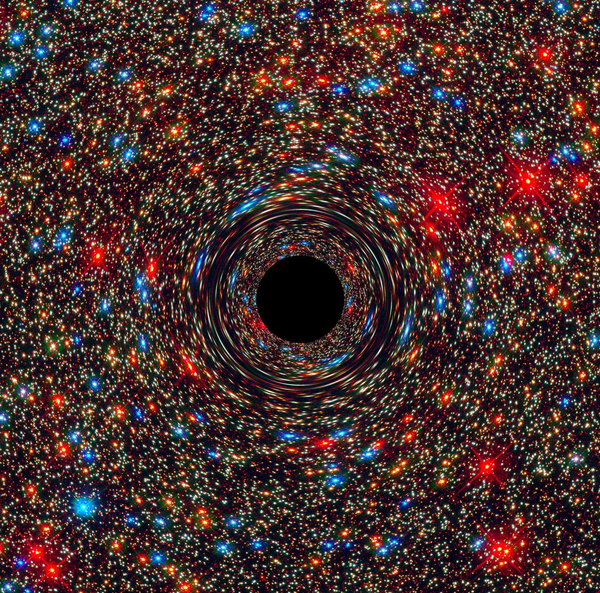
Galaxies That Shouldn't Exist
Episode 2: The Universe Is Still Expanding — And Speeding Up
I like science that leaves room to imagine. When things that seemed unrelated turn out to share a hidden pattern — that moment feels like finding one of the world's secrets. Which opens a door I didn't know was there. Which leads somewhere unexpected. Which eventually leads back to me.
You know that feeling when you arrive somewhere too early?
You show up to a party. The lights are on. The music is playing. But the host is still setting out chips, and nobody else is there yet. You check your phone. You did read the invitation right. You're just... early. Wrong time. Too soon.
Now flip it around.
Imagine showing up to a party and finding people who arrived before the party could have started. Not early guests. Guests who were somehow already there, drunk, having a great time, before the invitation was even sent.
That's the feeling I can't shake right now.
Because in the last few years, we pointed a very expensive telescope at the oldest, faintest light we can catch — light that has been traveling toward us for more than 13 billion years [1]. And when that light finally landed, it showed us something that shouldn't have been there.
Galaxies. Big ones. Grown-up ones. Full of stars, arranged and settled, looking like they'd been around for ages [2].
The problem is the timing.
That light left them when the universe was only a few hundred million years old [2]. In cosmic terms, that's the universe as a newborn. Barely out of the delivery room. Everything we thought we understood said galaxies that mature take a long time to build — you need generations of stars to live and die, gas to collect, gravity to slowly pull things into shape. It's not a quick process. It's supposed to take billions of years.
And yet there they were. Already grown. At the party before the party started.
Let me put the numbers to it, because the numbers are the whole point. Some of these early galaxies looked like they'd already made hundreds of billions of times the mass of our Sun in stars [3]. That's a fully assembled galaxy, roughly the size of ours. Except ours took most of the universe's history to get here. These did it in a cosmic eyeblink [3].
When the first images came back, some astronomers assumed they'd made a mistake. That's the honest part. You don't usually announce "the universe is broken" on a Tuesday. You check your math. You check the telescope. You check whether that faint smudge is actually as far away as it looks, or whether it's something closer wearing a costume.
They checked. A lot of the smudges held up [2].
So now we have a real puzzle. Either the universe built its first galaxies far faster than anything we thought possible — which means our recipe for how stuff comes together is missing an ingredient [3]. Or we've misjudged something even deeper. How fast time ran back then. How much stuff there really was. How the whole thing was expanding.
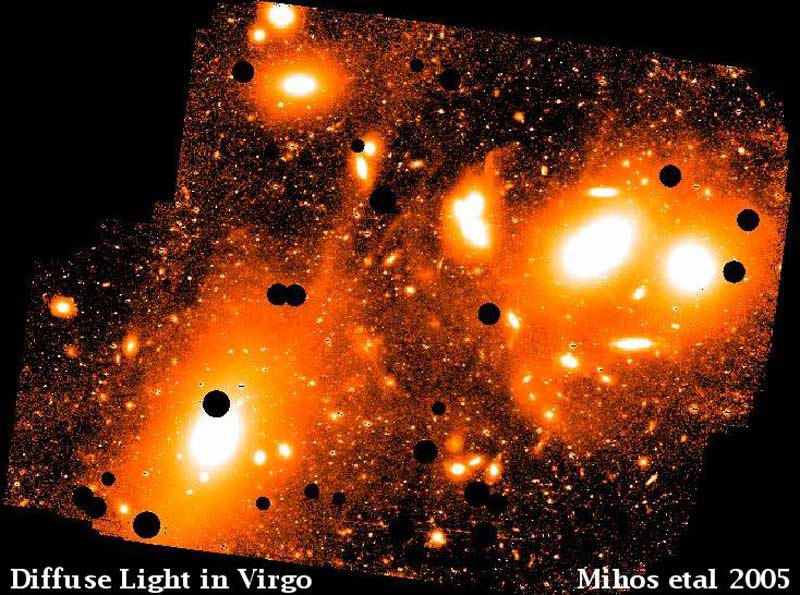
📷 Streams of Stars in the Virgo Cluster of Galaxies — NASA/ESA (NASA APOD, Public Domain)
That last one is what keeps me up.
Because to know how old the universe was when that light left — to say "a few hundred million years" instead of "a few billion" — you have to know how fast the universe is stretching. And it turns out we don't fully agree on that number [4]. Two good ways of measuring it give two different answers, and nobody can make them line up [4].
I find that oddly comforting. We built a machine to look at the beginning of everything, and the beginning looked back and said: you got something wrong.
Which brings me to the thing I actually want to talk about. Not the galaxies exactly. The stretchingitself. The fact that everything is pulling away from everything else, and doing it faster every year [5].
That's not a metaphor. Right now, as you read this, the space between distant galaxies is getting wider [5]. Not because they're flying through space like debris from an explosion. Because space itself is growing underneath them, carrying them along, the way raisins drift apart in rising bread dough *1.
And here's the part that took me a while to sit with. It's not slowing down. You'd think it would. You throw a ball up, gravity drags it back. All that matter in the universe should be pulling everything together, hitting the brakes. For most of the last century, the only real argument was how hard the brakes were pressed [5].
Then in the late 1990s, two teams measured it carefully and found the opposite [5]. The expansion is accelerating. Something is pushing space apart, harder and harder, and we have almost no idea what it is [6].
We gave it a name anyway. We called it dark energy — which is a bit like naming the thing in your basement "The Noise" [6]. It sounds like an explanation. It isn't. It's a label on a box we can't open.
So those impossibly early galaxies and this runaway expansion are tangled up together. To read the age of the young universe, you need the expansion. To trust the expansion, you need the numbers to agree. And the numbers don't agree [4].
Two mysteries, holding hands.
I want to follow that thread with you — backwards, all the way to the start, if we can get there. But first I need to ask you something, and I don't have the answer.
If the map you used to arrive somewhere turns out to be wrong, do you trust where you're standing?
So here's what actually happened, and it's stranger than the party.
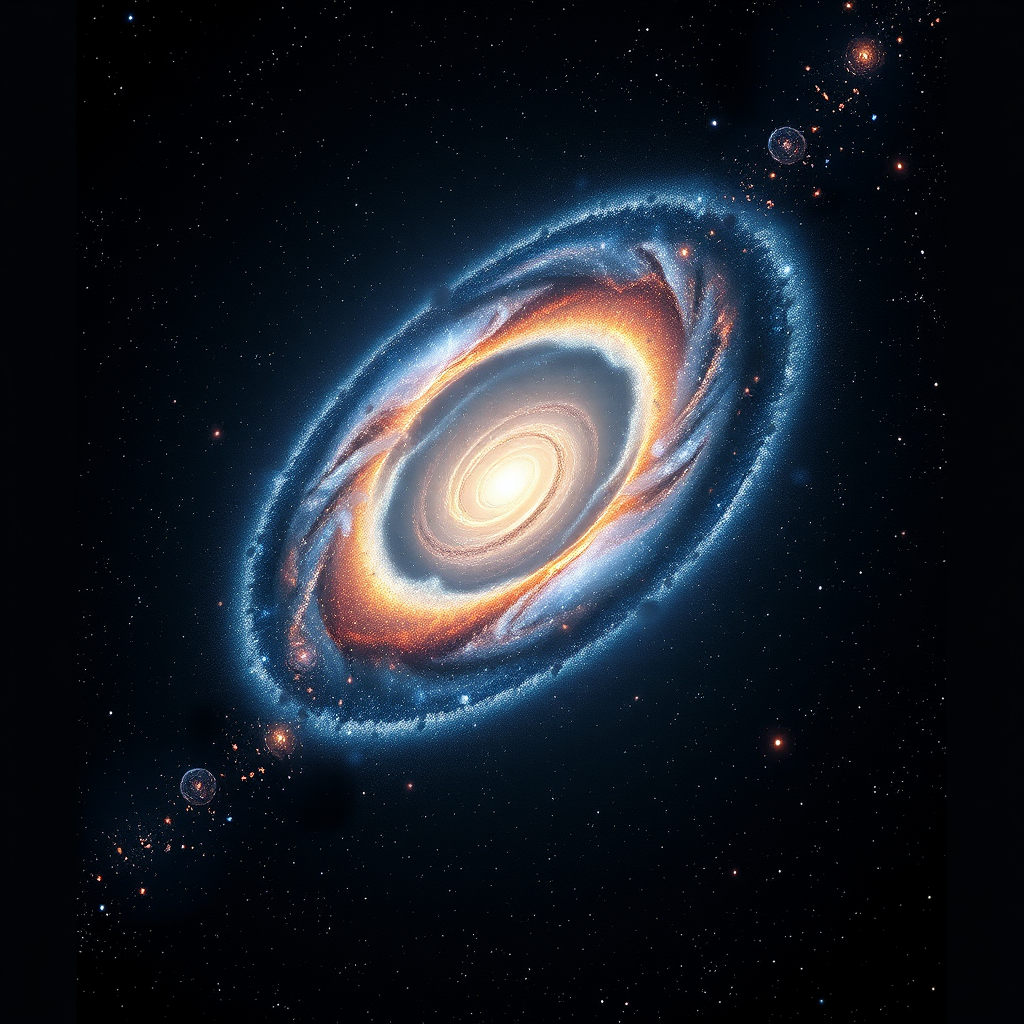
AI-generated image — a conceptual visualization
In July 2022, the James Webb Space Telescope opened its eyes for the first time [1]. This is a telescope that sees in infrared — light too red for your eyes to catch, the kind of light that travels to us from the oldest, most distant corners of the universe. Because here's the trick: looking far away is the same as looking back in time. Light is fast, but it's not instant. When you see the Sun, you're seeing it as it was eight minutes ago [2]. When Webb looks at a galaxy billions of light-years away, it's seeing that galaxy as it was billions of years ago. The telescope is a time machine that only points one direction. Backwards.
So Webb looked back. Way back. Toward the beginning.
Let me try an analogy for what it found.
Imagine you're watching a recording of a child growing up, but the tape is scrambled. You can't play it in order. You can only pull out random frames. So you grab a frame and you try to guess how old the kid is in the picture. Baby teeth? Probably five or six. Braces? Maybe twelve. A driver's license in the photo? Sixteen at least.
Now imagine you pull a frame that you're certain comes from the first year of the recording. The very beginning. And in that frame, there's a fully grown adult. Full beard. Mortgage. Opinions about tax policy.
That's the problem.
The universe is about 13.8 billion years old [3]. Webb found galaxies that appear to have formed when the universe was only 300 to 500 million years old — the newborn phase, the first frames of the tape [4]. And these galaxies weren't small smudges of gas just starting to clump together, like we expected. Some of them looked massive. Mature. Packed with stars, as if they'd been busy building for far longer than the universe had existed [4].
Adults in the baby photos.
Let me stretch the analogy a little further, because this is where it gets good. Building a galaxy takes time. You need gas to cool, collapse, and light up into stars. Stars need to live and die and seed the next generation. It's slow cooking, not a microwave. The recipe we had said: in 300 million years, you get a starter galaxy. A toddler. A little clump. What you should not get is a giant, dense city of stars that looks like it's been running for billions of years [4].
It's like walking into a brand-new bakery on opening morning and finding a hundred perfectly aged sourdough loaves already cooling on the racks. Sourdough takes days. The bakery opened an hour ago. So either someone is lying about the opening time, or you're wrong about how bread works.
And that's the honest fork in the road. There are two ways out, and both should make you a little uncomfortable.
Option one: we're wrong about the bread. Maybe galaxies can form much faster than we thought. Maybe the early universe had ways of building big, fast, that our models never accounted for [5]. That's not a small edit. That's rewriting the recipe.
Option two: we're wrong about the clock. Maybe some of these galaxies aren't asmassive as they first looked. Some of that brightness might not be a billion crowded stars — it might be a black hole at the center, gorging on gas and glowing like a lighthouse, fooling us into thinking we're seeing a whole city when we're really seeing one very hungry mouth [6].
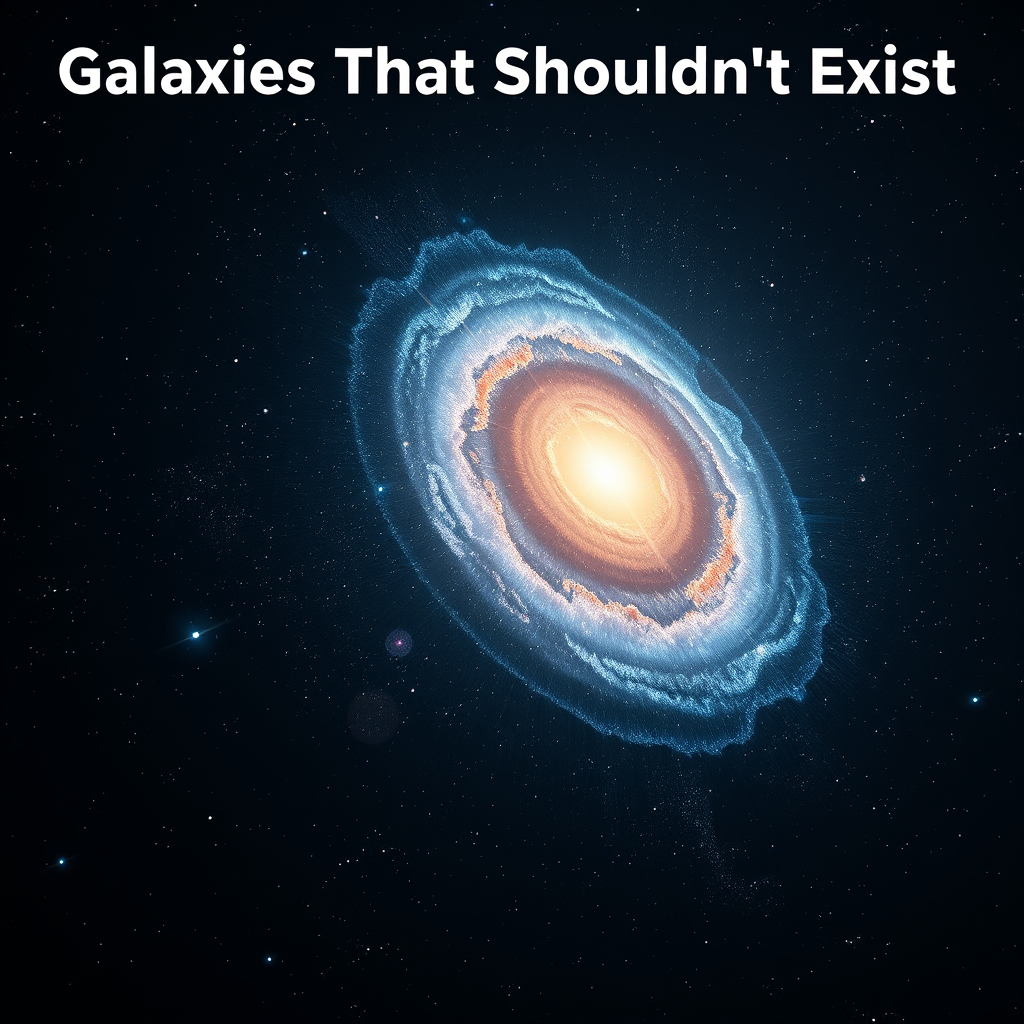
AI-generated image — a conceptual visualization
Astronomers have already caught a few of these impostors. Galaxies that looked impossibly heavy turned out to be lit up by feeding black holes, not overstuffed with stars [6]. So the adult in the baby photo? On closer inspection, some of them are just kids standing on each other's shoulders wearing a long coat.
But — and this is the part that keeps people up at night — not all of them. Some of these early galaxies still look genuinely, stubbornly too big, even after you account for the black holes and the tricks of light [4]. The coat comes off and there's still an adult standing there.
Here's how I've come to picture the whole mess.
You have a photograph of the universe's first morning. In that photograph, there are things that don't belong in a first morning. And you're standing there holding it, doing what any reasonable person does when the evidence contradicts the story: checking whether you misread the photo, or whether you told the wrong story.
The universe doesn't care which. It just keeps handing you frames.
And every time Webb pulls another one out of the scrambled tape, the pattern gets harder to explain away as a fluke. It's not one weird galaxy. It's a crowd of them, showing up at a party that, by every calculation we trust, hadn't started yet [4].
So we're left where good mysteries always leave us. Not with an answer, but with a sharper question. Either galaxies grow up faster than we imagined, or the deep past is even weirder than the strangeness we already knew about. Maybe both. Maybe neither, and there's a third thing we haven't thought of yet — which, if you've been paying attention to how this stuff usually goes, is the option I'd quietly put my money on.
Which means the loaves are cooling on the rack. The bakery just opened. And nobody in the building can quite agree on what time it actually is.
So Webb looked back, and it found something that shouldn't be there.
Let me tell you what "shouldn't be there" means, because it's not a figure of speech. It's a math problem.
The universe is 13.8 billion years old [2]. We're pretty confident about that number. It comes from measuring how fast everything is flying apart and running the clock backwards, plus the faint heat left over from the beginning — the cosmic microwave background *1, the oldest light there is. Both methods agree. 13.8 billion years.
The first stars didn't switch on right away. After the Big Bang, the universe was too hot for atoms. Then it cooled into a fog of hydrogen gas. Dark. No stars, no galaxies, nothing to see. Physicists call this the cosmic dark ages *2. It lasted a while. The first stars are thought to have formed somewhere between 100 and 250 million years after the beginning [3].
Then galaxies had to build themselves. And building a galaxy is slow work.
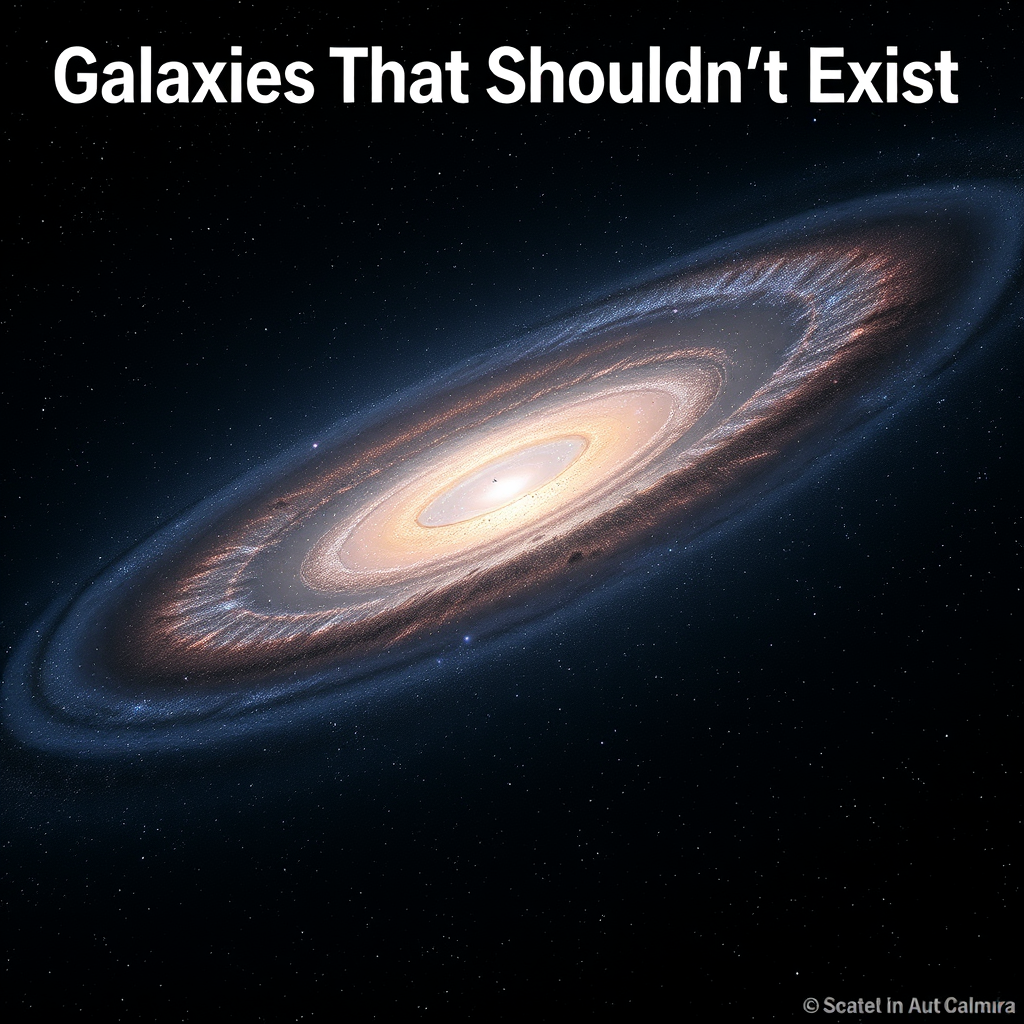
AI-generated image — a conceptual visualization
Here's the picture physicists had, and it was a good picture. Little clumps of gas pull together under gravity. Small galaxies form first. They collide, merge, eat each other, grow. Over hundreds of millions of years, then billions, you get the big spiral and elliptical galaxies we see nearby today. Small to big. Slow and steady. This is called hierarchical assembly *3, and it was one of the more settled ideas in the field.
So when Webb aimed at the early universe — the first few hundred million years — nobody expected to find much. Maybe some faint smudges. Some baby galaxies just getting started. Small, dim, a little sad.
That's not what showed up.
In early 2023, a team led by Ivo Labbé at Swinburne University published a paper in Nature with a title that sounds calm and reads like a fire alarm: "A population of red candidate massive galaxies ~600 Myr after the Big Bang" [4]. They found six galaxies. Six galaxies that appeared to already contain as many stars as the Milky Way does today — tens of billions of Suns' worth of mass [4]. And they had done it in about 600 million years.
That's the problem. The Milky Way took most of the age of the universe to become what it is. These things did it in the first five percent of cosmic history.
Labbé didn't hide how strange this was. In the paper and the press around it, the team was blunt: these objects are "too massive" to fit comfortably in the standard model of how galaxies grow [4]. One of the co-authors, Erica Nelson at the University of Colorado, put it in plain terms to reporters — she said the galaxies were so unexpected they broke the science. "It's bananas," she said. "You just don't expect the early universe to be able to organize itself that quickly" [5].
That word — organize — is the whole thing. Gravity needs time to pull matter together. You can't rush it. Or so we thought.
Now, science is not a place where you get to panic on the first day. There are ways to be wrong, and good scientists go looking for them before anyone else does.
The first way to be wrong isdistance. In astronomy, you almost never measure how far away something is directly. You measure how red its light looks. The universe is expanding, so light from distant objects gets stretched on its way to us — stretched toward red. The more stretch, the farther and older. Physicists call this redshift *4. A high redshift means very far, very early.
But you can be fooled. A nearer galaxy full of dust can also look red, because dust reddens light the same way a sunset does. So a "young distant giant" might really be a "closer, dustier, ordinary" galaxy wearing a costume. To be sure, you need a spectrum — you split the light into its colors and read the fingerprints of specific atoms, which tell you the redshift exactly instead of guessing from a blur.
Labbé's team was careful to say so. Their paper called these objects candidate galaxies [4]. Candidates. Not verdicts. They flagged their own uncertainty before their critics could.
And the critics came, which is how it's supposed to work.
Over the following months, other teams chased spectra for some of these monsters. A group did follow-up on one of the brightest candidates and found something deflating and interesting at the same time: at least one of the objects wasn't a galaxy stuffed with stars. It was hiding a supermassive black hole [6]. A black hole feeding on gas glows fiercely. That glow can masquerade as the light of billions of stars, making a galaxy look far heavier than it is. So some of the "impossible mass" was a mirage — not stars, but a black hole putting on a show.
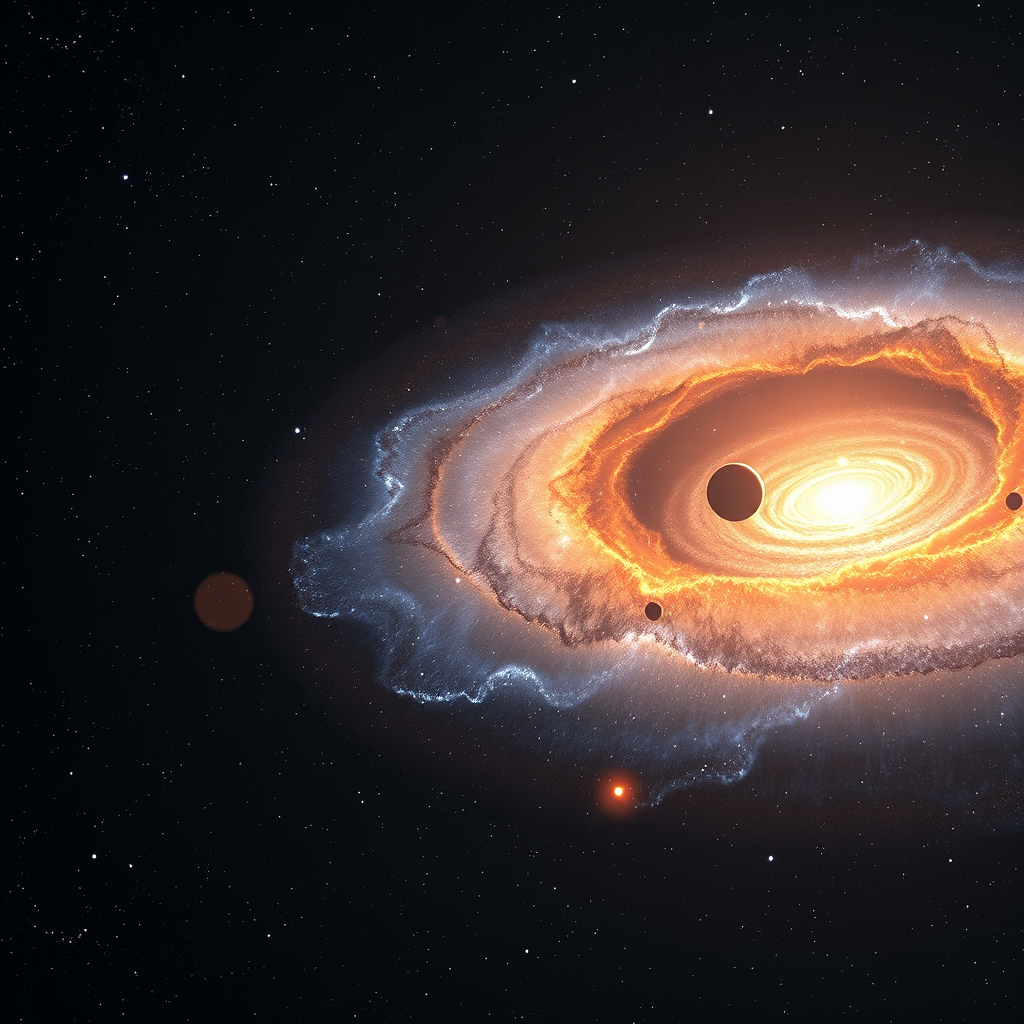
AI-generated image — a conceptual visualization
That sounds like the problem solved. It isn't. Because a giant black hole in the first 600 million years is its own headache. Black holes are supposed to grow slowly too. Finding a big one that early just moves the impossible thing from one column to another [6]. You close one door and a window opens.
Then came the confirmations that couldn't be waved away.
In 2024, a team using Webb's spectrograph confirmed a galaxy called JADES-GS-z14-0, sitting at a redshift where we're seeing it as it was just 290 million years after the Big Bang [7]. Confirmed, not guessed — they read the fingerprints in the light. And it's bright. Too bright, and too big, for something that young. Stefano Carniani at the Scuola Normale Superiore in Pisa, who led the work, said the surprising thing was not just that the galaxy exists but "the fact that it is quite large and luminous" for that moment in time [7].
The pattern held across many observations. The early universe kept handing us galaxies that were brighter, bigger, and more mature than the models allowed. A team led by Michael Boylan-Kolchin at the University of Texas ran the numbers on the extreme cases and pointed out something sharp: if you take the earliest, most massive candidates at face value, they'd need to have turned nearly all their available gas into stars almost immediately [8]. Real galaxies are wasteful. They lose gas, blow it out, take their time. Turning basically all of it into stars, fast, is not how any galaxy we know behaves. Boylan-Kolchin's paper put it carefully: the brightest early galaxies would require an efficiency of star formation far higher than we see anywhere in the nearby universe, and if that's real, "it may indicate a problem" with the standard cosmological model itself [8].
That last part is the thing that makes physicists sit up. Not "our galaxy recipe is wrong" — that would be annoying but fixable. Something more unsettling: maybe the whole framework of how much matter there was and how fast it could clump needs adjusting. That framework is called Lambda-CDM *5, and it's the standard model of cosmology. It's the picture that gets you the 13.8 billion years, the dark ages, the whole timeline. It has passed test after test for decades. Nobody wants to throw it out over six red smudges. But nobody gets to ignore the smudges either.
So where does the field actually stand? Let me be honest about it, because honesty is more interesting than a clean ending.
There are, roughly, three ways out, and physicists are arguing about all of them.
The first: we're being fooled about the mass. Some of these giants are black holes in disguise, some are dustier or closer than they looked, and once you clean up the measurements, the crisis shrinks. This is the boring answer, and boring answers win more often than exciting ones. A number of the extreme candidates have already softened under closer inspection [6].
The second: the galaxies are real, but our recipe for making stars in the early universe was too conservative. Maybe the first galaxies were just better at it than anything today. Maybe the first stars were enormous and blazing, so a little bit of mass produced a lot of light [9]. Maybe star formation in that era ran without the brakes that slow it down now. In this version, Lambda-CDM survives — we just underestimated how eager the young universe was to build things. Several teams lean this way, and it's the most comfortable fix that still respects the data.
The third, the one people whisper: the framework has a crack in it. Maybe there was more matter available to clump early, or gravity had more to work with than we thought. This would touch the same machinery that governs the thing this whole episode is about — the expansion of the universe, and why it's speeding up. If the early universe assembled faster than Lambda-CDM permits, and the late universe is expanding faster than Lambda-CDM predicts, you start to wonder whether those are two symptoms of one illness. Nobody has shown that. But the question is sitting there, unignored [8].
Here's what I keep coming back to. Every time we build a sharper eye, the universe turns out to have been busier, earlier, than we gave it credit for. We keep arriving at the party expecting an empty room and finding it already crowded. The dark ages were supposed to be dark and long and dull. Instead, the lights came on fast, and hard, and we don't fully understand the switch.
Adam Frank, the astrophysicist, has a line about this that stuck with me — that the history of astronomy is mostly the history of being surprised by how much is out there and how early it got started [10]. Webb didn't break physics. It did something more useful.
Here's the part I love most: nobody knows what's going on.
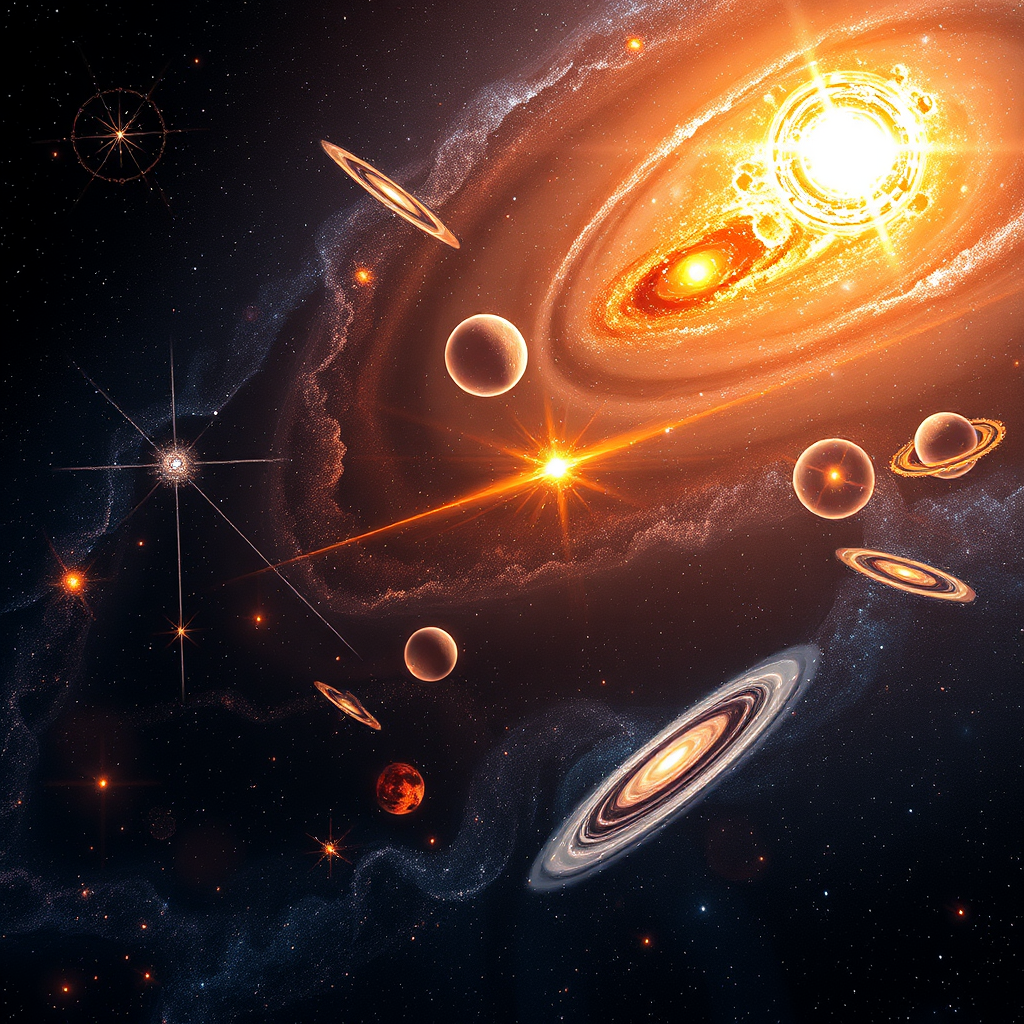
AI-generated image — a conceptual visualization
Not "we have three competing theories and one is probably right." I mean the people who built the telescope, who spent decades and billions getting it into space, looked at these early galaxies and said, out loud, in papers, that this is a problem [3].
Let me lay out the honest options, because each one is strange in its own way.
Option one: the galaxies are lying about their weight. When Webb sees a smudge of light from the early universe, it estimates how many stars are packed in there by how bright it is. But brightness can fool you. A galaxy that's making stars in a sudden frenzy — a cosmic sugar rush — can look far more massive than it really is [4]. So maybe these galaxies aren't too big. Maybe they're just showing off. Some follow-up measurements have already trimmed the early estimates down [4]. That would be the boring answer. Boring is often correct.
Option two: they really are that big, and our recipe for making galaxies is wrong. The standard story says gas slowly clumps under gravity, stars switch on gradually, galaxies grow up over billions of years, like everything else. But if massive galaxies existed 500 million years after the beginning [3], maybe the early universe was better at building things than we thought. Maybe stars formed faster, or more efficiently, turning almost all their gas into stars instead of wasting most of it [5]. Nobody knows why they'd do that.
Option three — and this is the one that keeps me up — maybe the clock is off. Not by much. But that 13.8 billion year number, and the expansion speed behind it, comes with its own quiet argument. When we measure how fast the universe is expanding one way, we get one number. Measure it another way, we get a different number. They don't match, and they've refused to match for years [6]. It's called the Hubble tension *1. It's small. It's stubborn. And if something is wrong with our expansion story, then the age of the universe, the timeline of the party, the whole invitation, might need editing.
I want to be clear about something. These three options are not equally likely, and most working astronomers would bet on option one. The universe fooling us is easier to swallow than the universe being fundamentally misunderstood.
But here's what I keep coming back to. Every one of these explanations is a way of saying: we don't fully know how galaxies come to exist. We've been staring at galaxies our whole existence as a species. We live inside one. And we still can't say for certain how the first ones got made, or how fast, or whether they broke our rules.
That's not a failure. That's the good part. A telescope was supposed to confirm what we already believed, and instead it showed up with a question we didn't order.
What I can't shake is the smallness of it all. Not the galaxies — those are enormous. I mean us. A species that figured out how to build a mirror the size of a tennis court, fold it up, fire it a million miles from home, and use it to catch light that left its source before the Earth had even formed [1]. And the first thing that light told us was: you were wrong about something. We're not sure what yet.
You'd think that would be humbling. It is. But italso feels like the opposite. Being wrong is how you know you're still looking.
Think about your own life for a second. The moments you actually learned something — were they the times the world confirmed what you already believed? Or were they the times you showed up expecting one thing and got handed another?
We built the most expensive question-answering machine in history, and it answered with a better question. Somewhere out there is light that's been traveling for thirteen billion years, and it arrived just in time to tell us we don't understand the beginning as well as we thought.
So which is it? Are those galaxies fooling us — or are we the ones who read the invitation wrong?
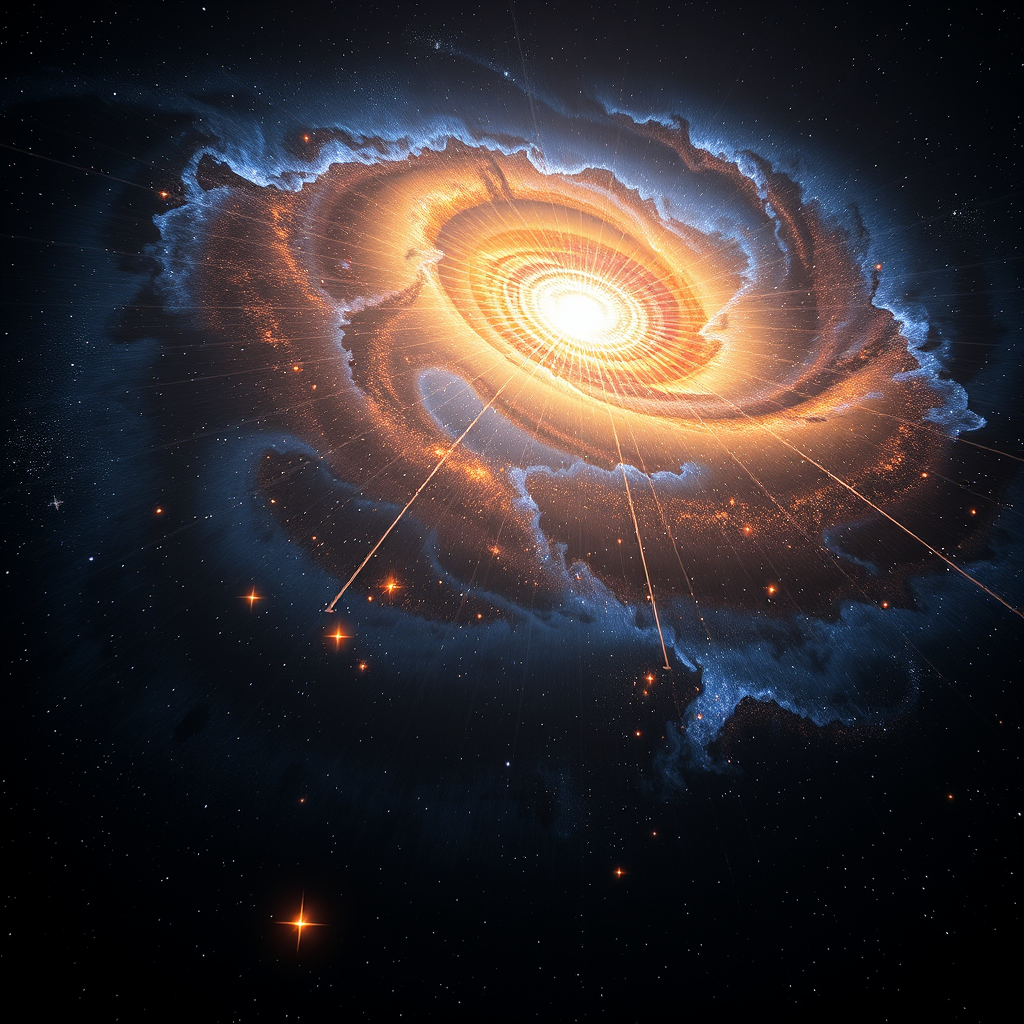
AI-generated image — a conceptual visualization
So where does that leave you?
Sitting here, thirteen and a half billion years after the fact, made of atoms that were cooked inside stars that lived and died before the Sun existed. You are the universe's late arrival, showing up to read a blog post about guests who came too early.
And here's the thing I can't shake.
Every time we build a better eye, the universe does this to us. It waits. It lets us feel like we've got the story straight — the age, the timeline, the neat sequence of one thing leading to the next. Then it shows us a galaxy that breaks the schedule, and we have to admit we were guessing more than we thought [3].
That should be terrifying. Somehow it's the opposite.
Because think about what these too-early galaxies actually mean for you. They mean the story isn't finished. They mean the smartest people alive, with the most expensive machine ever pointed at the sky, are standing in front of the same mystery you are, equally confused, just with better data. You are not behind. You are caught up. You are exactly as puzzled as the experts, which is a rare and honest place to stand.
And it gets stranger the further back you go.
Because these galaxies are old, but they're not the beginning. They're just the oldest thing we can see. Behind them is a wall of light *1 we can't look past — the moment the universe first became clear enough to see through. And behind that wall is the thing this whole series is walking toward. The start. The moment before there were galaxies to arrive too early, before there was time to be early in.
We've been traveling backwards this whole time. Party guests, then the invitation, then the moment someone decided to throw a party at all.
The universe is still expanding. Still speeding up. Still, somehow, making things we didn't expect to find. And we're the ones who got here just in time to notice we don't understand it.
So before we reach the beginning, I have to ask you the question that's been under all of this, the one I keep circling back to at two in the morning:
If the universe keeps surprising the people who know the most — what makes you so sure it has an ending we'd recognize?
TERMS EXPLAINED
- *1Expanding space: The universe isn't galaxies flying apart through empty space like shrapnel. It's the space between them getting bigger everywhere at once. Picture raisins in bread dough as it rises — each raisin sees the others moving away, but no raisin is doing the moving. The dough is.
- *2Light-year: The distance light travels in one year. Because light takes time to reach us, something a billion light-years away is seen as it was a billion years ago.
- *3Black hole: A region where gravity is so strong that nothing escapes, not even light. When gas falls toward one, it heats up and glows fiercely before disappearing — which is why a single feeding black hole can outshine a whole crowd of stars.
- *4Redshift: The stretching of light toward redder colors as the universe expands. The more an object's light is stretched, the farther and older it is. It's how astronomers put a date stamp on a distant galaxy.
SOURCES & REFERENCES
- [1]Robertson, B. et al. (2023). "Identification and properties of intense star-forming galaxies at redshifts z > 10." Nature Astronomy. — Light from the earliest galaxies has traveled over 13 billion years to reach us.
- [2]Curtis-Lake, E. et al. (2023). "Spectroscopic confirmation of four metal-poor galaxies at z = 10.3–13.2." Nature Astronomy. — Confirmed galaxies existing a few hundred million years after the Big Bang.
- [3]Labbé, I. et al. (2023). "A population of red candidate massive galaxies ~600 Myr after the Big Bang." Nature. — Candidate galaxies with masses far larger than models predict for such early times.
- [4]Di Valentino, E. et al. (2021). "In the realm of the Hubble tension — a review." Classical and Quantum Gravity. — Two methods of measuring cosmic expansion give conflicting values.
- [5]Riess, A. et al. (1998); Perlmutter, S. et al. (1999). "Observational Evidence from Supernovae..." / "Measurements of Omega and Lambda..." Astronomical Journal / Astrophysical Journal. — Discovery that cosmic expansion is accelerating.
- [6]Peebles, P.J.E. & Ratra, B. (2003). "The cosmologicalconstant and dark energy." Reviews of Modern Physics. — Dark energy is the unknown cause of accelerating expansion, still not understood.
Inline citations [N] correspond to numbered references above.
A weekly journey from the present universe back to the Big Bang — and to what it means for us.
![[Deep Dive] Scale-free localization in pseudo-Hermitian quantum walk](/content/images/size/w600/2026/10/deep_dive_thumb-9.png)