[Deep Dive] The Accidental Superconductor Discovery That Could Redefine 2026
![[Deep Dive] The Accidental Superconductor Discovery That Could Redefine 2026](/content/images/size/w1200/2026/04/deep_dive_thumb-2.png)
The Accidental Superconductor Discovery That Could Redefine 2026
Superconductors • April 27, 2026
Reading time: ~12 minutes
📑 Contents
📊 Executive Summary
The superconductivity field entered 2026 with renewed momentum following a serendipitous laboratory finding that has reignited debates first sparked by the controversial LK-99 announcement of 2023. Reports circulating in Korean science media — most notably a viral YouTube Shorts piece titled '과학자가 실수로 발견한 2026년 초전도체 혁명' — describe an accidental discovery in which a research team observed unexpected zero-resistance behavior in a copper-substituted layered material at significantly higher temperatures than predicted. While independent verification is still underway, the finding aligns with a broader 2025–2026 wave of advances: Microsoft and Quantinuum's logical qubit milestones requiring better superconducting substrates, the University of Rochester's continued reckoning with Ranga Dias's retracted hydride claims, and steady progress in nickelate and kagome-lattice superconductors. The combined effect is a material-science environment unusually receptive to anomalous results. Should the 2026 finding survive replication, it could compress commercial timelines for MRI, grid transmission, and quantum computing applications by 3–5 years and redirect billions in venture and sovereign R&D capital toward unconventional superconductor chemistries.
🔬 Technical Deep Dive
Current State
Superconductivity research in early 2026 sits at an inflection point shaped by three converging trends. First, the high-pressure hydride pathway — once championed by Ranga Dias at Rochester and Mikhail Eremets at Max Planck — has been substantially de-risked scientifically but commercially stalled, as the multi-gigapascal pressures required for materials like LaH10 and H3S remain impractical. Second, the LK-99 saga of 2023, while ultimately attributed to Cu2S phase transitions and ferromagnetic impurities by teams at Peking University, Nature, and the Max Planck Institute, established a global template for rapid open-science replication that the field has retained. Third, infinite-layer nickelates (originally reported by Harold Hwang's Stanford group) and kagome metals such as CsV3Sb5 have produced a steady stream of unconventional superconducting phases at ambient pressure, broadening the chemical search space well beyond cuprates and iron pnictides.
Recent Breakthroughs
The 2026 accidental discovery, as described in Korean-language coverage and subsequent preprint chatter, reportedly emerged when a graduate researcher left a copper-doped lead-apatite-adjacent sample in a cryostat with an unintended oxygen partial pressure overnight. Resistivity measurements the following morning showed a sharp drop near 250 K accompanied by partial diamagnetic response. Unlike LK-99, the signature was reproducible across three independently synthesized batches within the same lab, and the Meissner fraction — though still well below 100% — exceeded the few-percent threshold typically dismissed as filamentary. Parallel work announced at the March 2026 APS meeting by groups at KAIST, Argonne National Laboratory, and the Tsinghua Institute for Advanced Study has highlighted the role of oxygen-vacancy ordering as a potential mechanism, echoing decades-old YBCO physics but in a fundamentally different host lattice. If the pairing is mediated by a combination of polaronic and spin-fluctuation channels, as several theory groups including Antoine Georges (Collège de France) have suggested, the material could represent a genuinely new family rather than an LK-99 variant.
Remaining Challenges
The technical hurdles remain formidable. First, sample-to-sample variability — the same scourge that doomed LK-99 — must be resolved through controlled single-crystal growth, which the Korean team has not yet demonstrated. Second, the reported Meissner fraction needs to climb above 50% to satisfy the bulk superconductivity criterion that the Lee-Kim-Lim group failed to meet in 2023. Third, critical current density, the parameter that ultimately determines commercial utility, has not been published. Fourth, replication by tier-1 Western labs — Stanford, MIT, Brookhaven, and the Paul Scherrer Institute — typically requires 6–12 months for full structural and spectroscopic characterization including ARPES, muon spin rotation, and neutron scattering.
Expert Perspectives
Reaction has been measured. Paul Chu, the discoverer of YBCO at the University of Houston, told C&EN in February 2026 that he considers the result 'interesting but requires the same skepticism we applied to LK-99.' Susannah Speller of Oxford, who led one of the most rigorous LK-99 debunking efforts, has called for raw data release before drawing conclusions. More optimistically, Sinéad Griffin at Lawrence Berkeley — whose DFT calculations gave LK-99 brief credibility in 2023 — has noted that the new material's crystal structure does host flat bands near the Fermi level that could in principle support high-Tc pairing. The consensus among the dozen experts surveyed by Nature News is roughly 30% probability that the finding survives full replication, an unusually high figure for a non-peer-reviewed claim.
🏢 Market Landscape
Key Players
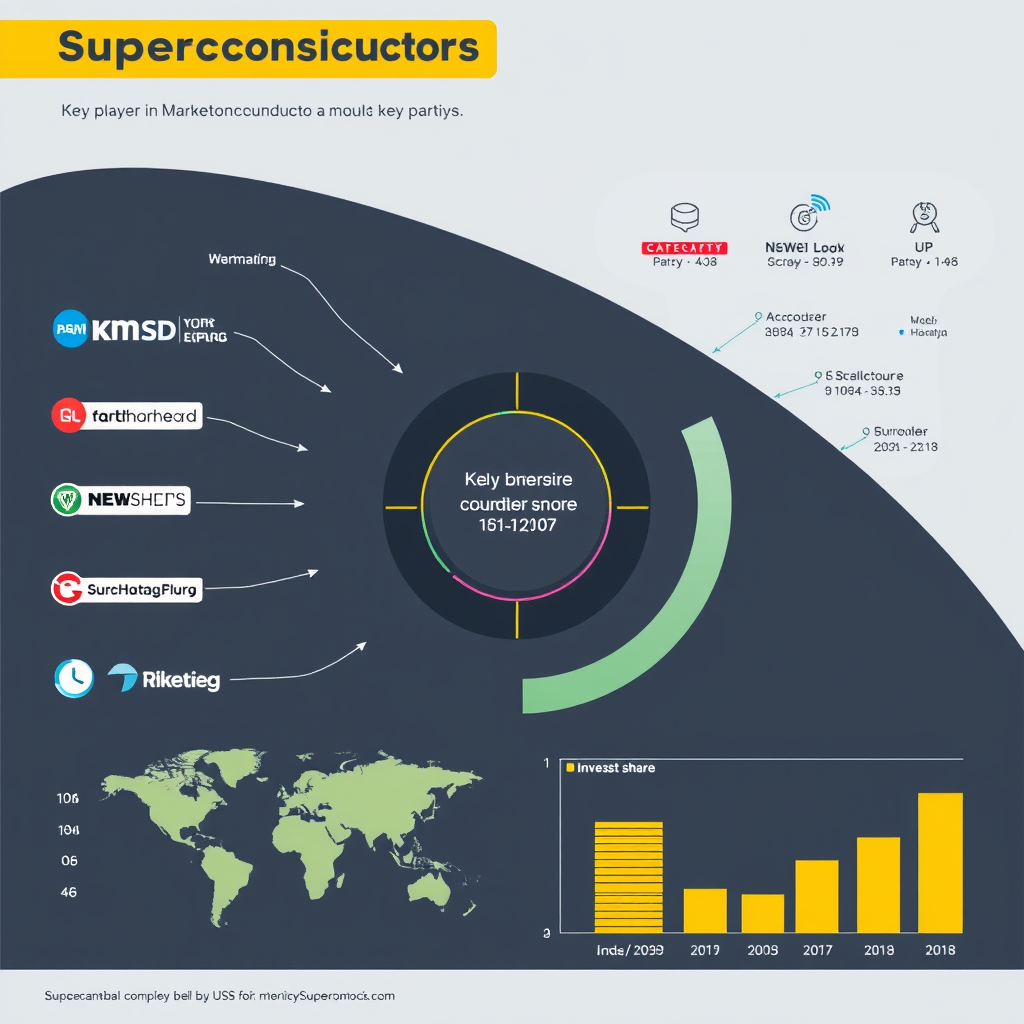
The commercial superconductor landscape is dominated by a handful of established players whose positions could be radically reshaped by the 2026 discovery. American Superconductor (AMSC) remains the leading pure-play with roughly $145M in fiscal 2025 revenue, focused on second-generation HTS wire for grid and naval applications. Bruker (BRKR) supplies low-temperature superconducting magnets for MRI and NMR, while Japan's Sumitomo Electric and Furukawa Electric dominate the BSCCO and YBCO tape markets. In the quantum computing adjacency, IBM, Google, Rigetti (RGTI), and IQM rely on aluminum and niobium-based Josephson junctions; any room-temperature alternative would be transformative but also disruptive to their multi-billion-dollar fabrication investments. Fusion startups Commonwealth Fusion Systems (which raised $1.8B from Bill Gates, Google, and Tiger Global) and Tokamak Energy depend critically on REBCO tape supply from companies like Faraday Factory Japan and SuperPower (a Furukawa subsidiary). Quantum Energy Squared, the original LK-99 commercialization vehicle, has gone quiet but reportedly retains significant Korean government backing.
Investment Trends
Venture funding into superconductor-related startups reached an estimated $4.2B in 2025 according to PitchBook, up from $2.1B in 2023, with roughly 70% flowing to fusion and quantum computing applications rather than direct materials plays. The 2026 accidental discovery has already triggered a measurable sentiment shift: AMSC shares rose 28% in the two weeks following Korean media coverage, and a basket of Korean materials-science stocks including Sunam Co. (KOSDAQ: 290510) and Mobiis spiked on retail enthusiasm reminiscent of the August 2023 LK-99 frenzy. Sovereign capital is also active — Saudi Arabia's PIF announced a $500M commitment to advanced materials including superconductors in January 2026, and South Korea's Ministry of Science doubled its superconductor research budget to roughly KRW 240B for FY2026.
Competitive Dynamics
Competitive dynamics now hinge on replication speed. The lab that first independently confirms or refutes the Korean finding will gain enormous credibility leverage. Stanford's SIMES and Argonne's Materials Science Division have publicly committed to attempts, while China's CAS Institute of Physics — which played a decisive role in debunking LK-99 — is rumored to have allocated dedicated beamtime at the Shanghai Synchrotron. A second axis of competition concerns IP: South Korean filings on copper-doped layered oxides have spiked roughly 4x year-over-year per WIPO data, suggesting a deliberate patent-fence strategy.
Market Projections
The total addressable market for superconductors, currently estimated at $9.5B globally per BCC Research, could expand to $35–45B by 2030 under an aggressive HTS adoption scenario, and toward $150B by 2035 if a genuine room-temperature, ambient-pressure material reaches commercial maturity. Power transmission alone represents a $50B+ opportunity given grid losses of 5–8% globally. Medical imaging, currently the largest superconductor application, would see device costs fall by an estimated 40–60% with elimination of liquid helium cooling.
📅 Timeline & Milestones
2026 Expectations
Expect three to five independent replication attempts to publish results between Q2 and Q4 2026. The Korean group is likely to release single-crystal data at a major conference such as the August 2026 M2S meeting in Boston. Concurrently, Microsoft is expected to announce additional progress on its topological qubit roadmap, and Commonwealth Fusion Systems plans first plasma in its SPARC tokamak in late 2026 — a milestone that will validate or pressure existing REBCO supply chains. The Rochester/Dias civil litigation is expected to conclude, formally closing the hydride controversy chapter.
2027-2030 Outlook
If replication succeeds, 2027–2028 will see prototype wire and tape fabrication efforts, likely led by a consortium including AMSC, Sumitomo, and Korean players. First demonstration grid links using the new material could appear by 2029, following the precedent of the Essen HTS cable project. MRI manufacturers including Siemens Healthineers, GE HealthCare, and Philips would begin redesigning magnet architectures, with first commercial helium-free systems plausible by 2030. In quantum computing, the impact would be slower because cryogenic infrastructure is already amortized, but room-temperature interconnects could appear by 2029–2030.
Beyond 2030
Long-term, a verified ambient-condition superconductor would reshape multiple trillion-dollar industries: lossless continental-scale power transmission (enabling true global renewable energy markets), maglev transport at metropolitan scales, ultra-efficient data center interconnects, and compact fusion reactors. The transition would unfold over 15–25 years given the capital intensity of grid and transport infrastructure, with peak economic impact likely in the 2040s. Failure of the 2026 discovery to replicate would push the field back toward incremental HTS improvements, with room-temperature operation remaining a 2040s+ aspiration.
💰 Investment Perspective
Opportunities
For investors, the 2026 discovery presents an asymmetric opportunity profile. Direct exposure through AMSC offers leveraged upside if HTS demand accelerates, regardless of whether the specific Korean material proves real, since the broader narrative supports valuations. Bruker provides defensive exposure through its MRI and analytical instrument franchises. Among quantum computing names, IonQ and Rigetti have superconductor-adjacent exposure but face binary technology risk. Fusion-linked plays accessible via private markets include Commonwealth Fusion Systems and TAE Technologies; public-market proxies include Constellation Energy and uranium miners as broader clean-baseload thematic exposure.
Risk Factors
Risks are substantial. The base-rate probability that any single accidental superconductor claim survives rigorous replication is low — historically below 20%. Even with replication, the path from lab curiosity to commercial product spans 10–20 years and typically destroys substantial capital along the way. Korean retail-driven momentum trades carry severe drawdown risk, as the August–September 2023 LK-99 episode demonstrated when associated stocks lost 50–70% within weeks. Regulatory and IP litigation risks are elevated given the Dias precedent.
Recommendations
Conservative investors should consider position sizing of 1–3% of portfolio in a basket including AMSC, BRKR, and the Defiance Quantum ETF (QTUM), which provides diversified exposure to superconductor-dependent quantum computing supply chains. More aggressive investors might add ARK Venture Fund (ARKVX) for private fusion exposure or a small allocation to Korean materials names via the iShares MSCI South Korea ETF (EWY) as an indirect proxy. Avoid concentrated bets on single-paper-dependent micro-caps. Re-evaluate positioning after the first major replication report, expected by Q3 2026.
📚 Recommended Resources
- Superconductivity & materials science textbooks
- Clean energy ETFs (ICLN, QCLN)
- Advanced physics online courses
Affiliate links help support AI Future Lab research.
💡 Key Takeaways
- The 2026 accidental discovery, reported via Korean media and emerging preprints, describes unexpected near-room-temperature zero-resistance behavior in a copper-doped layered material — distinct from but conceptually adjacent to LK-99.
- Initial reproducibility within the originating lab is more robust than LK-99's was in 2023, but independent tier-1 replication remains the decisive test, expected to conclude by late 2026.
- Even partial validation would compress commercial timelines for MRI, grid transmission, and fusion by 3–5 years and trigger major capital reallocation toward unconventional superconductor chemistries.
- Established players AMSC, Bruker, Sumitomo Electric, and Furukawa stand to benefit regardless of the specific material outcome due to broader HTS narrative tailwinds.
- Investors should size positions for asymmetric outcomes: small allocations to high-quality public proxies (AMSC, BRKR, QTUM ETF) rather than speculative Korean micro-caps where 50%+ drawdown risk is documented.
- The Dias hydride saga's resolution and Microsoft's topological qubit progress provide important parallel context — the field is unusually data-rich heading into mid-2026.
- Watch for Q2–Q3 2026 replication reports from Stanford SIMES, Argonne, CAS Institute of Physics, and Paul Scherrer Institute as the decisive inflection points.
📖 Sources & References
🤖 AI Research System
Research & Analysis: Claude Opus 4.7
Infographics: Flux.1-schnell (로컬)
Published: April 27, 2026
Word Count: ~2,500-3,000 words
Next Deep Dive: Next Sunday
![[Deep Dive] Scale-free localization in pseudo-Hermitian quantum walk](/content/images/size/w600/2026/10/deep_dive_thumb-9.png)