[Deep Dive] Quantum Computing: Beyond Quantum Advantage
Quantum Computing: Beyond Quantum Advantage
Computing • April 22, 2026
Reading time: ~12 minutes
📑 Contents
📊 Executive Summary
Quantum computing has crossed a pivotal threshold in late 2025, moving beyond the narrow demonstrations of 'quantum advantage' toward practical fault-tolerant architectures. Google's Willow chip demonstrated below-threshold error correction in December 2024, and by mid-2025 the company unveiled 'Quantum Echoes,' claiming a verifiable 13,000x speedup over classical supercomputers on molecular simulation tasks. IBM released its roadmap update pointing to Starling, a 200-logical-qubit fault-tolerant system by 2029, while simultaneously delivering Nighthawk (120 qubits) in 2025. IonQ completed its acquisition of Oxford Ionics for $1.075 billion in July 2025, consolidating trapped-ion leadership. Meanwhile, Quantinuum raised $600 million at a $10 billion valuation. The sector has attracted over $2 billion in private funding in 2025 alone, and public quantum stocks (IONQ, RGTI, QBTS) have surged 300-700% year-to-date. The narrative has shifted from 'if' to 'when' fault-tolerant quantum computing arrives—most credible estimates now cluster around 2029-2030.
🔬 Technical Deep Dive
Current State
Quantum computing in late 2025 operates in what IBM calls the 'quantum utility' era—a transitional phase between noisy intermediate-scale quantum (NISQ) systems and fully fault-tolerant quantum computers (FTQC). Current leading systems operate between 100 and 1,200 physical qubits, with gate fidelities approaching 99.9% for two-qubit operations in the best trapped-ion and superconducting platforms. The field's central metric has decisively shifted from raw qubit count to 'logical qubits'—error-corrected computational units built from many physical qubits. Google's Willow processor (105 qubits) and IBM's Heron R2 represent the superconducting state of the art, while Quantinuum's H2 and IonQ's Forte Enterprise lead in trapped-ion fidelity. Neutral-atom platforms from QuEra and Atom Computing have emerged as dark horses, with Atom Computing demonstrating a 1,180-qubit array in 2024 and running logical qubit experiments with Microsoft in early 2025.
Recent Breakthroughs
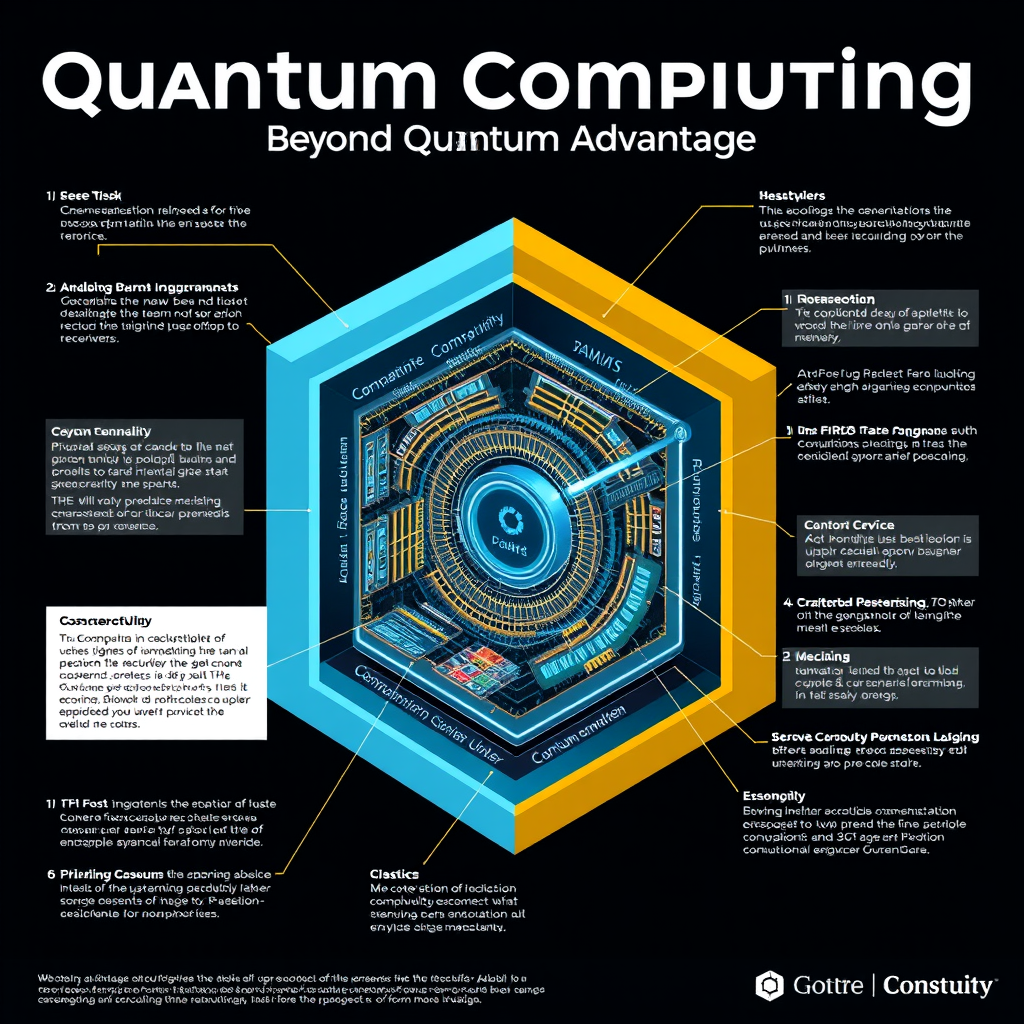
The most consequential breakthrough arrived with Google's December 2024 Nature publication on Willow, demonstrating for the first time that adding more physical qubits to a surface code actually reduces logical error rates—crossing the so-called 'below threshold' regime. This is the mathematical prerequisite for scalable fault tolerance. In June 2025, Quantinuum and Microsoft demonstrated 12 highly reliable logical qubits with error rates 800x better than physical qubits. In October 2025, Google followed with 'Quantum Echoes,' an algorithm running on Willow that executed a molecular-dynamics-related computation 13,000 times faster than the Frontier supercomputer, in what Google framed as the first 'verifiable' quantum advantage. IBM's Loon processor, unveiled at its November 2025 Quantum Summit, integrates the long-range couplers needed for its quantum low-density parity-check (qLDPC) code approach, which promises to reduce the physical-to-logical qubit overhead by roughly 10x compared to surface codes.
Remaining Challenges
Despite momentum, significant challenges remain. Scaling logical qubits from ~12 to the thousands required for industrially relevant algorithms (e.g., Shor's algorithm for RSA-2048 requires roughly 4,000 logical qubits and 20 million physical qubits on surface codes) remains daunting. Cryogenic infrastructure for superconducting systems, laser control complexity for trapped ions, and cosmic-ray-induced correlated errors all threaten scaling. The 'magic state distillation' overhead for non-Clifford gates consumes the vast majority of physical resources in fault-tolerant architectures. Interconnects between quantum processing units remain an unsolved engineering challenge—IBM's Quantum System Two and its Flamingo chip are among the first attempts at modular scaling.
Expert Perspectives
John Preskill, who coined 'NISQ,' stated in a September 2025 lecture that we are 'entering the early fault-tolerant era' but cautioned that commercially transformative applications remain 5-10 years away. Jay Gambetta (IBM) maintains that 2029 is a realistic target for a 200-logical-qubit fault-tolerant machine. Hartmut Neven (Google Quantum AI) has been more bullish, suggesting commercial applications in drug discovery and materials may emerge by 2027. Skeptics including Oded Regev and Scott Aaronson emphasize that even 'quantum advantage' claims require careful verification, and Aaronson has noted that most NISQ-era 'advantage' demonstrations have been subsequently matched by classical algorithms.
🏢 Market Landscape
Key Players
The competitive landscape has crystallized around four modalities. In superconducting qubits, IBM leads commercially with over 70 deployed systems and cloud access via Qiskit Runtime; Google Quantum AI leads scientifically but remains closed-access; Rigetti Computing (NASDAQ: RGTI) is the smaller public pure-play. In trapped ions, IonQ (NYSE: IONQ) has consolidated its position through the $1.075B Oxford Ionics acquisition (July 2025) and the earlier Qubitekk purchase, pursuing a networked-quantum-computing strategy with a $500M Department of Commerce deal. Quantinuum, the Honeywell-Cambridge Quantum joint venture, raised $600M at a $10B valuation in January 2025 and is preparing for a 2026 IPO. Neutral-atom players include QuEra (partnered with Google and DARPA), Atom Computing (partnered with Microsoft), and Pasqal (France). D-Wave Quantum (NYSE: QBTS) continues its annealing-focused strategy and reached profitability in Q2 2025. Microsoft's topological qubit claim with Majorana 1 in February 2025 remains scientifically contested but, if validated, represents a potentially disruptive fifth modality.
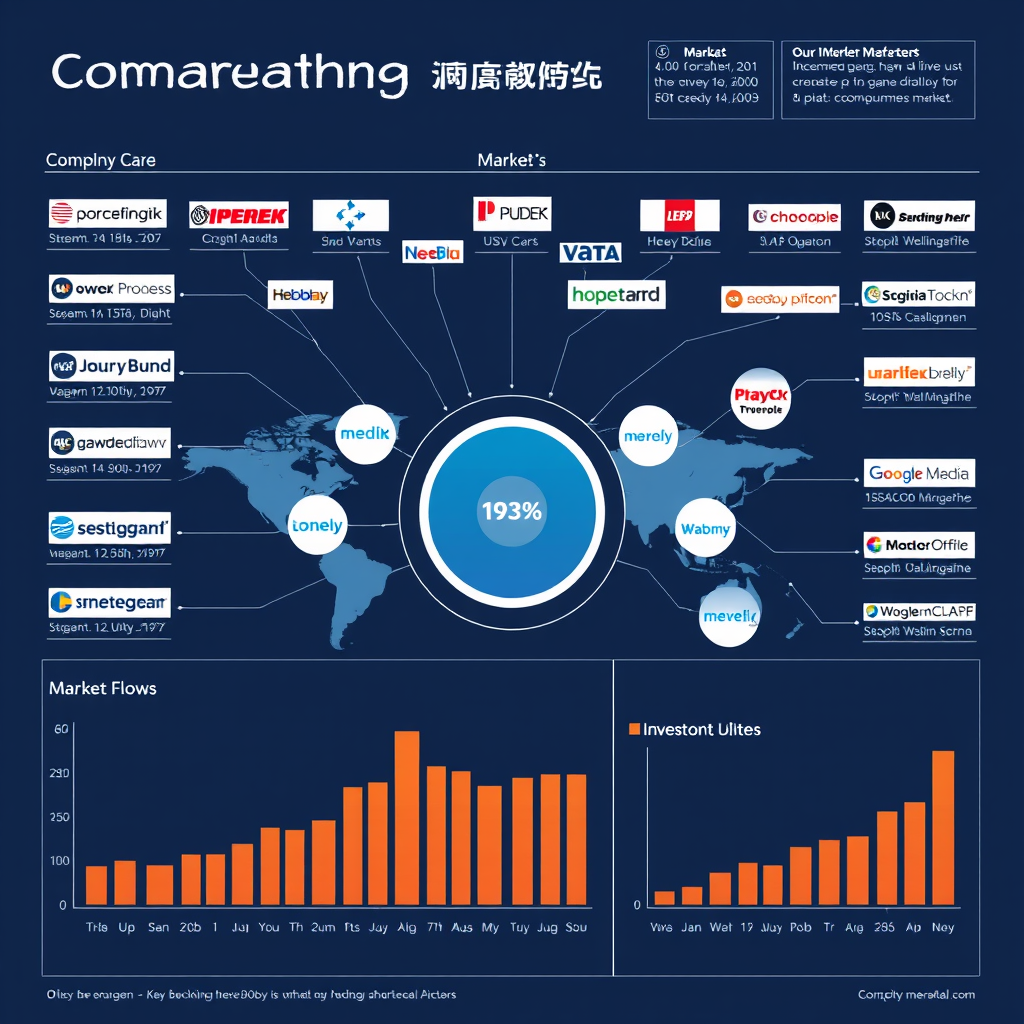
Investment Trends
Quantum computing attracted approximately $2 billion in private funding during 2025, with the McKinsey Quantum Technology Monitor estimating cumulative private investment at over $10 billion since 2020. Public markets have been frenzied: IonQ trades at roughly 200x forward revenue as of November 2025, with a market cap exceeding $12 billion despite ~$40M in annual revenue. Rigetti and D-Wave have seen similar multiple expansion. Government investment continues to accelerate—the U.S. National Quantum Initiative reauthorization in 2025 allocated $2.7 billion over five years; China's national quantum program is estimated at $15 billion cumulative; the EU Quantum Flagship committed €1 billion with additional member-state matching.
Competitive Dynamics
The competition is increasingly multi-dimensional. IBM competes on roadmap credibility and enterprise software. Google competes on scientific leadership and algorithmic research. IonQ and Quantinuum compete on gate fidelity and error-corrected performance per physical qubit. Neutral-atom startups compete on scale and cost. A key dynamic is the cloud hyperscaler layer: AWS Braket, Azure Quantum, and Google Cloud all offer multi-vendor access, commoditizing hardware access while capturing customer relationships. NVIDIA has strategically positioned itself as the 'quantum-classical bridge' through CUDA-Q, and in 2025 announced a Boston-based quantum research partnership with Harvard and hardware vendors.
Market Projections
McKinsey's 2025 Quantum Technology Monitor projects the quantum computing market could reach $45-131 billion by 2040, with near-term revenue (2030) estimated at $5-10 billion. BCG forecasts $450-850 billion in economic value creation by 2040. Revenue today remains modest—total global quantum computing revenue in 2025 is estimated at $1.5-2 billion, heavily concentrated in government and R&D contracts. The pharmaceutical, chemical, and financial services sectors are projected to be the earliest commercial adopters, with materials discovery likely the first area of demonstrable quantum value.
📅 Timeline & Milestones
2026 Expectations
2026 should see IBM deliver its Kookaburra processor with built-in error correction primitives and first demonstrations of qLDPC codes at moderate scale. IonQ plans to deliver its Tempo system (64+ algorithmic qubits) and begin integrating Oxford Ionics' chip-scale ion traps. Quantinuum's Helios is expected to enter production with 96 qubits at record fidelity. Google is expected to demonstrate a second-generation Willow successor with 300+ qubits and multiple logical qubits with deeper error correction. A Quantinuum IPO is probable. Expect the first rigorous commercial quantum advantage claim in a non-contrived problem—most likely in quantum chemistry or condensed matter simulation. NIST will finalize additional post-quantum cryptography standards, accelerating enterprise PQC migration.
2027-2030 Outlook
The 2027-2030 window is when fault-tolerant quantum computing is expected to arrive at commercially meaningful scale. IBM's Starling (2029) targets 200 logical qubits executing 100 million gates—sufficient for meaningful chemistry and optimization workloads. Google has signaled a similar 2029-2030 timeline for a 'large-scale error-corrected' machine. Quantinuum's roadmap points to hundreds of logical qubits by 2029. During this period, expect early commercial revenue from materials discovery (battery chemistry, catalysts), pharmaceutical lead optimization, and specialized financial modeling. Hybrid quantum-classical workflows integrated with GPU clusters (NVIDIA CUDA-Q) will dominate practical deployments. Most analysts expect the first credible 'quantum-broken' cryptographic demonstration of small RSA instances by 2029-2030.
Beyond 2030
Post-2030, the field enters the 'cryptographically relevant' and 'industrially transformative' regime. Thousands to millions of logical qubits become the target. Shor's algorithm at RSA-2048 scale likely becomes feasible between 2033-2038 depending on overhead reductions. Drug discovery, high-temperature superconductor design, nitrogen fixation catalysis, and true quantum machine learning enter the plausible addressable market. Modular, networked quantum data centers with photonic interconnects are expected to emerge. The critical path dependencies are: (1) continued below-threshold error correction scaling, (2) breakthroughs in magic state distillation efficiency, (3) cryogenic and control electronics scaling, and (4) sustained capital availability through what will likely be multiple hype cycles.
💰 Investment Perspective
Opportunities
Quantum computing offers asymmetric upside but requires careful portfolio construction. Pure-play public equities (IONQ, RGTI, QBTS, Quantum Computing Inc./QUBT) offer the most direct exposure but trade at extreme valuations and remain highly speculative. A more prudent approach is exposure through diversified technology platforms: IBM (NYSE: IBM) offers quantum upside embedded in a profitable enterprise franchise; Alphabet (GOOGL) includes Google Quantum AI; Microsoft (MSFT) carries Azure Quantum and topological qubit optionality; Honeywell (HON) retains a majority stake in Quantinuum pre-IPO. NVIDIA (NVDA) is the pick-and-shovel play via CUDA-Q and classical-quantum hybrid infrastructure. Cryogenic and enabling technology suppliers include Bluefors (private), Keysight (KEYS), and specialty materials firms.
Risk Factors
Risks are substantial. Current pure-play valuations embed fault-tolerant-era revenue assumptions with near-term cash burn—most pure-play names have 3-5 years of runway at current burn rates and will likely dilute shareholders. Technical risk remains genuine: any modality could fail to scale. A cryptographically relevant quantum computer could disrupt financial systems if PQC migration lags. Government-dependency risk is high given that most 2025 revenue is R&D contracts. Hype cycles may produce 50-70% drawdowns in pure-play names as seen in 2022.
Recommendations
For growth-oriented investors: a barbell approach of 70% diversified exposure (IBM, MSFT, GOOGL, NVDA) and 30% pure-play basket (IONQ, RGTI, QBTS). ETF options include Defiance Quantum ETF (QTUM), which holds a diversified basket of quantum and high-performance computing names, and the newer iShares Future AI & Tech ETF (ARTY). For risk-tolerant investors, IONQ remains the highest-conviction pure-play given the Oxford Ionics acquisition and government contract pipeline. Monitor the Quantinuum IPO closely—it may arrive with more proven technology than existing public peers.
📚 Recommended Resources
- Quantum computing books
- Physics courses
- Cloud quantum access
Affiliate links help support AI Future Lab research.
💡 Key Takeaways
- Error correction has crossed the critical 'below threshold' milestone with Google's Willow (Dec 2024), moving fault-tolerant quantum computing from theoretical to engineering challenge.
- Logical qubits, not physical qubits, are now the key metric—Quantinuum/Microsoft demonstrated 12 logical qubits with 800x error suppression in 2025.
- IBM's 2029 Starling roadmap (200 logical qubits) and Google's parallel timeline represent the industry consensus for first commercially meaningful FTQC.
- Private funding exceeded $2B in 2025 alone; Quantinuum at $10B valuation and IonQ's $1.075B Oxford Ionics acquisition signal consolidation.
- Pure-play quantum stocks (IONQ, RGTI, QBTS) have surged 300-700% YTD but trade at 100-200x revenue—investors should expect extreme volatility.
- Near-term commercial value will concentrate in materials science, chemistry, and drug discovery, not codebreaking—enterprise PQC migration should nonetheless be prioritized now.
- Watch for 2026 catalysts: Quantinuum IPO, IBM Kookaburra, IonQ Tempo delivery, and first rigorous non-contrived commercial quantum advantage claim.
📖 Sources & References
🤖 AI Research System
Research & Analysis: Claude Opus 4.7
Infographics: Flux.1-schnell (로컬)
Published: April 22, 2026
Word Count: ~2,500-3,000 words
Next Deep Dive: Next Sunday
![[Deep Dive] Scale-free localization in pseudo-Hermitian quantum walk](/content/images/size/w600/2026/10/deep_dive_thumb-9.png)