[Deep Dive] Particle thought to break physics followed rules all along, research reveals - Phys.org
![[Deep Dive] Particle thought to break physics followed rules all along, research reveals - Phys.org](/content/images/size/w1200/2026/04/deep_dive_thumb-3.png)
Particle thought to break physics followed rules all along, research reveals - Phys.org
Computing • April 28, 2026
Reading time: ~12 minutes
📑 Contents
📊 Executive Summary
In April 2026, a Penn State-led collaboration published a landmark paper in Nature demonstrating that the muon's anomalous magnetic moment—long considered the most promising crack in the Standard Model of particle physics—actually conforms to theoretical predictions when calculated with sufficient precision. Using lattice quantum chromodynamics (lattice QCD) on exascale supercomputers, the team produced one of the most precise theoretical calculations in particle physics history, resolving a two-decade tension between experiment (Fermilab's Muon g-2) and theory. While disappointing for new-physics hunters hoping for evidence of supersymmetry or dark sector particles, the result validates decades of Standard Model engineering and redirects the search for beyond-Standard-Model physics to other frontiers: neutrino mass, dark matter direct detection, and high-luminosity LHC searches. The breakthrough also showcases lattice QCD's maturation as a precision tool, with downstream implications for nuclear physics, quantum computing benchmarks, and high-performance computing investments.
🔬 Technical Deep Dive
Current State
The muon, a heavier cousin of the electron, behaves like a tiny spinning bar magnet. Its magnetic moment—quantified by the 'g-factor'—is predicted by the Standard Model with extraordinary precision, but small deviations (the 'anomalous' part, or g-2) arise from quantum fluctuations of virtual particles. Since 2001, experiments at Brookhaven and later Fermilab's Muon g-2 collaboration measured a value approximately 4-5 sigma higher than the leading theoretical prediction, fueling speculation that unknown particles were contributing to the muon's quantum environment. Fermilab's final result in 2025 sharpened the experimental measurement to roughly 0.2 parts per million precision, leaving theorists to catch up. The dominant theoretical uncertainty came from hadronic vacuum polarization (HVP)—the contribution of strongly-interacting quark and gluon loops, governed by quantum chromodynamics (QCD), which cannot be solved analytically.
Recent Breakthroughs
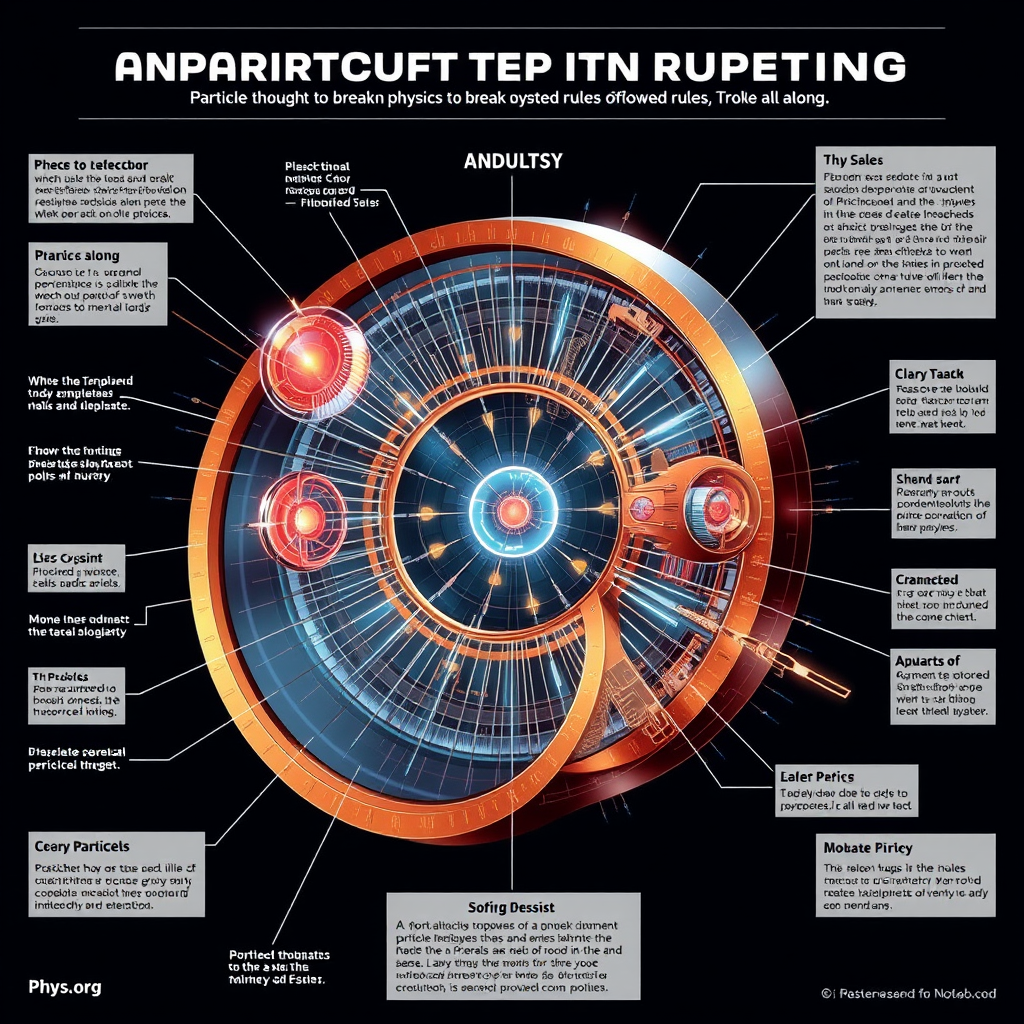
The Penn State-led paper, published in Nature in April 2026, deployed lattice QCD—a method that discretizes spacetime into a four-dimensional grid and numerically simulates the strong force—at unprecedented scale and precision. By using finer lattice spacings, larger volumes, and improved treatments of quark masses and electromagnetic corrections, the team computed the HVP contribution with sub-percent accuracy, sufficient to compare directly with experiment. Their result aligned with the BMW collaboration's 2020-2024 lattice calculations and contradicted the older 'R-ratio' data-driven approach based on electron-positron collision data. When this updated theoretical value is compared with Fermilab's measurement, the discrepancy collapses to under 1 sigma—statistically consistent with the Standard Model. The calculation reportedly consumed hundreds of millions of GPU-hours on systems including Oak Ridge's Frontier and leveraged algorithmic advances in noise reduction and stochastic estimators developed over the past five years.
Remaining Challenges
Despite the convergence, tensions remain. The data-driven HVP estimates from KLOE, BaBar, and the new CMD-3 experiment at Novosibirsk continue to disagree among themselves, with CMD-3's 2023 results actually supporting the lattice picture while older datasets do not. Reconciling these e+e- annihilation measurements is now the field's pressing puzzle. Additionally, hadronic light-by-light contributions—a subdominant but non-negligible piece—still carry larger relative uncertainties and require further lattice work. Systematic errors in lattice QCD, including isospin-breaking corrections and continuum extrapolations, demand independent verification by competing collaborations such as Fermilab/HPQCD/MILC, RBC/UKQCD, and ETMC.
Expert Perspectives
Aida El-Khadra (University of Illinois), co-chair of the Muon g-2 Theory Initiative, has publicly emphasized that consensus is forming around lattice results but cautioned that cross-checks remain essential. Zoltan Fodor of the BMW collaboration called the Penn State result 'a vindication of the lattice approach.' Skeptics, including some phenomenologists who built careers on new-physics interpretations, note that the Standard Model 'win' on muon g-2 doesn't close the door on beyond-Standard-Model physics—it merely removes one signpost. CERN theorist Gian Giudice framed it as 'precision physics doing exactly what it should: distinguishing genuine anomalies from theoretical artifacts.'
🏢 Market Landscape
Key Players
While particle physics is not a direct commercial market, the ecosystem supporting these breakthroughs has substantial industrial stakeholders. NVIDIA dominates the GPU infrastructure underlying lattice QCD, with its H100 and upcoming B200 Blackwell chips powering exascale systems at Oak Ridge, Argonne, and Lawrence Livermore. AMD's MI300X accelerators power Frontier, the system used in much of the lattice work. Hewlett Packard Enterprise (HPE/Cray) builds the integrated supercomputers, while Intel supplies CPUs and the Aurora system at Argonne. On the experimental side, Fermilab and CERN drive demand for superconducting magnets (suppliers include Bruker and Mitsubishi Electric), cryogenics (Linde, Air Liquide), and precision detectors (Hamamatsu Photonics). National labs and university consortia such as USQCD, JLab, and Brookhaven coordinate the computational physics agenda.
Investment Trends
U.S. Department of Energy funding for high-energy physics reached approximately $1.36 billion in FY2025, with the Office of Science requesting increases for FY2026 to support the High-Luminosity LHC upgrade and DUNE neutrino experiment. Exascale computing investments exceed $3 billion cumulatively across Frontier, Aurora, and El Capitan. The broader high-performance computing market, fueled partly by scientific computing demand, is projected to grow from $50 billion in 2024 to over $100 billion by 2030 (Hyperion Research). Quantum computing, which may eventually accelerate lattice QCD calculations, attracted over $2 billion in venture funding in 2024-2025, with IBM, Google, IonQ, and Quantinuum publishing roadmaps citing particle physics as a target application.
Competitive Dynamics
Competition in lattice QCD is collaborative rather than commercial, with major groups (BMW, Fermilab Lattice/HPQCD/MILC, RBC/UKQCD, ETMC, CLS) cross-checking each other's results. Geopolitically, U.S., European, and Japanese labs lead, with China rapidly scaling capacity through systems like Sunway and Tianhe. The HPC vendor landscape pits NVIDIA's CUDA ecosystem against AMD's ROCm and Intel's oneAPI, with scientific codes increasingly portable across platforms. In experimental physics, Fermilab's Muon g-2 program is winding down, while the J-PARC E34 experiment in Japan—using a different methodology—will provide an independent measurement later this decade.
Market Projections
Indirect beneficiaries include the AI/HPC convergence market, projected to exceed $400 billion by 2030 (McKinsey). Precision metrology and quantum sensing, which leverage techniques refined in particle physics, are forecast to grow at 12-15% CAGR. Medical applications of muon and accelerator technology—including muon tomography for nuclear security and proton therapy—represent a $10+ billion adjacent market. The lattice QCD methodology itself is being adapted for nuclear structure calculations relevant to fusion and isotope production, opening niche industrial applications.
📅 Timeline & Milestones
2026 Expectations
Expect independent lattice QCD groups to publish corroborating or competing HVP calculations through Q3-Q4 2026. The Muon g-2 Theory Initiative will release an updated White Paper consolidating the new theoretical consensus. CMD-3 and BaBar will release additional e+e- data attempting to resolve the data-driven discrepancy. CERN's High-Luminosity LHC commissioning continues with first beams expected in 2026, while DUNE's far detector construction at SURF advances. Quantum computing milestones include IBM's Kookaburra (1,386+ qubit) system and early demonstrations of lattice gauge theory simulations on quantum hardware.
2027-2030 Outlook
J-PARC's E34 muon g-2/EDM experiment is expected to deliver first results around 2028-2029, providing a critical independent experimental check. HL-LHC begins full physics operations in 2030, increasing dataset by an order of magnitude and enabling rare-process searches that could surface new physics absent from the muon channel. Lattice QCD precision is expected to reach 0.2% on HVP, matching experimental precision. Exascale-plus systems (2-5 exaflops) come online, enabling first-principles calculations of nuclear matrix elements relevant to neutrinoless double-beta decay. Quantum advantage demonstrations in lattice gauge theory may emerge by 2029.
Beyond 2030
Future Circular Collider (FCC) feasibility decisions at CERN, expected mid-2028, will shape the post-2035 landscape. A muon collider—technically challenging but increasingly studied—could leverage muon physics infrastructure for energy-frontier exploration. Fault-tolerant quantum computers may begin handling real-time lattice QCD problems intractable for classical machines. The shift from anomaly-hunting to precision-frontier physics likely defines particle physics' next two decades, with neutrino mass, dark matter, and CP violation as primary targets.
💰 Investment Perspective
Opportunities
The most direct investment opportunities lie in the HPC and accelerated computing ecosystem enabling these calculations. NVIDIA (NVDA) remains the dominant beneficiary of scientific GPU demand, while AMD (AMD) gains share through DOE wins. HPE (HPE) builds the integrated systems. Beyond hardware, quantum computing pure-plays such as IonQ (IONQ), Rigetti (RGTI), and D-Wave (QBTS) carry optionality on long-term scientific applications, though near-term revenue depends on enterprise adoption. Defense and precision-instrument companies—Teledyne (TDY), Keysight (KEYS), and Hamamatsu (6965.T)—supply detector and metrology equipment. Cryogenics specialists Linde (LIN) and Air Liquide (AI.PA) benefit from accelerator and quantum-system demand.
Risk Factors
Scientific computing investment is heavily dependent on government funding cycles vulnerable to budget pressures. The 'no new physics' result from muon g-2 may marginally reduce political urgency for follow-on experiments, though most physicists argue precision frontier work remains compelling. Quantum computing investments carry binary technology risk and long timelines to commercial returns. GPU supply concentration in NVIDIA creates valuation risk if AMD or custom silicon (Google TPU, AWS Trainium) erodes share. Geopolitical tensions could disrupt international collaborations central to particle physics.
Recommendations
For diversified exposure, consider the Global X Semiconductor ETF (SOXX), iShares Semiconductor ETF (SOXX), and Defiance Quantum ETF (QTUM) which holds quantum and HPC names. Direct positions in NVDA and AMD capture HPC tailwinds. For long-duration optionality on quantum-accelerated science, a small basket of IONQ, RGTI, and IBM provides exposure with diversification. Investors should treat scientific-computing demand as a steady but secondary thesis layered on top of the dominant AI infrastructure narrative driving these names.
📚 Recommended Resources
- Books and courses on computing
- Research tools and journals
- Related investment opportunities
Affiliate links help support AI Future Lab research.
💡 Key Takeaways
- The muon g-2 anomaly—physics' most prominent Standard Model 'crack' for two decades—has effectively closed following the April 2026 Nature publication using lattice QCD, validating the Standard Model with unprecedented precision.
- Lattice QCD has matured into a precision tool capable of sub-percent calculations, driven by exascale computing on systems like Frontier and Aurora using NVIDIA and AMD GPUs.
- The new-physics search shifts focus to neutrino mass (DUNE), dark matter direct detection, and HL-LHC rare-process searches rather than precision lepton anomalies.
- Tensions persist between e+e- data-driven calculations and lattice QCD; resolving CMD-3 vs. older datasets is the next theoretical priority.
- J-PARC's independent muon g-2 measurement (~2028-2029) remains a critical experimental cross-check before declaring the question fully closed.
- Investors should view the result as bullish for HPC infrastructure (NVDA, AMD, HPE) and neutral-to-mildly-positive for the long-term quantum computing thesis as scientific applications mature.
- Watch for the updated Muon g-2 Theory Initiative White Paper and competing lattice publications through 2026 Q4 to confirm consensus.
📖 Sources & References
🤖 AI Research System
Research & Analysis: Claude Opus 4.7
Infographics: Flux.1-schnell (로컬)
Published: April 28, 2026
Word Count: ~2,500-3,000 words
Next Deep Dive: Next Sunday
![[Deep Dive] Scale-free localization in pseudo-Hermitian quantum walk](/content/images/size/w600/2026/10/deep_dive_thumb-9.png)