[Deep Dive] Nuclear Fusion: The Race to Net Energy Gain
![[Deep Dive] Nuclear Fusion: The Race to Net Energy Gain](/content/images/size/w1200/2026/04/lab_feature_superconductor.png)
Nuclear Fusion: The Race to Net Energy Gain
Energy • April 19, 2026
Reading time: ~12 minutes
📑 Contents
📊 Executive Summary
Nuclear fusion energy stands at a historic inflection point in 2025, with multiple private and public programs converging on net energy gain demonstrations and pre-commercial reactor designs. The field has been transformed since the National Ignition Facility's December 2022 ignition milestone, with over $7 billion in cumulative private investment now flowing into more than 40 fusion companies worldwide. Commonwealth Fusion Systems (CFS) continues construction of its SPARC tokamak in Devens, Massachusetts, targeting first plasma by 2026–2027, while Helion Energy is building its Polaris prototype with contractual obligations to deliver electricity to Microsoft by 2028. Recent months have seen significant advances in high-temperature superconducting (HTS) magnet technology, continued NIF experimental campaigns validating ignition repeatability, and new government funding mechanisms in the US, UK, and EU designed to accelerate fusion commercialization. The regulatory landscape is also evolving, with the US Nuclear Regulatory Commission establishing a framework to license fusion power plants distinctly from fission reactors. The central question is no longer whether fusion works in principle, but whether it can be engineered into economically viable power plants within the next decade—a challenge that remains formidable but increasingly plausible.
🔬 Technical Deep Dive
Current State
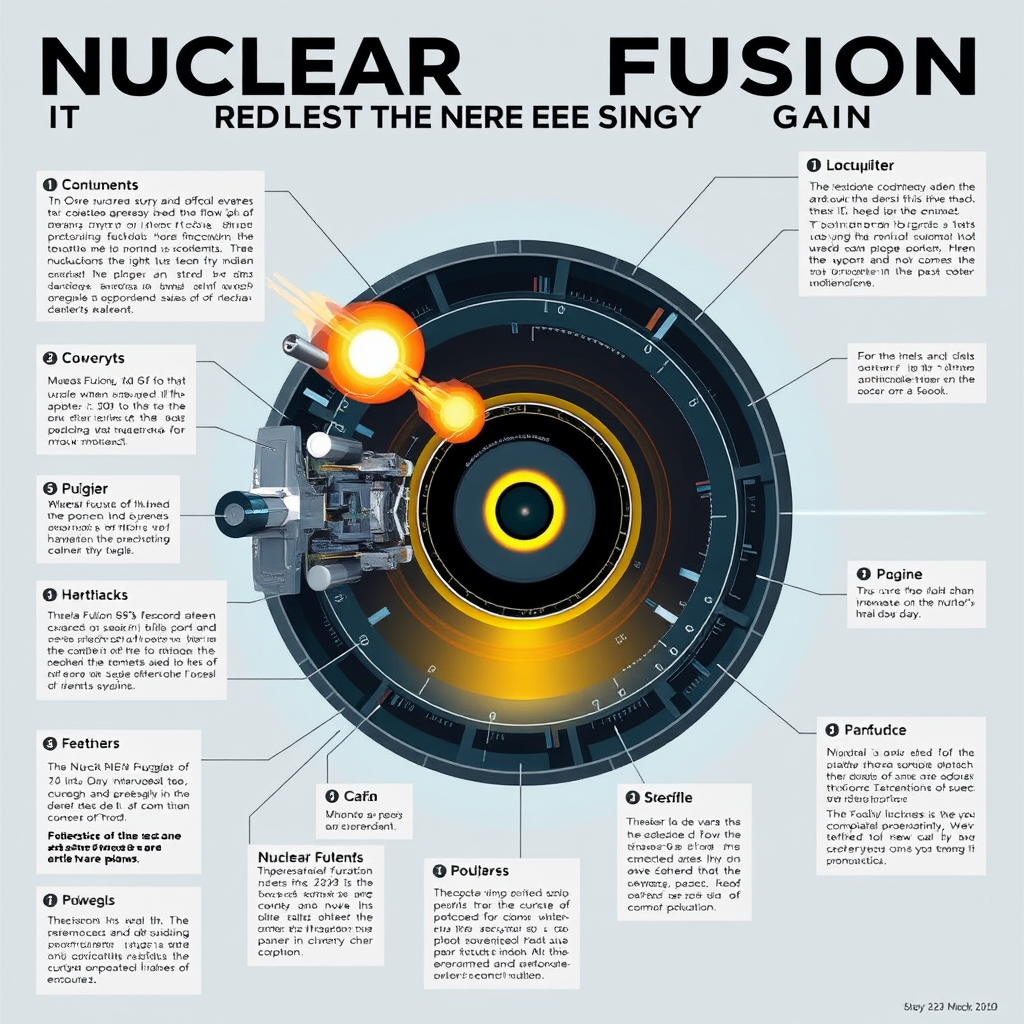
Fusion energy research is pursued through several distinct technological pathways, each with unique advantages and engineering challenges. The dominant approach remains magnetic confinement fusion (MCF), epitomized by the tokamak design, in which hydrogen isotopes (deuterium and tritium) are heated to temperatures exceeding 100 million degrees Celsius and confined by powerful magnetic fields. At these temperatures, the fuel exists as a plasma in which nuclei overcome their electrostatic repulsion and fuse, releasing enormous energy—roughly four million times more energy per kilogram than coal combustion. The tokamak approach is being pursued most aggressively by Commonwealth Fusion Systems with its SPARC device and by the international ITER project in Cadarache, France. SPARC represents a paradigm shift: by employing high-temperature superconducting (HTS) magnets made from rare-earth barium copper oxide (REBCO) tape, CFS can generate magnetic fields of over 20 Tesla—roughly double the field strength of ITER's conventional low-temperature superconducting magnets—in a device roughly 1/40th ITER's volume. This compact approach, if validated, could dramatically reduce the cost and timeline for fusion power plants. Inertial confinement fusion (ICF), the approach used at the National Ignition Facility, takes a fundamentally different path: 192 high-powered laser beams converge on a tiny capsule of deuterium-tritium fuel, compressing it to densities exceeding that of the Sun's core and triggering fusion. Helion Energy pursues yet another approach—magneto-inertial fusion using field-reversed configurations (FRCs)—where plasma rings are accelerated and collided, compressed magnetically, and the resulting fusion energy is captured directly as electricity through electromagnetic induction rather than through a conventional steam cycle. Other notable approaches include stellarators (pursued by Type One Energy and the Wendelstein 7-X experiment in Germany), which use complex three-dimensional magnetic field geometries to confine plasma without the need for a plasma current; laser-driven inertial fusion adapted for power generation (Focused Energy, Marvel Fusion); and magnetized target fusion (General Fusion), which compresses plasma using mechanical pistons.
Recent Breakthroughs
The most significant recent breakthroughs span magnet technology, plasma physics, and materials science. In September 2021, CFS demonstrated a 20-Tesla HTS magnet—the most powerful fusion-class magnet ever built—and has since been scaling up production of these magnets for SPARC. Through 2024 and into 2025, CFS has reported continued progress on magnet manufacturing at its Devens facility, with multiple toroidal field coils completed and integrated testing underway. The company's ability to mass-produce these HTS magnets reliably represents a critical de-risking milestone for the entire compact tokamak concept. At the National Ignition Facility, the December 5, 2022, ignition shot (delivering 3.15 MJ of fusion energy from 2.05 MJ of laser input) was followed by subsequent experiments in 2023 and 2024 that achieved even higher yields, with one shot in July 2024 reportedly exceeding 5 MJ. These repeated demonstrations have moved ignition from a singular event to a reproducible scientific result, validating decades of computational modeling and target design. However, it must be noted that the NIF's laser system consumes approximately 300 MJ of wall-plug electricity to deliver its 2 MJ of laser energy, meaning the overall system energy balance remains deeply negative. NIF's primary mission is nuclear weapons stewardship, not power generation, but its results provide foundational physics data relevant to all fusion approaches. Helion Energy reported in 2024 that its sixth-generation prototype, Trenta, achieved 100-million-degree plasma temperatures and demonstrated the company's unique direct energy conversion approach. The company broke ground on its seventh-generation Polaris machine, which aims to demonstrate net electricity production—a first for any private fusion company. Helion's approach using deuterium-helium-3 fuel (rather than deuterium-tritium) would avoid neutron radiation and tritium handling challenges, though it requires significantly higher temperatures and confinement parameters. In the stellarator space, Type One Energy has made advances in manufacturing complex 3D-shaped plasma-facing components using modern additive manufacturing techniques, potentially solving one of the stellarator's historic cost disadvantages relative to the tokamak.
Remaining Challenges
Despite remarkable progress, fusion commercialization faces several formidable technical challenges that should temper unbridled optimism. First, plasma-facing materials remain an unsolved engineering problem at scale. The first wall of a fusion reactor must withstand neutron fluxes of approximately 10^18 neutrons per square centimeter per second, extreme heat loads exceeding 10 MW/m², and plasma erosion—continuously, for years. No material has been validated under these conditions at power-plant-relevant durations. Reduced-activation ferritic-martensitic (RAFM) steels, tungsten alloys, and silicon carbide composites are leading candidates, but qualification requires decades of irradiation testing that has barely begun. Second, the tritium fuel cycle presents enormous challenges. Tritium is radioactive (half-life 12.3 years), extremely scarce (global inventory is roughly 25 kg, mostly in Canadian CANDU reactor byproducts), and must be bred within the fusion reactor itself using lithium blankets surrounding the plasma. No breeding blanket has been demonstrated at reactor-relevant conditions. The ITER project includes test blanket modules specifically to address this, but results are years away. A commercial fusion plant would need to breed more tritium than it consumes (a tritium breeding ratio greater than 1.0) to be self-sustaining—a requirement that imposes significant design constraints. Third, sustaining plasma in a stable, high-performance state for the durations required by a power plant (essentially continuous operation) remains a grand challenge. Current tokamak experiments operate in pulses lasting seconds to minutes. Achieving steady-state or very-long-pulse operation requires solving problems of plasma instabilities (edge-localized modes, disruptions, neoclassical tearing modes), heat exhaust through the divertor, and fueling and ash removal. Fourth, the economic challenge cannot be understated. Fusion power plants must ultimately produce electricity at costs competitive with advanced fission, solar-plus-storage, and other low-carbon technologies. Current cost projections for first-of-a-kind fusion plants range from $50–100/MWh at best, with enormous uncertainty. Learning curves and manufacturing scale will be critical.
Expert Perspectives
Expert opinion on fusion timelines has shifted notably in recent years, from reflexive skepticism toward cautious optimism. Dr. Dennis Whyte, former director of MIT's Plasma Science and Fusion Center and a co-founder of CFS, has repeatedly stated that HTS magnet technology has fundamentally changed the calculus: 'The magnet changes everything. It allows you to build a fusion device that produces net energy in a machine small enough to iterate on quickly.' However, he and other experts caution that the jump from net energy in a plasma to net electricity on the grid involves solving an entire stack of engineering challenges simultaneously. Dr. Mark Herrmann, director of NIF, has emphasized that while ignition is a profound scientific achievement, the path from NIF's weapons-science mission to inertial fusion energy is long and would require entirely new driver technologies (such as high-efficiency diode-pumped lasers) and target mass-production at costs orders of magnitude lower than current levels. The Fusion Industry Association's (FIA) 2024 survey of fusion company executives found that a plurality expect fusion electricity on the grid in the early 2030s, with the most common answer being 2035. However, independent assessors including the National Academies of Sciences, Engineering, and Medicine have historically projected 2040–2050 for commercial-scale deployment, noting that previous fusion timelines have consistently proven optimistic. Dr. Anne White, head of MIT's Nuclear Science and Engineering department, has noted that workforce development represents an underappreciated bottleneck: 'We need thousands of trained fusion engineers and technicians, and the pipeline is only beginning to scale.' Government investment in university programs and training facilities will be critical to meeting industry demand.
🏢 Market Landscape
Key Players
The fusion landscape is increasingly dominated by well-funded private companies, though major public programs remain central. Commonwealth Fusion Systems, spun out of MIT in 2018, has raised over $2 billion in total funding, making it the best-capitalized private fusion venture. Its investors include Google, Bill Gates's Breakthrough Energy Ventures, Tiger Global Management, and Temasek. CFS's strategy is to build SPARC as a demonstration tokamak, then design and construct ARC, a commercial-scale pilot plant targeting the early 2030s. Helion Energy, based in Everett, Washington, has raised approximately $577 million (plus additional undisclosed amounts), including a $500 million Series E in 2021 led by Sam Altman (now CEO of OpenAI), who also serves as Helion's chairman. Helion's power purchase agreement with Microsoft—believed to be the first-ever commercial fusion energy contract—calls for delivery beginning in 2028, with a target price of $0.01/kWh once at scale. This agreement, while aspirational, signals corporate willingness to bet on fusion timelines. TAE Technologies, based in California, has raised over $1.2 billion and pursues a beam-driven field-reversed configuration approach, also targeting hydrogen-boron (p-B11) fuel in its ultimate reactor design—an aneutronic reaction that would produce minimal neutron radiation. TAE's Da Vinci prototype aims to demonstrate conditions necessary for p-B11 fusion. General Fusion (backed by Jeff Bezos), Zap Energy (pursuing sheared-flow stabilized Z-pinch), Tokamak Energy (UK-based, compact spherical tokamak with HTS magnets), and First Light Fusion (UK-based, projectile-driven inertial fusion) round out the top tier of private ventures. In the public sector, ITER—a $22+ billion international megaproject involving 35 nations—remains the largest fusion experiment ever attempted, though it has suffered chronic delays and cost overruns, with first plasma now projected for 2034–2035, delayed from an original target of 2025.
Investment Trends
According to the Fusion Industry Association's 2024 Global Fusion Industry Report, cumulative private investment in fusion exceeded $7.1 billion by mid-2024, up from $6.2 billion at the end of 2023 and less than $2 billion in 2020. The acceleration reflects both post-NIF-ignition enthusiasm and a broader recognition of fusion's potential role in deep decarbonization. Venture capital and growth equity have been the primary funding mechanisms, though several companies are now exploring project finance and government cost-sharing agreements. The US Department of Energy's Milestone-Based Fusion Development Program, announced in 2022, has awarded approximately $46 million in initial funding to eight companies (including CFS, Helion, Zap Energy, and Type One Energy), with the potential for follow-on funding contingent on meeting technical milestones. The UK Fusion Futures Programme and the EU's EUROfusion program have similarly directed hundreds of millions toward both public research and private partnerships. Government funding has expanded substantially. The US Fiscal Year 2025 budget request included approximately $1 billion for the Office of Fusion Energy Sciences—a record level—though congressional appropriations processes introduced uncertainty. The UK committed £650 million to its STEP (Spherical Tokamak for Energy Production) program, targeting a prototype fusion power plant by 2040. Corporate strategic investors have also entered the space. Eni (the Italian energy major) is a significant CFS investor. Chevron has invested in Zap Energy and TAE Technologies. Google DeepMind has collaborated with the Swiss Plasma Center on AI-driven plasma control algorithms. These investments signal growing interest from incumbent energy companies seeking to hedge against long-term energy transition risks.
Competitive Dynamics
The fusion sector is characterized by a diversity of technical approaches rarely seen in a single energy technology domain—a feature that both maximizes the probability of eventual success and complicates comparative assessment. Tokamak-based approaches (CFS, Tokamak Energy, ITER) benefit from the deepest scientific foundation, with decades of experimental data from devices like JET, DIII-D, EAST, and JT-60SA. However, alternative concepts (Helion's FRC, TAE's beam-driven FRC, Zap Energy's Z-pinch, General Fusion's magnetized target fusion) offer potential advantages in simplicity, cost, or fuel flexibility. A key competitive axis is the choice between deuterium-tritium (DT) fuel—which has the most favorable cross-section and the lowest ignition temperature but produces copious neutrons and requires tritium breeding—and advanced fuels like deuterium-helium-3 (DHe3) or proton-boron-11 (pB11), which would be cleaner but require vastly more extreme plasma conditions. Most near-term demonstrations will use DT, with advanced fuels remaining longer-term aspirations. The competitive landscape also features an interesting geographic dimension: the US leads in private fusion investment, but China has emerged as a formidable player in public fusion research, with its EAST tokamak setting records for sustained high-temperature plasma operations (over 1,000 seconds at 100 million degrees in recent campaigns) and aggressive plans for a China Fusion Engineering Test Reactor (CFETR). South Korea's KSTAR and Japan's JT-60SA also continue to push performance boundaries.
Market Projections
Estimating the addressable market for fusion energy requires acknowledging extraordinary uncertainty, but several credible projections provide a framework. The global electricity market generates approximately $2.5 trillion in annual revenue. Fusion, if commercially viable, could capture a significant fraction of baseload and industrial heat markets currently served by fossil fuels and nuclear fission. McKinsey & Company estimated in a 2023 analysis that fusion could represent a $40 trillion cumulative market opportunity through 2100 if deployment follows an optimistic trajectory. Bloomberg New Energy Finance has been more conservative, projecting that fusion is unlikely to contribute meaningfully to global electricity supply before 2045–2050, but could scale rapidly thereafter given its energy density advantages and absence of long-lived radioactive waste. The Fusion Industry Association projects that the first commercial fusion power plants could be operational in the 2030s, with broader deployment in the 2040s. If fusion achieves cost parity with advanced nuclear fission ($40–80/MWh), it could serve as a premium clean baseload technology—particularly valuable for energy-intensive industries (data centers, hydrogen production, desalination, industrial heat) where intermittent renewables face limitations.
📅 Timeline & Milestones
2026 Expectations
2025–2026 represents a pivotal period for several leading fusion programs. Commonwealth Fusion Systems targets completion of SPARC assembly and achievement of first plasma, though some slippage into 2027 is considered possible given the complexity of integrating 18 HTS toroidal field magnets and associated systems. If achieved, SPARC's first DT campaign would aim to demonstrate Q > 2 (twice as much fusion energy as heating energy input)—a landmark that would surpass JET's 1997 record of Q ≈ 0.67 by a factor of three. Helion Energy continues construction and commissioning of its Polaris prototype, with initial plasma operations expected in 2025–2026 and the goal of demonstrating net electricity production within the Polaris campaign. Zap Energy plans to test its next-generation Z-pinch device. TAE Technologies advances its Da Vinci prototype. ITER's construction continues in France, but first plasma has been pushed beyond 2033. Regulatory milestones are also expected: the US NRC is developing a licensing framework for fusion power plants under the direction of the Atomic Energy Act amendments and recent congressional guidance treating fusion distinctly from fission. The UK's regulatory approach through the Environment Agency and Health & Safety Executive is similarly evolving. China's EAST facility continues to set confinement records, and CFETR detailed engineering design advances.
2027-2030 Outlook
The 2027–2030 period is when the leading private fusion companies plan to transition from prototype demonstrations to pilot plant design and construction. CFS aims to begin construction of ARC, its first commercial-scale fusion pilot plant, targeting initial operations in the early 2030s. The ARC design envisions a compact tokamak producing approximately 500 MW of thermal power (roughly 200 MWe) using demountable HTS magnets that enable modular maintenance—a critical feature for commercial viability. Helion's Microsoft PPA calls for electricity delivery by 2028, though this timeline is widely considered ambitious. If Polaris successfully demonstrates net electricity, Helion would move to design and build a commercial unit. TAE Technologies targets relevant plasma conditions for hydrogen-boron fusion in this timeframe. General Fusion plans to demonstrate its Magnetized Target Fusion technology at its UK facility. ITER expects to begin initial operational campaigns (in hydrogen and helium) around 2033–2035, with DT operations potentially following in the late 2030s. While ITER's delays have been frustrating, the machine—if completed—would demonstrate Q = 10 (500 MW of fusion power from 50 MW of heating), providing definitive proof of the tokamak concept at energy-gain-relevant scale. Materials qualification and tritium breeding blanket technology will need to advance significantly in this period. Test facilities for neutron irradiation (such as IFMIF-DONES, the International Fusion Materials Irradiation Facility) are under development but may not be operational until the late 2020s.
Beyond 2030
Beyond 2030, the fusion industry envisions a transition from demonstration to deployment. If the leading programs achieve their milestones on or near schedule, the 2030s could see the construction of first-of-a-kind fusion power plants, with commercial fleet deployment beginning in the 2040s. The UK's STEP program targets a prototype fusion power plant producing net electricity by approximately 2040. China's CFETR, if funded and constructed on its proposed timeline, could demonstrate fusion power production in the 2030s and transition to a demonstration power plant in the 2040s. The EU has outlined a roadmap toward a demonstration fusion power plant (DEMO) by mid-century. Long-term cost reduction will depend on manufacturing learning curves, supply chain development (particularly for REBCO superconductor tape, beryllium, lithium enrichment, and specialized structural materials), and operational experience. Fusion's ultimate role in the energy mix will be shaped by its cost competitiveness against advanced fission (SMRs, Gen IV reactors), enhanced geothermal, and solar/wind plus long-duration storage. A wildcard scenario involves the application of artificial intelligence to fusion plasma control and reactor design optimization. DeepMind's collaboration with the Swiss Plasma Center demonstrated that reinforcement learning algorithms could discover novel plasma configurations, and multiple fusion companies are integrating AI/ML into their design and operational workflows. If AI accelerates the iterative learning cycle, fusion development timelines could compress beyond current projections.
💰 Investment Perspective
Opportunities
Fusion energy presents a high-risk, high-reward investment opportunity with characteristics distinct from most clean energy sectors. For institutional and accredited investors, direct investment in leading private fusion companies (CFS, Helion, TAE, Zap Energy) is possible through late-stage venture rounds, though most remain private and access is limited. The supply chain offers more accessible opportunities: companies manufacturing high-temperature superconductors (such as SuperPower/Furukawa Electric, AMSC, and Bruker), specialized materials, cryogenics, and power electronics stand to benefit from fusion industry growth regardless of which specific approach prevails. Publicly traded companies with fusion exposure include Eni S.p.A. (significant CFS investor), Chevron (investments in TAE and Zap Energy), and several defense/technology conglomerates involved in fusion supply chains. The broader advanced nuclear and clean energy ecosystem—including companies developing complementary technologies like advanced fission, grid infrastructure, and energy storage—offers portfolio diversification alongside fusion bets.
Risk Factors
The risks are substantial and must be acknowledged forthrightly. Technical risk remains the dominant concern: no fusion device has yet produced net electricity, and the engineering challenges of plasma-facing materials, tritium breeding, and sustained operations are profound. Timeline risk is equally significant; the fusion industry has a long history of overoptimistic projections, and current timelines from private companies are largely self-reported and unverified. Funding risk is real: several billion more dollars in capital will be needed to bring any fusion company from prototype to commercial plant, and investor fatigue or shifting macro conditions could constrain capital availability. Regulatory risk exists, though the trend toward favorable treatment of fusion (separate from fission regulation) is encouraging. Finally, competitive risk from other clean energy technologies—particularly as solar, wind, storage, and advanced fission continue to improve—could narrow fusion's market window.
Recommendations
For retail investors seeking fusion exposure, direct pure-play options are currently limited since leading fusion companies remain private. Consider the following strategies: (1) Monitor IPO/SPAC activity—CFS, Helion, or TAE could pursue public listings in the 2026–2028 timeframe as they approach commercialization milestones. (2) Invest in fusion supply chain companies with public equity: AMSC (American Superconductor Corporation, NASDAQ: AMSC) supplies HTS wire and power electronics; Bruker Corporation (NASDAQ: BRKR) provides advanced magnet and materials technology; Eni S.p.A. (NYSE: E) has significant CFS equity exposure. (3) Broad clean energy and advanced nuclear ETFs such as the VanEck Uranium+Nuclear Energy ETF (NLR) and the Global X Uranium ETF (URA) provide tangential exposure, though none are fusion-specific. (4) For accredited investors, fusion-focused venture funds such as Breakthrough Energy Ventures or DCVC offer portfolio-level exposure. (5) Watch for the emergence of dedicated fusion ETFs as the sector matures—several asset managers are reportedly exploring such products.
📚 Recommended Resources
- Clean energy ETFs
- Physics textbooks
- Engineering courses
Affiliate links help support AI Future Lab research.
💡 Key Takeaways
- Nuclear fusion has transitioned from a purely scientific endeavor to an engineering and commercialization race, with over $7 billion in cumulative private investment and more than 40 companies pursuing diverse technical approaches. The field's credibility inflection point was NIF's 2022 ignition achievement, and the next critical milestone is demonstration of net electricity—expected from SPARC or Polaris within 2–4 years.
- High-temperature superconducting magnet technology—particularly CFS's 20-Tesla REBCO magnets—represents the single most transformative enabling innovation in recent fusion history, allowing compact, faster-to-build, and potentially more economical tokamak designs that bypass the ITER paradigm of ever-larger machines.
- The path from net energy gain in a plasma to commercially viable electricity generation requires solving a stack of unsolved engineering challenges: plasma-facing materials durability, tritium self-sufficiency through breeding blankets, sustained high-performance plasma operations, and cost reduction to $40–80/MWh. None of these has been demonstrated at scale.
- Helion's power purchase agreement with Microsoft for 2028 delivery and CFS's target of a commercial pilot plant (ARC) in the early 2030s represent the most aggressive private-sector commercialization timelines. Independent experts generally project commercial fusion electricity in the 2035–2045 range, with significant uncertainty.
- Government policy is increasingly supportive: US regulatory frameworks are treating fusion separately from fission, DOE funding has reached record levels (~$1B annually for fusion energy sciences), and international programs (UK STEP, China CFETR, EU DEMO) provide additional momentum. However, sustained political support across multiple election cycles is not guaranteed.
- China's rapid progress in magnetic confinement fusion—particularly record-setting campaigns at EAST and ambitious CFETR plans—introduces a geopolitical dimension to the fusion race, potentially motivating increased Western government investment and accelerated timelines.
- Investors should approach fusion as a long-duration, high-conviction bet. Near-term opportunities lie in supply chain companies (HTS manufacturers, advanced materials, cryogenics) and in monitoring leading private companies for eventual public listings. The sector's risk profile demands portfolio-level exposure rather than concentrated positions.
📖 Sources & References
🤖 AI Research System
Research & Analysis: Claude Opus 4.6
Infographics: Flux.1-schnell (로컬)
Published: April 19, 2026
Word Count: ~2,500-3,000 words
Next Deep Dive: Next Sunday
![[Deep Dive] Scale-free localization in pseudo-Hermitian quantum walk](/content/images/size/w600/2026/10/deep_dive_thumb-9.png)