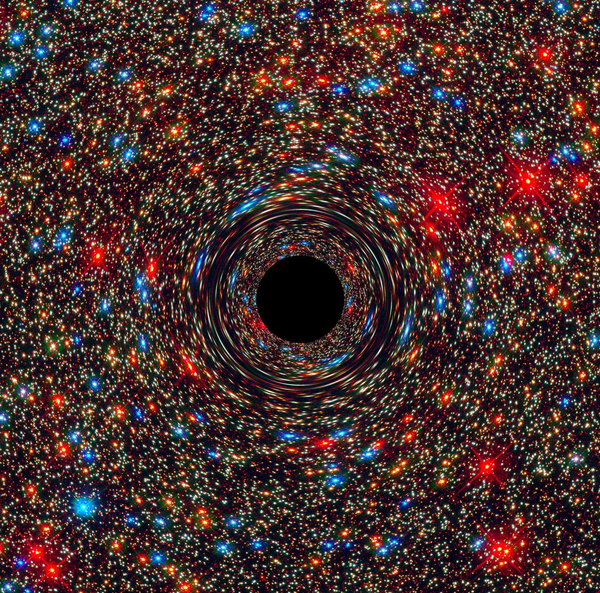
[Deep Dive] Mirage or miracle? JWST finds earliest known 'black hole star' at cosmic dawn
![[Deep Dive] Mirage or miracle? JWST finds earliest known 'black hole star' at cosmic dawn](/content/images/size/w1200/2026/08/deep_dive_thumb-9.png)
Mirage or miracle? JWST finds earliest known 'black hole star' at cosmic dawn
Energy • August 16, 2026
Reading time: ~12 minutes
📑 Contents
📊 Executive Summary
Little red dots (LRDs) have been the most stubborn open file in extragalactic astronomy since JWST started returning deep-field spectra in 2022. They are compact, absurdly red at rest-frame optical wavelengths, blue in the ultraviolet, and they show broad hydrogen emission lines that normally scream 'accreting black hole.' Yet they are invisible in X-rays, show no hot dust signature, and barely vary. The ISTA-led Nature paper published this month pushes the 'black hole star' interpretation to the earliest object yet identified: a young, fast-growing black hole buried inside a dense gas envelope so optically thick that the envelope itself radiates like a stellar atmosphere, complete with a Balmer break and Balmer absorption lines. If the model holds, it resolves the awkward gap between stellar-mass seeds and the billion-solar-mass quasars already seen at redshift 7.6. Peer review is done for this paper. The field-level argument is not.
One structural assumption, a black hole cocooned in gas dense enough to become its own photosphere, explains the Balmer break, the missing X-rays, the missing dust, and the missing variability in a single move.
🔬 Technical Deep Dive
Current State
Start with what actually sits in the data. LRDs are point-like or nearly point-like sources, typically a few hundred parsecs across or smaller, with a spectral energy distribution that turns over sharply in the rest-frame optical. Plot flux against wavelength and you get a V shape: blue rising UV continuum, a hard break around the Balmer limit, then a steep red optical slope. Several hundred candidates now exist across CEERS, JADES, UNCOVER, PRIMER, and CAPERS. Broad Balmer emission lines with widths of 1,000 to 3,000 km/s appear in a large fraction of the spectroscopically followed sample, which is the classic fingerprint of gas orbiting a black hole. Everything else about them refuses to cooperate with that reading.
Three competing explanations have been fighting over the same photons for three years. Here is how each one performs against the observables that matter:
| Observable | Dusty compact starburst | Standard obscured AGN (dust torus) | Black hole star (dense gas envelope) |
|---|---|---|---|
| Broad Balmer lines (1,000-3,000 km/s) | Requires outflows or unusually deep potential wells; strained | Natural fit | Natural fit, produced in the envelope interior |
| Balmer break with Balmer absorption | Possible with an aging stellar population | Poorly explained | Direct prediction of a dense neutral envelope |
| X-ray non-detection in stacks | Consistent (no AGN needed) | Fails unless Compton-thick at extreme column densities | Consistent: envelope absorbs and reprocesses the corona |
| Hot dust in mid-IR / MIRI photometry | Should be strong; often absent | Should be strong; often absent | Not required |
| Optical variability over months to years | None expected | Expected at 10-30% level; largely absent | Suppressed by envelope light-crossing and thermalization |
| Radio continuum | Expected from supernovae; weak or absent | Often expected; weak | Not required |
| Inferred BH-to-stellar mass ratio | Not applicable | 1% to 10%, uncomfortably high | Lower, since envelope light is misread as starlight |
Read down the right-hand column and the appeal becomes obvious. The black hole star model does not need a conspiracy of coincidences. One structural assumption, an accreting black hole cocooned in gas dense enough to become its own photosphere, explains the break, the absorption, the missing X-rays, the missing dust, and the missing variability in a single move.
Recent Breakthroughs
The physical picture is a modernized version of an old idea. Quasi-stars were proposed decades ago as objects where a black hole grows inside a bloated envelope of infalling gas, with radiation pressure holding the structure in quasi-hydrostatic balance. What JWST added is the spectroscopy to test it. Once you assume the envelope is optically thick at densities above roughly 10^9 cm^-3, you can run stellar-atmosphere machinery on it. The envelope develops a photosphere at temperatures near 5,000 to 8,000 K, hydrogen sits in the n=2 level in enough abundance to imprint Balmer absorption, and the emergent spectrum looks less like an accretion disk and more like a very strange A-type or F-type star scaled to galactic luminosity.
The ISTA-led work extends this to the earliest object yet, inside the universe's first billion years. That matters because of a timing problem the community has been carrying since before JWST launched. Quasar J0313-1806 hosts a 1.6 billion solar mass black hole at redshift 7.64, roughly 670 million years after the Big Bang. Grow a 100 solar mass Population III remnant at the Eddington limit for that entire window and you fall short. Black hole stars offer a mechanism for sustained super-Eddington growth: the envelope traps radiation, photon pressure escapes inefficiently, and the effective Eddington barrier moves. Accretion rates of several times Eddington become physically defensible rather than hand-waved.
The corollary is arguably more important than the objects themselves. If a meaningful fraction of the LRD population is envelope-dominated, then black hole masses derived from broad-line widths using local virial calibrations are systematically wrong, and the host stellar masses inferred from the red continuum are also wrong, because a chunk of that continuum is not stars. Two of the most-cited anomalies in high-redshift black hole demographics may partially dissolve into a calibration error.
Remaining Challenges
The model has real gaps. Nobody has demonstrated the stability of a 10^4 to 10^6 solar mass envelope over the tens of millions of years the growth argument requires. Convective instabilities, radiation-driven mass loss, and rotational flattening all threaten the structure, and current radiation-hydrodynamics simulations of these configurations run in one or two dimensions with simplified opacities. Full three-dimensional treatments with proper line opacity and non-LTE radiative transfer are not yet available at the resolution needed.
Then there is the sample. Spectroscopic confirmation exists for a modest subset of the several hundred LRD candidates, and the ones with clean Balmer absorption number in the dozens at best. Selection effects are severe: the reddest, most compact objects are the easiest to flag and the hardest to model. Metallicity is another loose thread, since envelope opacity depends strongly on composition and the early universe should be metal-poor in ways that push the photosphere hotter and bluer than some fits prefer.
Honest limitation, stated plainly: a single Nature paper on a single high-redshift object cannot settle a population-level question. The object is extraordinary, the modeling is careful, and the statistical weight is one. Everything downstream, including the seed-formation implications and the recalibration of black hole mass functions, depends on whether the next thirty objects behave the same way.
Expert Perspectives
The community has sorted itself into three loose camps, and none of them is being quiet about it. The envelope advocates, including groups at MIT, MPIA, and Cambridge that pushed the model after the 'Cliff' object showed an extreme Balmer break, argue that the spectral shape is not reproducible with any combination of stars and dust screens. Their case is essentially that the break is too sharp and the absorption too specific to be an accident.
The skeptics point at degeneracy. A dense-gas envelope has enough free parameters (density profile, covering fraction, velocity field, ionization structure) that fitting a spectrum is not the same as proving a mechanism. Several groups working on dusty starburst interpretations note that compact, metal-enriched star formation with unusual dust geometry can reproduce parts of the V-shaped SED without invoking exotic physics. They also flag that a few LRDs have now shown weak X-ray or variability signals, which suggests the population may be heterogeneous rather than a single class.
A third camp, closer to the seed-formation theory community, treats the debate as secondary. Whether the object is an envelope-wrapped black hole or a heavily obscured AGN, the mass budget at redshift 9 still demands heavy seeds from direct collapse in the 10^4 to 10^5 solar mass range. Their interest is in whether black hole stars are the observable phase of direct collapse, which would convert a theoretical construct into an observational target class.
🏢 Market Landscape
Key Players
There is no LRD industry, so the relevant market is the instrumentation and data infrastructure that makes discoveries like this possible. JWST itself represents roughly $10 billion in lifecycle cost, with Northrop Grumman as prime contractor, BAE Systems Space and Mission Systems (formerly Ball Aerospace) responsible for the optical telescope element, L3Harris on integration and test, and Teledyne supplying the HgCdTe near-infrared detector arrays that make the faint red continuum measurable in the first place. Those detector arrays are the actual enabling technology here. Without sub-electron read noise at 5 microns, the Balmer break in a redshift 9 object is noise.
The near-term pipeline is where capital is moving. The Nancy Grace Roman Space Telescope, roughly a $4 billion program with BAE and L3Harris hardware, will survey wide fields at JWST-class near-infrared sensitivity and should convert LRD hunting from a targeted exercise into a statistical one. Vera C. Rubin Observatory, funded jointly by NSF and DOE at around $680 million in construction, contributes the variability constraint: a decade of cadenced imaging is exactly the test that separates an accretion disk from an envelope. On the X-ray side, the AXIS probe concept out of the University of Maryland sits in NASA's Probe Explorer competition, and its selection would directly target the Compton-thick question. ESO's Extremely Large Telescope, at roughly 1.45 billion euros, adds ground-based spectroscopic aperture from 2029.
Compute is the quiet third pillar. Three-dimensional radiation-hydrodynamics of a black hole star envelope is a DOE-leadership-class problem. NVIDIA GPU clusters, Frontier and Aurora allocations, and cloud-hosted archive access through the MAST-on-AWS deployment are the actual bottleneck-breakers for the theory side of this argument.
Investment Trends
Government space science budgets globally run near $135 billion annually across all civil programs, with astrophysics a small slice. The dynamic worth tracking in 2026 is directional rather than volumetric. The FY2026 President's Budget Request proposed cutting NASA science from roughly $7.3 billion toward $3.9 billion, including reductions to Webb operations from about $187 million toward the $140 million range and cancellation pressure on Chandra. Congressional appropriators have pushed back hard, and advocacy groups including the Planetary Society mobilized around the operating-mission line specifically. The unresolved outcome creates genuine uncertainty for the follow-up observing campaigns this discovery requires.
Private capital has essentially no exposure to fundamental astrophysics and considerable exposure to the adjacent supply chain. The broader space economy sits near $600 billion, dominated by communications, launch, and defense. Aerospace and defense primes derive single-digit percentages of revenue from science missions, which means a JWST result moves nobody's earnings. What it does move is the political case for the next-decade flagship, and flagship programs are multi-billion-dollar multi-year contracts.
Competitive Dynamics
The competition that matters is for telescope time. JWST oversubscription has run between 6:1 and 9:1 across cycles, and LRD programs now compete directly with exoplanet atmosphere work, which has a much stronger public constituency. A single Nature result changes proposal weighting for a cycle or two. Sustained allocation requires the population-level case.
There is also a methodological competition between spectroscopy-first and multiwavelength-first approaches. NIRSpec observations are expensive in time; deep Chandra pointings on individual faint targets are effectively unaffordable at current sensitivity. That asymmetry biases the evidence base toward whichever interpretation spectroscopy favors, which is a structural issue nobody has solved.
Market Projections
Expect the LRD spectroscopic sample to grow from dozens with clean diagnostics today toward several hundred by 2029 as Roman wide-field surveys feed JWST follow-up. Ground-based extremely large telescopes add another factor as they come online at the end of the decade. The instrumentation market segment driving this, space-qualified infrared detectors and cryogenic optics, remains a low-volume, high-margin niche measured in the low hundreds of millions annually, with Teledyne and a handful of European suppliers holding effective duopoly positions.
📅 Timeline & Milestones
2026 Expectations
Expect a rapid wave of follow-up preprints on arXiv within weeks, most of them attempting to break the envelope model with alternative fits. Additional JWST NIRSpec spectra on high-redshift LRD candidates from Cycle 4 and Cycle 5 programs should roughly double the sample with usable Balmer absorption diagnostics by year end. Watch for MIRI photometry results testing the hot-dust prediction and for deeper Chandra stacking limits. The NASA FY2026 appropriations outcome remains the single largest schedule risk to any of this follow-up work. Roman launch preparations continue toward a window that could open as early as late 2026.
2027-2030 Outlook
Roman science operations open the statistical era: wide-field surveys should produce thousands of LRD candidates rather than hundreds, converting a case-study argument into a luminosity-function argument. Rubin's cadenced imaging accumulates enough baseline by 2028 to place hard variability constraints on the lower-redshift LRD population, which is arguably the cleanest discriminator available. Three-dimensional radiation-hydrodynamics simulations with non-LTE opacity should mature to the point of predicting envelope lifetimes rather than assuming them. ESO's ELT reaches first light around 2029 and adds ground-based spectroscopic aperture. A NASA Probe Explorer selection, if AXIS wins, sets up a 2032-era X-ray mission designed for exactly this obscuration question.
Beyond 2030
The long-term payoff is a coherent black hole seed formation history: direct measurement of the mass function of the first black holes and their occupation fraction in early galaxies. If black hole stars turn out to be the observable phase of direct-collapse seeds, they become a standard object class with their own evolutionary tracks, comparable to how protostars are treated now. LISA, launching around 2035, adds an independent gravitational-wave constraint on early massive black hole mergers that neither electromagnetic model can dodge. Next-generation X-ray observatories in the 2037 timeframe would close the obscuration argument for good.
💰 Investment Perspective
Opportunities
The tradeable exposure sits in the supply chain, not the science. Teledyne Technologies (TDY) holds a near-monopoly position in space-qualified infrared focal plane arrays and benefits from every subsequent infrared mission regardless of which astrophysical model wins. BAE Systems and L3Harris (LHX) carry Roman hardware and are positioned for next-decade flagship optics work. Northrop Grumman (NOC) retains the large-deployable-structure heritage that any post-Webb flagship will draw on. Photonics suppliers including Coherent (COHR) and Lumentum (LITE) touch the laser metrology and fiber components used in ground-based adaptive optics. NVIDIA (NVDA) remains the compute layer for the simulation work that will actually decide this debate.
Risk Factors
Science missions are budget-cycle dependent and politically exposed, as the FY2026 request demonstrated. Revenue concentration is low for every name listed, meaning astrophysics results do not move earnings in any measurable way. Program delays are endemic: Roman, ELT, and every X-ray probe concept have slip histories. Anyone treating a Nature paper as an investment signal is confusing scientific significance with commercial cash flow, and those two are only loosely coupled here.
Recommendations
For diversified exposure, ProShares S&P Kensho Final Frontiers ETF (ROKT) and Procure Space ETF (UFO) cover the space hardware universe, while iShares U.S. Aerospace and Defense ETF (ITA) offers the primes with defense revenue cushioning the science-program volatility. ARK Space Exploration and Innovation ETF (ARKX) skews toward speculative names with higher beta. A pairs approach makes more sense than a thematic bet: hold detector and photonics suppliers with genuine technical moats, and treat the primes as defense positions that happen to carry science optionality.
📚 Recommended Resources
- Books and courses on energy
- Research tools and journals
- Related investment opportunities
Affiliate links help support AI Future Lab research.
💡 Key Takeaways
Little red dots have resisted explanation since 2022 because they combine AGN-like broad emission lines with the total absence of X-rays, hot dust, and variability that AGN should show.
The black hole star model explains the full checklist with one assumption: a black hole wrapped in gas dense enough (10^9 to 10^12 cm^-3) to form its own stellar-like photosphere.
The ISTA-led Nature paper extends this interpretation to the earliest object yet, inside the universe's first billion years, following the 2025 CAPERS-LRD-z9 result at redshift 9.29.
If correct, existing black hole masses derived from broad-line widths and host stellar masses derived from red continua are both systematically miscalibrated for this population.
Envelope stability over tens of millions of years remains unproven, and current radiation-hydrodynamics simulations lack the dimensionality and opacity treatment to settle it.
The cleanest near-term discriminator is variability: Rubin Observatory's cadenced imaging through 2028 will test whether these objects flicker like accretion disks or stay flat like photospheres.
Watch three things next: the volume of skeptical preprints in the next 60 days, MIRI hot-dust follow-up results, and the FY2026 NASA appropriations outcome that determines whether follow-up time exists at all.
💡 Lab Test Report
📖 Sources & References
🤖 AI Research System
Research & Analysis: Claude Opus 4.7
Infographics: Flux.1-schnell (로컬)
Published: August 16, 2026
Word Count: ~2,500-3,000 words
Next Deep Dive: Next Sunday
![[Deep Dive] Scale-free localization in pseudo-Hermitian quantum walk](/content/images/size/w600/2026/10/deep_dive_thumb-9.png)