[Deep Dive] Mapping the human brain histamine system at the molecular, structural and functional levels - Nature
![[Deep Dive] Mapping the human brain histamine system at the molecular, structural and functional levels - Nature](/content/images/size/w1200/2026/05/deep_dive_thumb-10.png)
Mapping the human brain histamine system at the molecular, structural and functional levels - Nature
Computing • May 17, 2026
Reading time: ~12 minutes
📑 Contents
📊 Executive Summary
A landmark 2026 study published in Nature Mental Health has delivered the first comprehensive multimodal map of the human brain's histamine system, integrating transcriptomics, molecular imaging, developmental trajectories, and cognitive meta-analysis into a single systems-level framework. The work links histaminergic architecture to higher-order cognition and vulnerability to major psychiatric disorders including schizophrenia, depression, Tourette syndrome, and Alzheimer's disease. Coming amid renewed pharmaceutical interest in H3 receptor antagonists and dual-action antihistamines for CNS indications, the research provides a foundational atlas that could redirect drug development across narcolepsy, ADHD, and cognitive impairment. With the global CNS therapeutics market projected to exceed $150 billion by 2030 and several H3-targeted compounds now in mid-to-late stage trials, this atlas arrives at a pivotal moment. The findings reframe histamine — long dismissed as merely an allergy mediator — as a master neuromodulator whose dysregulation underlies a wide spectrum of brain disorders, opening new precision-medicine pathways.
Histamine arises from just ~64,000 neurons in the tuberomammillary nucleus yet modulates the entire brain — and this 2026 atlas finally maps how that diffuse architecture maps onto cognition and psychiatric vulnerability.
🔬 Technical Deep Dive
Current State
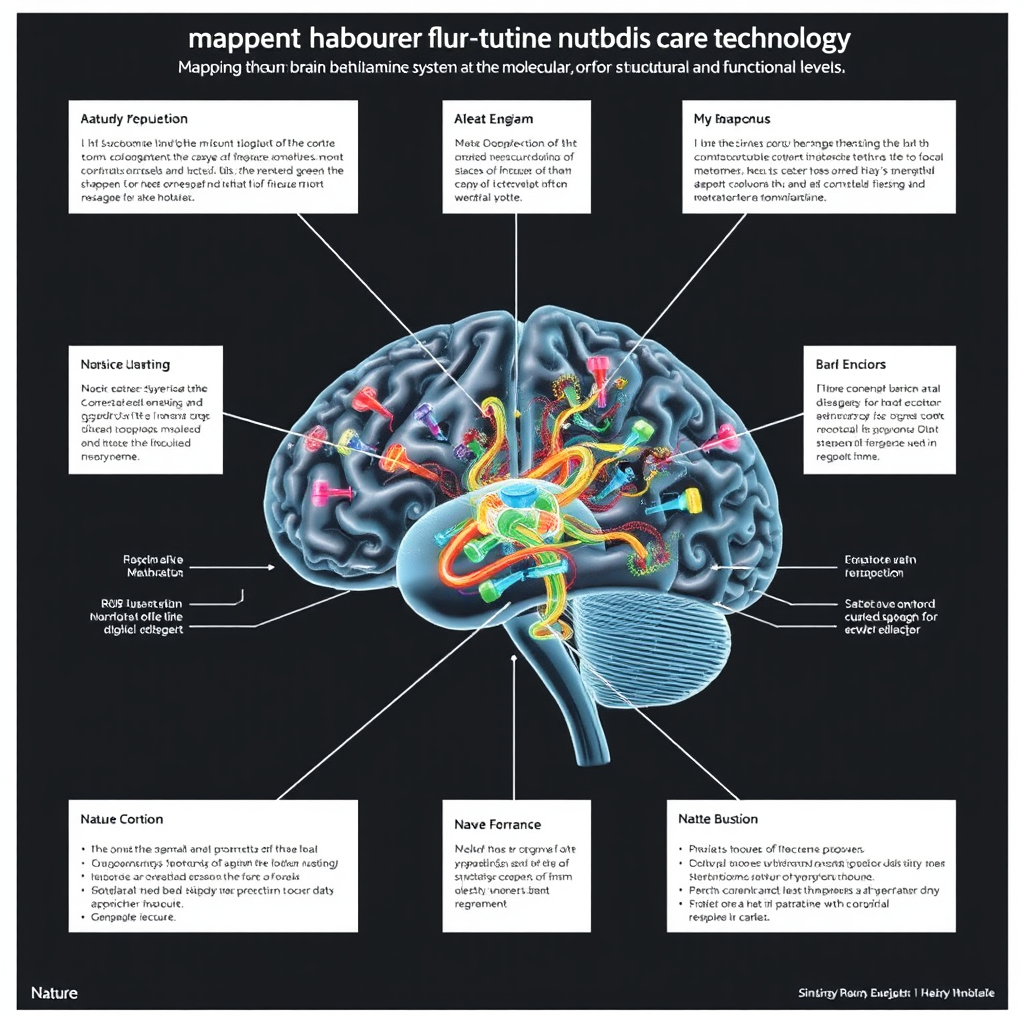
The human brain histamine system originates from approximately 64,000 neurons in the tuberomammillary nucleus (TMN) of the posterior hypothalamus, which project diffusely throughout the entire central nervous system. Despite this anatomical centrality, histamine has historically been underrepresented in neuroscience compared to dopamine, serotonin, and norepinephrine. The Nature Mental Health study published in 2026 changes this by combining four orthogonal data modalities: Allen Human Brain Atlas transcriptomics for histamine receptors (HRH1-4) and synthesis/degradation enzymes (HDC, HNMT), PET molecular imaging data for receptor density, BrainSpan developmental trajectories spanning fetal to adult timepoints, and Neurosynth-derived cognitive meta-analytic decoding. The result is the first integrated atlas showing how histaminergic gene expression, protein density, developmental timing, and functional cognitive associations align across cortical hierarchies and subcortical structures.
Recent Breakthroughs
The core breakthrough is methodological convergence. Previous histamine mapping efforts were fragmented — autoradiography in post-mortem tissue, isolated PET studies, or rodent extrapolations. By aligning transcriptomic and imaging-derived receptor distributions with cognitive ontologies, the authors demonstrate that histaminergic density follows the brain's principal sensorimotor-to-association cortical gradient, with H3 receptors particularly enriched in regions supporting executive function and arousal regulation. Critically, the developmental analysis reveals histaminergic maturation windows that coincide with adolescent vulnerability periods for schizophrenia and mood disorders. The study also performs case-control overlay with disorder-specific gene expression signatures, identifying statistically significant spatial convergence between histaminergic architecture and risk maps for Tourette syndrome, schizophrenia, and Alzheimer's disease — providing mechanistic plausibility for histamine-targeted interventions in these conditions.
Remaining Challenges
Several technical limitations remain. Transcriptomic data from Allen and BrainSpan derive from limited donor numbers, raising questions about individual variability. PET radioligands for H3 (such as [11C]GSK189254) have good selectivity but H2 and H4 imaging remains underdeveloped, leaving half the receptor family poorly visualized in vivo. The cognitive meta-analytic approach via Neurosynth uses reverse inference, which can conflate co-activation with causal involvement. Furthermore, the study is correlational — establishing spatial overlap between histaminergic systems and disorder maps does not prove causality, and translation to therapeutics requires functional validation through pharmacological challenge studies and clinical trials. Sex differences, which are pronounced in histaminergic signaling, are also incompletely resolved.
Expert Perspectives
Neuropsychiatry leaders have responded positively. Dr. Helmut Haas and colleagues, longtime champions of histamine neuroscience, have argued the field has been overdue for this kind of integrative treatment. The work aligns with growing clinical evidence: pitolisant (Wakix), an H3 inverse agonist from Bioprojet/Harmony Biosciences, has demonstrated efficacy in narcolepsy and idiopathic hypersomnia, and is being explored for ADHD and Prader-Willi syndrome. Researchers at Karolinska and the Max Planck Institute have independently shown histaminergic deficits in Tourette syndrome HDC-mutation carriers, corroborating the atlas's predictions. Peer reviewers reportedly highlighted the multimodal design as setting a new standard for neuromodulator system mapping, with parallel projects underway for cholinergic and noradrenergic systems.
🏢 Market Landscape
Key Players
The histamine CNS space is led by Harmony Biosciences (HRMY), which commercializes pitolisant (Wakix) in the US under license from French firm Bioprojet. Wakix generated $708 million in 2024 net revenue, up 22% year-over-year, and Harmony is pursuing label expansions into idiopathic hypersomnia (approved 2024), myotonic dystrophy, and pediatric narcolepsy. Avadel Pharmaceuticals (AVDL) competes adjacent with Lumryz. Larger pharma players include Suven Life Sciences (developing samelisant, an H3 antagonist for narcolepsy with cataplexy), Johnson & Johnson (historic H3 program), and Boehringer Ingelheim. On the imaging and tool-development side, GE HealthCare, Siemens Healthineers, and specialty radiopharma firms like Lantheus support PET tracer development. Academic spinouts targeting H4 receptors for neuroinflammation — relevant to Alzheimer's — include Palau Pharma and several preclinical biotechs.
Investment Trends
CNS drug development funding rebounded meaningfully in 2024-2025 after a difficult 2022-2023 period. According to BioPharma Dive and Evaluate Pharma data, neuroscience venture funding crossed $4.5 billion in 2024, with cognitive-disorder and sleep-wake programs capturing a growing share. Harmony Biosciences' market cap reached approximately $2 billion in early 2026, and the company has been actively acquiring pipeline assets. M&A activity in CNS picked up notably with Bristol Myers Squibb's $14 billion acquisition of Karuna Therapeutics in 2024 validating muscarinic and neuromodulator approaches — a thesis that extends naturally to histaminergic targets.
Competitive Dynamics
Competition centers on three axes: (1) sleep-wake disorders, where H3 antagonists compete with orexin agonists from Takeda, Alkermes, and Centessa; (2) cognitive enhancement for Alzheimer's and schizophrenia, where histamine programs compete with cholinergic, glutamatergic, and amyloid/tau approaches; and (3) ADHD, where non-stimulant H3 mechanisms could capture share from amphetamine-based incumbents. Patent landscapes around selective H3 inverse agonists are increasingly crowded, pushing innovators toward dual-mechanism compounds (e.g., H3/5-HT or H3/sigma-1).
Market Projections
The global CNS therapeutics market is projected by Grand View Research to reach $159 billion by 2030 at an 8.1% CAGR. The narcolepsy segment alone is forecast to exceed $9 billion by 2030. If H3-targeted compounds gain expanded indications in ADHD, cognitive impairment associated with schizophrenia (CIAS), and Alzheimer's-related agitation, addressable markets could expand by tens of billions.
📅 Timeline & Milestones
2026 Expectations
Expect Phase 3 readouts for pitolisant in idiopathic hypersomnia maintenance and pediatric populations. Suven's samelisant Phase 2 data anticipated in narcolepsy. Several academic groups will release follow-on atlas papers extending the methodology to depression and bipolar cohorts. Expect new H4-selective PET tracers to enter first-in-human studies. The Nature Mental Health atlas itself will likely seed 20-30 derivative analyses by year-end.
2027-2030 Outlook
By 2028, H3 antagonist label expansions into ADHD and cognitive impairment in schizophrenia (CIAS) are realistic if ongoing trials succeed. Dual-mechanism compounds (H3 plus serotonergic or cholinergic) should reach Phase 2. The histaminergic atlas will be integrated into precision-psychiatry platforms enabling patient stratification based on receptor expression profiles. By 2030, expect first regulatory approval of a histaminergic agent for a primary cognitive indication, and broader recognition of the H4 receptor as a neuroinflammation target in Alzheimer's and Parkinson's disease.
Beyond 2030
Longer term, histaminergic mapping will inform circuit-specific neuromodulation strategies including focused ultrasound and closed-loop deep brain stimulation targeting the tuberomammillary nucleus or its projections. Combined with single-cell atlases and AI-driven drug discovery, the histamine system could become a cornerstone of next-generation cognitive therapeutics, with personalized regimens tuned to individual receptor expression and developmental trajectories.
💰 Investment Perspective
Opportunities
The most direct beneficiary of expanding histamine neuroscience is Harmony Biosciences (HRMY), with a growing Wakix franchise and a pipeline pursuing multiple histamine-mechanism indications. Investors seeking diversified neuroscience exposure should consider the iShares Biotechnology ETF (IBB), SPDR S&P Biotech ETF (XBI), and the more specialized Tema Neuroscience and Mental Health ETF (MNTL). Larger-cap exposure to CNS innovation includes Bristol Myers Squibb (BMY) following Karuna, Eli Lilly (LLY) via its neuroscience pipeline, and Biogen (BIIB). Imaging-tool exposure comes through GE HealthCare (GEHC) and Lantheus (LNTH).
Risk Factors
CNS drug development carries notoriously high failure rates — Phase 2 to approval success rates remain below 10%. Reverse-inference and correlational findings from atlas studies do not guarantee therapeutic translation. Pricing pressure on orphan and niche CNS drugs is rising under IRA negotiations. Competition from orexin-targeting programs could compress H3 commercial opportunity in sleep-wake disorders. Harmony specifically faces patent cliff risk on Wakix in the early 2030s.
Recommendations
Core positions: HRMY (BUY for histamine-pure-play exposure), MNTL ETF (BUY for diversified neuroscience theme), GEHC (HOLD for imaging infrastructure). Watch list: Suven Life Sciences, Avadel (AVDL), and emerging H4-focused private biotechs likely to IPO in 2026-2027.
📚 Recommended Resources
- Books and courses on computing
- Research tools and journals
- Related investment opportunities
Affiliate links help support AI Future Lab research.
💡 Key Takeaways
The 2026 Nature Mental Health atlas is the first integrated multimodal map of the human brain histamine system, combining transcriptomics, PET imaging, development, and cognitive meta-analysis.
Histamine, long dismissed as an allergy mediator, is now established as a major neuromodulator implicated in schizophrenia, depression, Tourette syndrome, ADHD, and Alzheimer's disease.
Pitolisant (Wakix) at $708M in 2024 sales validates the commercial viability of H3-targeted CNS drugs, with Harmony Biosciences pursuing aggressive label expansion.
The atlas reveals histaminergic maturation timing that aligns with adolescent psychiatric vulnerability windows, opening developmentally-informed treatment strategies.
Investors should watch H3 antagonist Phase 2/3 readouts in 2026-2027 for narcolepsy, ADHD, and cognitive impairment indications as key catalysts.
Key risks include high CNS trial failure rates, competition from orexin-class drugs, and the correlational nature of atlas-based predictions.
Long-term, histaminergic mapping will enable precision-psychiatry approaches combining patient receptor profiles with targeted pharmacology and neuromodulation.
📖 Sources & References
🤖 AI Research System
Research & Analysis: Claude Opus 4.7
Infographics: Flux.1-schnell (로컬)
Published: May 17, 2026
Word Count: ~2,500-3,000 words
Next Deep Dive: Next Sunday
![[Deep Dive] Scale-free localization in pseudo-Hermitian quantum walk](/content/images/size/w600/2026/10/deep_dive_thumb-9.png)