[Deep Dive] Laser-plasma 'mirror' unlocks a new path to extreme light intensities - Phys.org
![[Deep Dive] Laser-plasma 'mirror' unlocks a new path to extreme light intensities - Phys.org](/content/images/size/w1200/2026/04/deep_dive_thumb-1.png)
Laser-plasma 'mirror' unlocks a new path to extreme light intensities - Phys.org
Computing • April 26, 2026
Reading time: ~12 minutes
📑 Contents
📊 Executive Summary
The field of ultra-high-intensity laser physics is undergoing a rapid transformation in 2026, driven by a wave of breakthroughs in laser-plasma interaction science. The most recent development—a laser-plasma 'mirror' technique reported in April 2026—offers a viable pathway to push light intensities beyond the 10²³ W/cm² regime, approaching the Schwinger limit where quantum vacuum effects become observable. This builds on a remarkable three-month run of advances: in March 2026, researchers experimentally observed quantum radiation reaction as electrons collided with ultra-intense lasers; in February 2026, the Strong Field Spin-Boson model revised theoretical understanding of how intense lasers drive electrons in dense matter; and in April 2026, ultrafast quantum light pulses were measured for the first time. Collectively, these developments are reshaping high-energy density physics, promising new tools for inertial fusion energy, compact particle accelerators, medical radiotherapy, and fundamental tests of quantum electrodynamics (QED).
🔬 Technical Deep Dive
Current State
Modern petawatt-class lasers, such as the ELI-NP 10 PW system in Romania, the Apollon facility in France, and the upcoming OPAL at the University of Rochester, have pushed focused intensities to roughly 10²³ W/cm². However, conventional optics—dielectric mirrors and gratings—physically cannot survive or focus light beyond a damage threshold around 10¹² W/cm². To break this barrier, scientists must employ 'plasma optics': structured plasmas that act as reflective and focusing elements while withstanding the very intensities that destroy solid-state optics. The newly reported laser-plasma mirror represents the maturation of this approach, transforming a long-discussed concept into a practical scheme for amplifying laser intensity by orders of magnitude.
Recent Breakthroughs
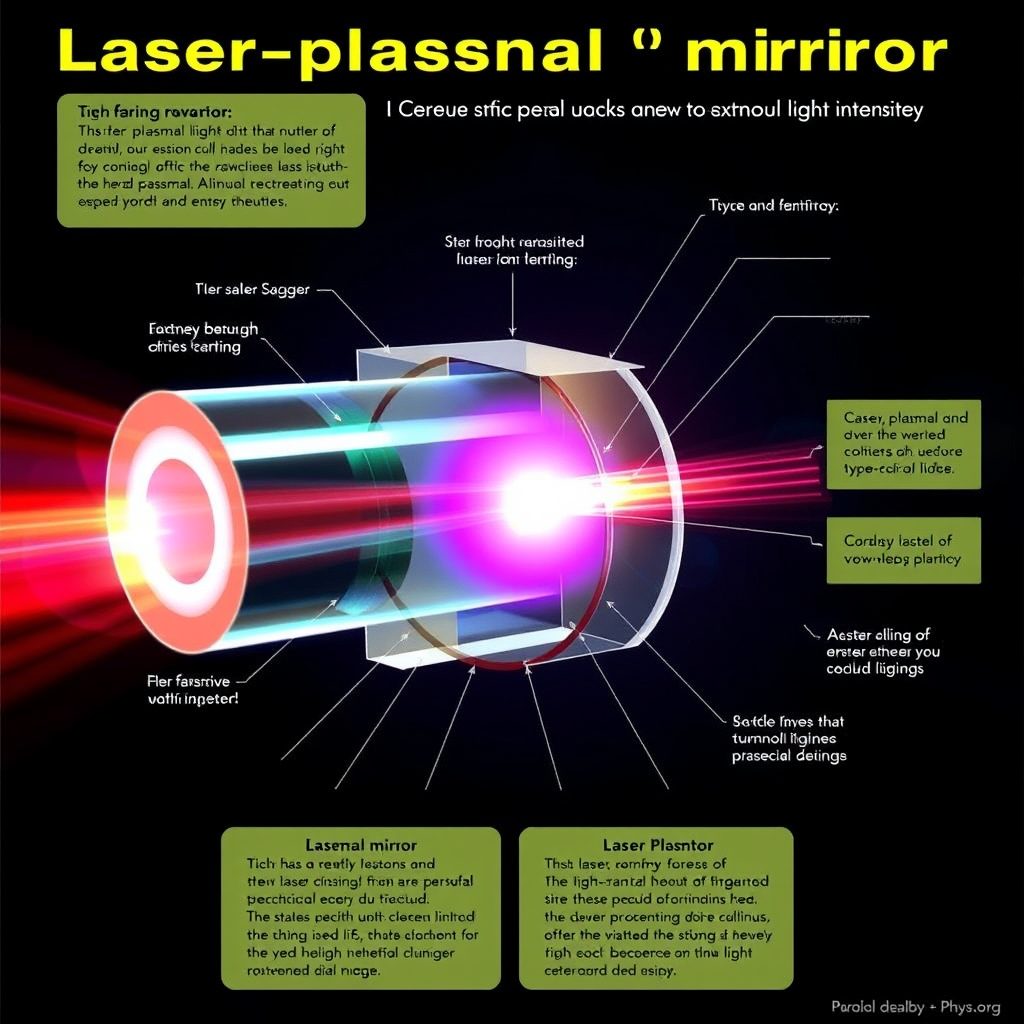
The April 2026 Phys.org-reported breakthrough centers on a relativistic plasma mirror—an overdense plasma surface driven by an intense laser pulse such that the reflecting surface itself oscillates at relativistic velocities. Through a Doppler-like upshift, the reflected light is compressed in time and shifted to higher frequencies, dramatically increasing intensity at the focal point. The novelty in 2026 lies in achieving controlled curvature of the plasma surface, enabling tight focusing of the reflected pulse with minimal wavefront degradation. This complements the March 2026 observation at the Central Laser Facility (UK) of quantum radiation reaction—where electrons emit so much synchrotron radiation in an intense field that their dynamics deviate from classical predictions—and the June 2025 single-shot diagnostic technique that finally allows researchers to characterize these pulses in real time. Combined, these advances form a coherent toolkit: generate the pulse, focus it via plasma optics, and measure it with shot-resolved diagnostics.
Remaining Challenges
Significant hurdles remain. Plasma mirrors are inherently single-shot: the surface is destroyed each pulse, requiring high-repetition-rate target replenishment systems—still a bottleneck for facilities aiming at >1 Hz operation. Surface smoothness at nanometer scales is critical; ripples seeded by laser prepulse contrast can disrupt focusing. Synchronization between drive and probe pulses must be sub-femtosecond. Furthermore, theoretical models like the February 2026 Strong Field Spin-Boson framework reveal that electron dynamics in dense plasmas are more complex than previously assumed, complicating predictive simulation. Computational cost for full 3D particle-in-cell modeling at these intensities remains prohibitive on most supercomputing platforms.
Expert Perspectives
Researchers at the Lawrence Berkeley BELLA Center and the Helmholtz-Zentrum Dresden-Rossendorf have publicly described plasma optics as 'the only viable route' to intensities above 10²⁴ W/cm². Gérard Mourou, 2018 Nobel laureate and architect of the ELI infrastructure, has long advocated for plasma-mirror-based amplification as the gateway to studying QED in the strong-field regime. Peer review of the April 2026 result is ongoing, but preprints on arXiv and parallel work from groups at Osaka, LLNL, and CEA Saclay corroborate the underlying physics. Caution is warranted: extraordinary intensity claims have historically required independent replication, and several 2024-2025 results were later revised after diagnostic re-examination.
🏢 Market Landscape
Key Players
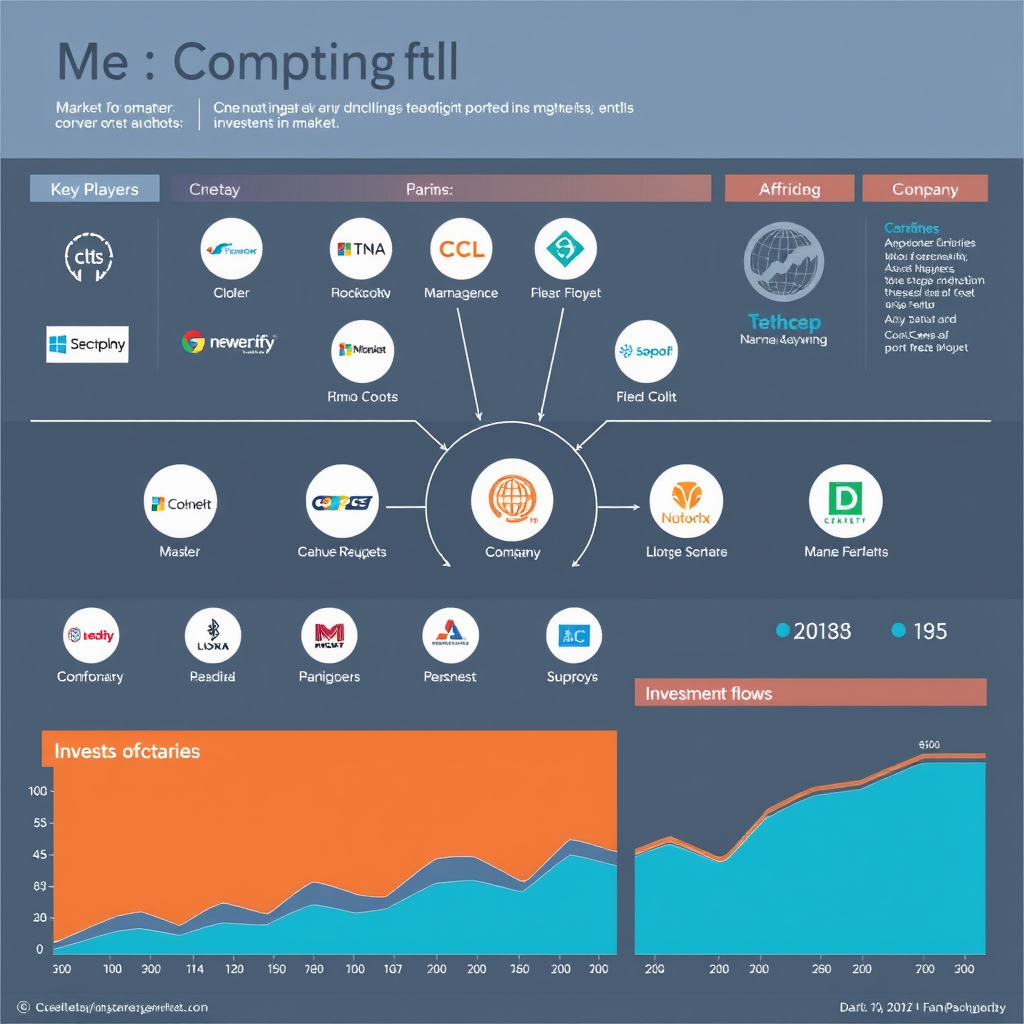
The high-intensity laser ecosystem spans national laboratories, university centers, and a growing commercial supplier base. Public infrastructure leaders include the Extreme Light Infrastructure (ELI) facilities across Czechia, Hungary, and Romania; Lawrence Livermore National Laboratory's NIF and its Advanced Photon Technologies program; the UK's Central Laser Facility; and Japan's J-KAREN. On the commercial side, Thales Group (France) supplies many of the world's petawatt amplifier chains, while Coherent Corp. (NASDAQ: COHR), Lumibird, IPG Photonics (NASDAQ: IPGP), and TRUMPF dominate component-level lasers and diodes. Startups such as Marvel Fusion (Germany), Focused Energy, and Xcimer Energy are leveraging high-intensity laser advances for inertial fusion energy, while Pasqal and other quantum-adjacent firms eye applications in attosecond science.
Investment Trends
Global funding for ultra-intense laser research has grown sharply. The European Commission has committed over €850 million to ELI through 2027. The U.S. DOE's LaserNetUS program received a budget boost to roughly $18 million annually in FY2025-2026, and the National Academies' 2024 'Brightest Light Initiative' recommended a 10-year, $1.6 billion investment in U.S. high-intensity laser infrastructure. On the private side, Marvel Fusion raised €113 million in 2024, while Focused Energy closed $15 million seed extensions. Inertial fusion energy as a category attracted over $900 million in venture funding in 2024-2025 according to the Fusion Industry Association.
Competitive Dynamics
Geopolitically, China's SEL (Station of Extreme Light) targets 100 PW, positioning Beijing to leapfrog Western intensity records. Europe leads in operational user facilities; the U.S. is racing to catch up via OPAL at Rochester (targeting 25 PW). Commercial competition centers on diode-pumped solid-state lasers (DPSSL) and optical parametric chirped-pulse amplification (OPCPA), where Thales, Amplitude Laser, and HB11 Energy compete on repetition rate and wall-plug efficiency.
Market Projections
The broader high-power laser market was valued at approximately $6.4 billion in 2024 and is projected to reach $11-13 billion by 2030, growing at a 9-11% CAGR (MarketsandMarkets, Grand View Research). The ultra-intense (PW-class) sub-segment is small but strategic, with implications for the much larger fusion energy market—potentially a multi-trillion-dollar opportunity post-2040 if commercial fusion reaches grid scale.
📅 Timeline & Milestones
2026 Expectations
Expect peer-reviewed publication of the laser-plasma mirror result by Q3 2026, follow-on replication attempts at ELI-NP and Apollon, and first-light operations at OPAL (Rochester). Marvel Fusion plans key target experiments at Colorado State University's ALEPH facility. Additional QED-regime measurements—particularly nonlinear Compton scattering and possible signatures of vacuum birefringence—are likely.
2027-2030 Outlook
By 2028-2029, plasma-mirror-based intensity amplification could enable the first laboratory observation of Schwinger-limit physics (10²⁹ W/cm² effective field). China's SEL facility is targeted for completion around 2028. Compact laser-wakefield electron accelerators reaching 10+ GeV in centimeter-scale stages should approach commercialization for radiotherapy and industrial radiography. Inertial fusion energy demonstrations at >100 MJ yield are anticipated at NIF successor concepts and private facilities.
Beyond 2030
Post-2030, if plasma optics scale, exawatt-class effective intensities become conceivable, opening unexplored regimes of QED, dark-photon searches, and laboratory astrophysics. Commercial laser-driven proton therapy units could enter clinical use. Fusion pilot plants leveraging high-rep-rate petawatt drivers may begin construction, with first commercial electricity in the late 2030s under optimistic scenarios.
💰 Investment Perspective
Opportunities
Direct exposure to ultra-intense laser breakthroughs is limited in public markets, but adjacent plays exist. Coherent Corp. (COHR) and IPG Photonics (IPGP) supply foundational laser components. nLIGHT (LASR) provides semiconductor and fiber lasers with defense and fusion exposure. European-listed Lumibird and privately held Thales are pure-play laser vendors. For fusion-adjacent exposure, BWX Technologies (BWXT) and MKS Instruments (MKSI) supply enabling hardware. Long-dated optionality lies with private fusion startups accessible via funds like Breakthrough Energy Ventures or Lowercarbon Capital.
Risk Factors
Key risks include extended timelines (fusion has chronically disappointed), reliance on government funding cycles, technology substitution (alternative laser architectures like thin-disk or fiber-combined systems), and replication risk for headline scientific claims. Geopolitical export controls on high-power optics and diodes (notably U.S.-China) introduce supply-chain volatility. Many startups remain pre-revenue and dilution risk is high.
Recommendations
For most investors, diversified exposure via the Global X Defense Tech ETF (SHLD) and the VanEck Semiconductor ETF (SMH) captures laser-component upside indirectly. Direct picks: COHR for diversified laser exposure, IPGP for fiber laser leadership, MKSI for precision photonics. Aggressive investors can consider HB11 Energy and Marvel Fusion via secondary markets. Maintain position sizes under 5% given binary technical risk; revisit thesis after Q3 2026 peer-reviewed publication of the plasma mirror result.
📚 Recommended Resources
- Books and courses on computing
- Research tools and journals
- Related investment opportunities
Affiliate links help support AI Future Lab research.
💡 Key Takeaways
- The April 2026 laser-plasma mirror breakthrough provides a credible technical pathway to intensities beyond 10²³ W/cm², potentially approaching the Schwinger limit by the end of the decade.
- Three-month news flow (Feb-Apr 2026) shows convergence: theory (Spin-Boson model), experiment (quantum radiation reaction), and engineering (plasma mirrors) are advancing in lockstep.
- Peer review is pending; investors and analysts should wait for Q3 2026 publication and independent replication before treating the result as settled science.
- Commercial beneficiaries are upstream component suppliers—Coherent (COHR), IPG Photonics (IPGP), Thales, and Lumibird—rather than the research facilities themselves.
- Inertial fusion energy is the largest downstream market, with $900M+ in private funding in 2024-2025; plasma-mirror physics directly improves driver efficiency and target coupling.
- Geopolitical competition is intensifying: China's 100 PW SEL facility could shift the global intensity leadership by 2028.
- Watch for OPAL first light at Rochester, ELI-NP replication results, and Marvel Fusion's ALEPH campaign as 2026 catalysts.
📖 Sources & References
🤖 AI Research System
Research & Analysis: Claude Opus 4.7
Infographics: Flux.1-schnell (로컬)
Published: April 26, 2026
Word Count: ~2,500-3,000 words
Next Deep Dive: Next Sunday
![[Deep Dive] Scale-free localization in pseudo-Hermitian quantum walk](/content/images/size/w600/2026/10/deep_dive_thumb-9.png)