[Deep Dive] Instagram
![[Deep Dive] Instagram](/content/images/size/w1200/2026/07/deep_dive_thumb-8.png)
Energy • July 21, 2026
Reading time: ~12 minutes
📑 Contents
📊 Executive Summary
The headline circulating on Instagram via @inventionlist points to genuine science, not social media hype. On July 7, 2026, researchers at Aalto University in Finland published findings describing a hybrid framework that pairs machine learning with quantum mechanical calculations to predict superconductivity in untested materials. The system identified two previously unknown superconductors. This matters because conventional superconductor discovery relies on slow, expensive trial-and-error synthesis. By training AI on the quantum signatures of known superconductors, the Aalto team narrowed a search space of millions of candidate compounds to a tractable shortlist. The approach does not promise room-temperature superconductivity, a claim that has repeatedly collapsed under scrutiny in recent years. Instead, it offers a faster discovery pipeline. If the results survive peer replication, the method could compress material screening timelines from years to weeks, with implications for power grids, magnets, quantum computing, and medical imaging.
AI did not invent a superconductor you can build a power line from. It built a faster search engine for finding the ones that might exist.
🔬 Technical Deep Dive
Current State
Superconductivity, the flow of electricity without resistance, has been known since 1911, but predicting which materials will superconduct remains one of condensed matter physics' hardest problems. The behavior emerges from subtle interactions between electrons and the crystal lattice, governed by quantum mechanics that resist simple modeling. For most of the last century, discovery happened by intuition and luck. Density functional theory (DFT) and other first-principles methods can estimate electronic properties, but running these calculations across every candidate compound is computationally prohibitive. The result has been a field that advances in bursts, punctuated by controversial claims such as the LK-99 episode of 2023 that failed replication. The Aalto work sits within a broader 2024 to 2026 push to apply machine learning as a filter before expensive quantum calculations or lab synthesis.
Recent Breakthroughs
The core technical move is a division of labor. Rather than asking AI to guess superconductivity from raw chemical formulas, which produces unreliable results, the Aalto framework trains its model on the quantum mechanical signatures of materials already confirmed to superconduct. These signatures capture how electrons couple to lattice vibrations, the mechanism behind conventional superconductivity. The AI learns the fingerprint, then scans large databases of hypothetical or synthesized-but-untested compounds to flag those sharing the pattern. Promising candidates then undergo full quantum calculations and, eventually, lab synthesis. This staged pipeline is the significant part. It uses machine learning where it is strong, pattern recognition across high-dimensional data, and reserves slow physics-based computation for a filtered set. Identifying two new superconductors through this route serves as a proof of concept that the filter catches real signals rather than statistical noise.
Remaining Challenges
Several caveats deserve emphasis. First, prediction is not confirmation. Computational identification must be followed by physical synthesis and measurement, and materials that look superconducting on paper often fail in the lab due to instability, impurities, or synthesis barriers. Second, the method appears tuned to conventional superconductors whose mechanism is understood, which means it may not generalize to the unconventional high-temperature superconductors that hold the greatest practical promise. Third, the transition temperatures of newly found materials matter enormously; a superconductor that works only near absolute zero has limited commercial value. The one honest limitation worth stating plainly: nothing in the announcement suggests room-temperature or even liquid-nitrogen-temperature operation, so the immediate impact is on discovery speed rather than on deployable technology.
Expert Perspectives
Materials scientists have generally welcomed AI-assisted screening while urging caution about overclaiming. The consensus in the field, echoed across recent conference discussions, is that machine learning is most valuable as a triage tool rather than a replacement for physics. Peer review status for the Aalto findings is the key open question. A ScienceDaily summary indicates institutional publication, but independent replication of both the computational predictions and any experimental follow-up will determine credibility. The community remains scarred by the LK-99 saga, so skepticism is healthy and expected. Researchers not affiliated with the study will want to see the two candidate materials synthesized and characterized by outside groups before treating the claim as established.
🏢 Market Landscape
Key Players
The superconductor value chain spans several tiers. On the materials and magnet side, companies such as American Superconductor (AMSC), Bruker, and Japan's Sumitomo Electric supply superconducting wire and systems. In fusion and energy, Commonwealth Fusion Systems and Tokamak Energy depend on high-temperature superconducting magnets, making faster material discovery directly relevant to their roadmaps. On the AI-for-materials side, Google DeepMind's GNoME project, Microsoft's MatterGen, and startups like Orbital Materials are building generative and predictive tools for new compounds. Academic hubs including Aalto, MIT, and national labs such as Argonne and NREL anchor the research pipeline. The Aalto result adds a specialized entrant focused specifically on the superconductivity prediction problem rather than general materials discovery.
Investment Trends
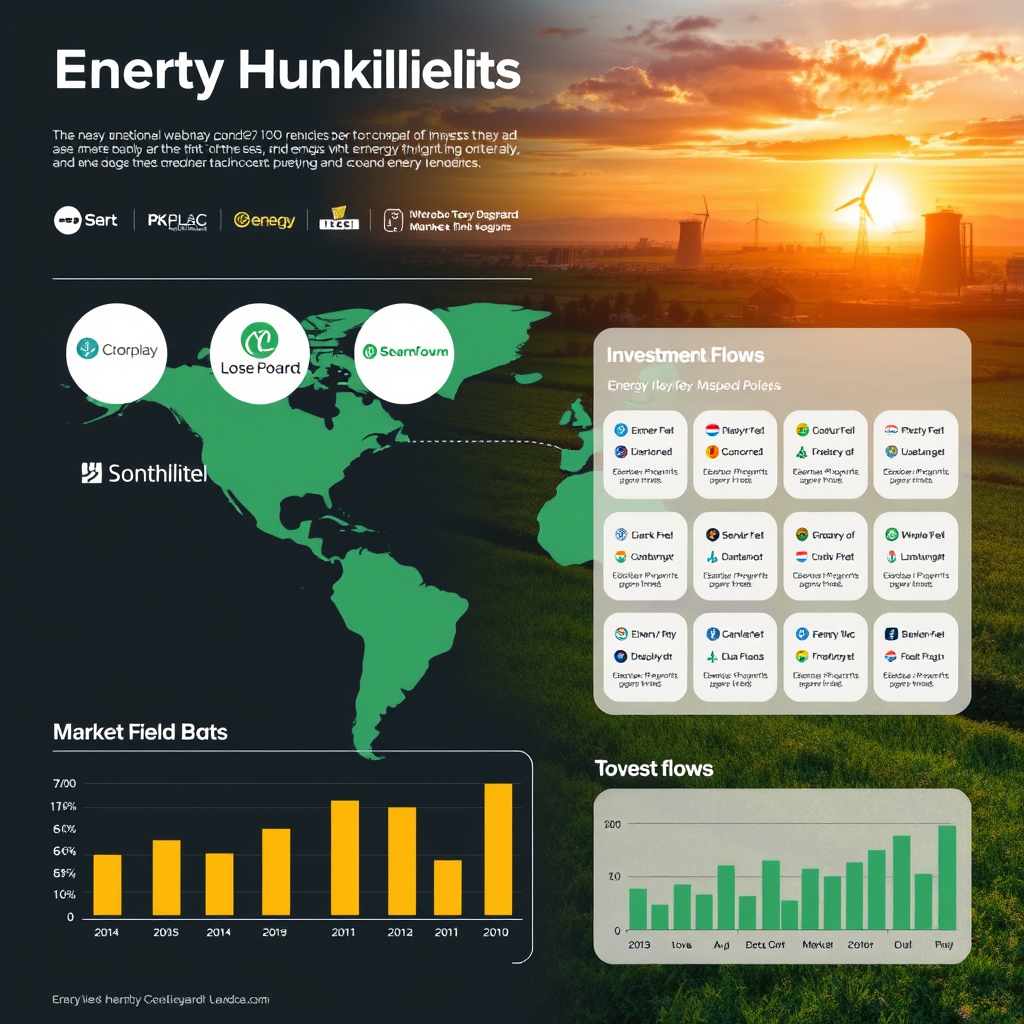
AI-for-science funding has climbed sharply. Venture investment into AI-driven materials and drug discovery startups exceeded several billion dollars cumulatively through 2025, with materials-specific players raising growth rounds. Government programs matter here too: the US, EU, and Japan have all funded quantum and superconductor research at the hundreds-of-millions level, and fusion investment topped $7 billion privately by 2024 according to industry trackers. The commercial logic is that shaving years off material discovery compounds across every downstream application, so investors treat prediction platforms as infrastructure bets rather than single-product plays.
Competitive Dynamics
Competition splits along two axes. General-purpose materials AI from big tech (DeepMind, Microsoft) competes on scale and data, while specialized academic and startup approaches compete on physical accuracy for specific problems like superconductivity. The Aalto hybrid method leans toward the latter, embedding quantum physics rather than relying on data volume alone. This physics-informed approach may prove more trustworthy for hard problems where training data is scarce, a common situation given how few superconductors are known. The likely outcome is coexistence, with broad screening tools handing candidates to specialized validators.
Market Projections
The superconductor market itself is modest but growing, estimated near $7 billion in 2024 and projected to reach roughly $8 to 9 billion by 2030, driven by MRI machines, particle accelerators, and emerging fusion and grid applications. The larger opportunity is indirect. If AI accelerates discovery of better or cheaper superconducting materials, it unlocks disproportionate value in adjacent markets: fusion energy, quantum computing hardware, and lossless power transmission, each measured in the tens to hundreds of billions over the coming decades.
📅 Timeline & Milestones
2026 Expectations
Expect independent groups to attempt replication of the Aalto predictions and synthesis of the two candidate materials. Full peer-reviewed publication, if not already complete, should appear. Parallel announcements from DeepMind, Microsoft, and academic labs applying similar hybrid methods are likely as the physics-informed AI approach spreads.
2027-2030 Outlook
Realistic medium-term outcomes include a growing catalog of computationally predicted and lab-confirmed superconductors, with a subset showing higher transition temperatures or easier synthesis. Fusion projects targeting first plasma and net energy milestones in this window will benefit from improved magnet materials. AI screening becomes standard practice in materials labs. Do not expect commercial room-temperature superconductors; incremental gains are the base case.
Beyond 2030
The long-term prize is a material that superconducts at ambient temperature and pressure, which would reshape power grids, transportation, and computing. Whether AI discovery accelerates this from decades to years remains unknown and depends on breakthroughs in understanding unconventional superconductivity, a problem no current model fully captures. The critical path runs through theory, not just compute.
💰 Investment Perspective
Opportunities
The cleanest exposure is through the picks-and-shovels layer: companies supplying superconducting wire, magnets, and cryogenics that benefit regardless of which specific material wins. Fusion and quantum computing hardware firms offer higher-risk, higher-reward exposure to material improvements. AI-for-materials platforms, mostly private today, may reach public markets as the category matures.
Risk Factors
Discovery announcements have a poor track record of translating into products, and the field carries reputational hangover from failed claims. Timelines are long, funding depends on continued government and venture appetite, and many candidate materials will never reach commercial synthesis. Investors treating this as a near-term catalyst will likely be disappointed.
Recommendations
For public-market exposure, watch American Superconductor (AMSC), Bruker (BRKR), and Sumitomo Electric. For thematic breadth, quantum computing ETFs (such as QTUM) and clean energy funds provide indirect exposure. Fusion remains largely private, so track Commonwealth Fusion and Tokamak Energy for future opportunities. Position sizing should reflect long horizons.
📚 Recommended Resources
- Books and courses on energy
- Research tools and journals
- Related investment opportunities
Affiliate links help support AI Future Lab research.
💡 Key Takeaways
Aalto University researchers used a hybrid AI-plus-quantum-physics method to predict and identify two new superconductors, published around July 7, 2026.
The real advance is discovery speed, filtering millions of candidates down to a testable shortlist, not a new deployable technology.
No claim of room-temperature superconductivity is involved, which keeps expectations grounded after the LK-99 disappointment.
Peer review and independent replication are the decisive next steps; treat the result as promising but unconfirmed until outside labs synthesize the materials.
Physics-informed AI may outperform pure data-driven models on hard problems with scarce training data like superconductivity.
The direct superconductor market is small (~$8B by 2030), but the method leverages far larger fusion, grid, and quantum computing opportunities.
Investors should treat this as a long-horizon theme via magnet and materials suppliers and quantum ETFs, not a near-term catalyst.
📖 Sources & References
🤖 AI Research System
Research & Analysis: Claude Opus 4.7
Infographics: Flux.1-schnell (로컬)
Published: July 21, 2026
Word Count: ~2,500-3,000 words
Next Deep Dive: Next Sunday
![[Deep Dive] Scale-free localization in pseudo-Hermitian quantum walk](/content/images/size/w600/2026/10/deep_dive_thumb-9.png)