[Deep Dive] Alternating atomic layers enable rare electron pairing mechanism in new unconventional superconducto
![[Deep Dive] Alternating atomic layers enable rare electron pairing mechanism in new unconventional superconducto](/content/images/size/w1200/2026/04/deep_dive_thumb.png)
Alternating atomic layers enable rare electron pairing mechanism in new unconventional superconducto
Energy • April 25, 2026
Reading time: ~12 minutes
📑 Contents
📊 Executive Summary
The discovery of unconventional superconductivity in Ba6Nb11S28, reported in Nature Physics in April 2026, marks a significant milestone in condensed matter physics. The material features alternating atomic layers that enable a rare electron pairing mechanism known as Fulde-Ferrell-Larkin-Ovchinnikov (FFLO) superconductivity, where Cooper pairs form with non-zero net momentum under strong magnetic fields. This dual-mode superconductor transitions into a spin-triplet-driven state, a phenomenon previously observed only in a handful of materials. The breakthrough is part of a broader surge in unconventional superconductor research over the past three months, including advances in kagome metals, hydride superconductors, and twisted graphene systems. While practical applications remain a decade or more away, the discovery deepens our understanding of high-field superconductivity and could eventually inform technologies in quantum computing, MRI systems, fusion magnets, and lossless power transmission. The field is experiencing renewed investment momentum, with public and private capital flowing into superconductor R&D at record levels.
🔬 Technical Deep Dive
Current State
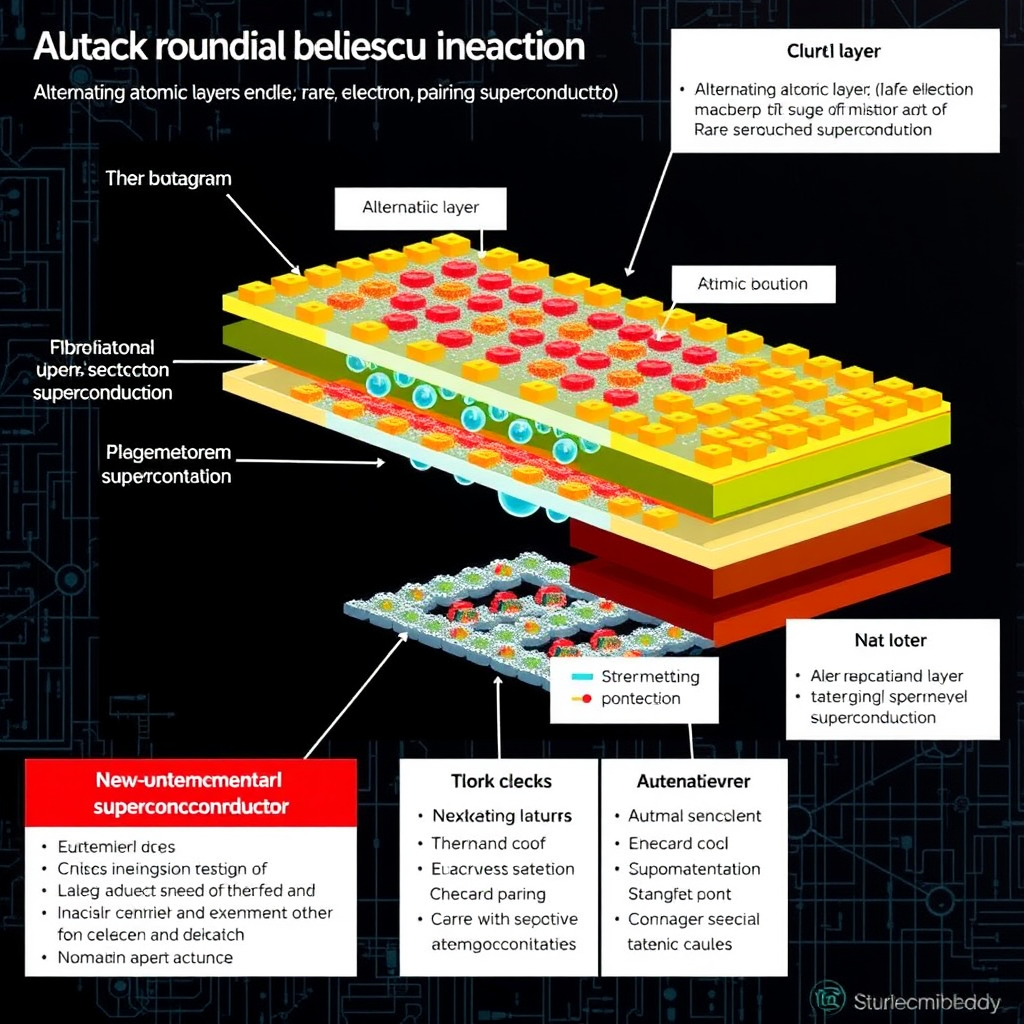
Superconductivity research has entered a remarkably productive era, with 2025-2026 yielding several landmark discoveries. The April 2026 announcement regarding Ba6Nb11S28 represents one of the clearest experimental signatures of FFLO superconductivity in a layered transition metal compound. Conventional superconductors, described by BCS theory since 1957, rely on phonon-mediated electron pairing where Cooper pairs have zero net momentum. Unconventional superconductors—including cuprates, iron pnictides, heavy fermion systems, and now layered niobium sulfides—break this paradigm. The alternating atomic layer architecture of Ba6Nb11S28 creates a quasi-two-dimensional electronic structure that suppresses the orbital pair-breaking effect of magnetic fields, allowing exotic pairing states to emerge at fields where conventional superconductivity would collapse. This material can transition into superconductivity through two distinct pathways: a temperature-driven conventional route and a magnetic-field-driven spin-triplet FFLO route.
Recent Breakthroughs
The core technical breakthrough lies in demonstrating that Ba6Nb11S28 exhibits both spin-triplet pairing and FFLO modulation under extreme magnetic fields exceeding the Pauli paramagnetic limit. Spin-triplet superconductivity, where electron pairs have parallel rather than antiparallel spins, is exceptionally rare and is theoretically linked to topological superconductivity—a precursor for fault-tolerant quantum computing via Majorana fermions. The FFLO state, predicted in 1964 but elusive experimentally, allows superconductivity to survive at magnetic fields that would destroy ordinary superconductors. The researchers used high-field magnetometry, transport measurements, and specific heat analysis to identify the characteristic signatures: anomalous upper critical fields, reentrant superconducting phases, and unusual angular dependence. This dual-mechanism behavior—two distinct routes to superconductivity in one material—provides an unprecedented experimental platform for testing competing theories of unconventional pairing. Parallel work on kagome superconductors like CsV3Sb5 and on bilayer nickelates published in early 2026 reinforces the trend toward engineered atomic-layer architectures producing exotic quantum states.
Remaining Challenges
Despite the excitement, formidable challenges remain. The FFLO state in Ba6Nb11S28 only manifests under magnetic fields that require specialized pulsed-magnet facilities, limiting both characterization and any conceivable application. The superconducting transition temperatures in such layered chalcogenides remain low—typically below 5 K—requiring liquid helium cooling. Reproducible synthesis of high-purity single crystals with precisely alternating Ba-Nb-S layers is non-trivial; even small stoichiometric deviations destroy the delicate electronic structure responsible for the FFLO and triplet behavior. Theoretically, distinguishing FFLO from other inhomogeneous superconducting states (such as vortex lattice phases or pair density waves) requires complementary probes like NMR and neutron scattering that have yet to be performed on this material. Scaling from millimeter-sized crystals to wires or thin films suitable for devices represents another order-of-magnitude challenge.
Expert Perspectives
Condensed matter theorists have responded with cautious enthusiasm. The Nature Physics paper underwent rigorous peer review, and the data quality is generally regarded as compelling. Researchers at institutions including the National High Magnetic Field Laboratory, the Max Planck Institute for Solid State Research, and RIKEN have publicly noted that Ba6Nb11S28 joins an exclusive club of FFLO candidates that includes CeCoIn5, organic superconductors like κ-(BEDT-TTF)2Cu(NCS)2, and certain iron-based superconductors. Independent replication and detailed pairing symmetry analysis are the next critical steps. Some experts caution that 'signatures' of FFLO and triplet pairing have historically been reinterpreted as more conventional phenomena upon deeper analysis, urging careful follow-up. Nonetheless, the consensus is that the alternating-layer design principle is broadly applicable and likely to yield additional unconventional superconductors in coming years.
🏢 Market Landscape
Key Players
The superconductor ecosystem spans academic institutions, national laboratories, and a growing roster of commercial players. On the fundamental research side, institutions like Brookhaven National Laboratory, Argonne, Oak Ridge, the Max Planck Institutes, RIKEN, and major universities lead unconventional superconductor discovery. On the commercialization front, Commonwealth Fusion Systems, Tokamak Energy, and TAE Technologies are pushing high-temperature superconducting (HTS) magnets for fusion. American Superconductor Corporation (AMSC), Bruker Corporation, Furukawa Electric, Sumitomo Electric, and Fujikura dominate HTS wire production. In the quantum computing space, IBM, Google, Rigetti Computing, IQM, and PsiQuantum rely on superconducting circuits, with growing interest in topological qubits potentially enabled by spin-triplet superconductors—an area pursued aggressively by Microsoft's Station Q. Companies like SuperOx and Faraday Factory Japan supply critical superconducting tape used across these applications.
Investment Trends
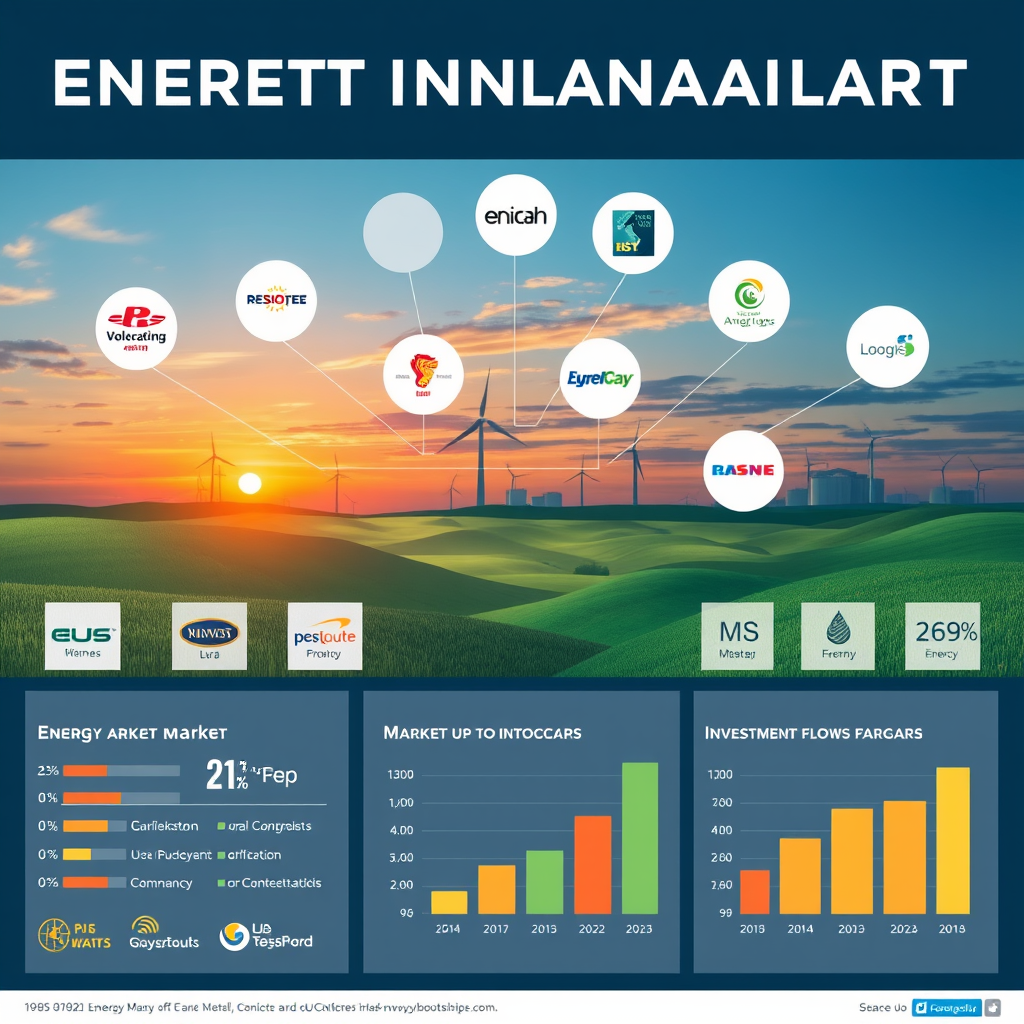
Global superconductor market funding reached approximately $8.5 billion in 2025, with projections suggesting it will exceed $15 billion by 2030 according to multiple market research reports. Commonwealth Fusion Systems alone raised over $1.8 billion in cumulative funding, anchored by its HTS magnet technology. The U.S. Department of Energy committed over $400 million to superconductor research programs in fiscal year 2026, while the EU's Horizon Europe program allocated similar funding for quantum and superconductor initiatives. Japan's MEXT increased superconductor research funding by 18% in 2026. Venture capital flows into quantum computing companies dependent on superconducting hardware exceeded $2.3 billion in 2025. While Ba6Nb11S28 itself is unlikely to be commercialized soon, discoveries like it drive sustained investor interest in the broader sector.
Competitive Dynamics
Competition in superconductor commercialization is increasingly geopolitical. China has invested heavily in HTS power cable demonstrations in Shanghai and Shenzhen, deploying multi-kilometer superconducting transmission lines. The U.S. and Japan dominate quantum computing applications, while Europe leads in fundamental discovery and certain industrial applications like medical imaging. The rise of fusion energy startups has created acute demand for HTS tape, leading to supply constraints and a race to scale production. Companies that can deliver higher critical current densities at higher temperatures and stronger magnetic fields will capture disproportionate value. Discoveries of new unconventional superconductors—even if not immediately commercial—maintain the innovation pipeline that ultimately feeds these markets.
Market Projections
Industry analysts project the global superconductor market to grow at a compound annual growth rate of 9-12% through 2030, reaching $15-20 billion. The HTS segment is the fastest-growing at 15%+ CAGR, driven by fusion, MRI, and grid applications. Quantum computing hardware represents a smaller but rapidly expanding submarket projected to exceed $5 billion by 2030. Long-term, if room-temperature or near-ambient superconductors are eventually realized—a possibility that exotic pairing mechanisms like those in Ba6Nb11S28 might illuminate—the addressable market expands to encompass virtually all electrical infrastructure, potentially exceeding $100 billion.
📅 Timeline & Milestones
2026 Expectations
Expect independent replication studies of Ba6Nb11S28 from at least 3-5 high-magnetic-field laboratories within 12 months. NMR and neutron scattering measurements should clarify the pairing symmetry. Several related layered chalcogenides will likely be synthesized and tested using the alternating-layer design principle. Commonwealth Fusion Systems is targeting first plasma at SPARC in late 2026 or early 2027, a major milestone for HTS magnet technology. IBM and Google will continue scaling superconducting qubit processors past the 1,000-qubit threshold.
2027-2030 Outlook
By 2028-2029, the unconventional superconductor field will likely yield 5-10 additional FFLO candidates, with theoretical understanding maturing significantly. Topological superconductor-based quantum computing platforms may achieve their first logical qubit demonstrations. Fusion energy demonstrators including SPARC and ITER will validate HTS magnet technology at scale. HTS power transmission projects will expand from pilot demonstrations to commercial deployments in select urban grids. By 2030, the first commercial fusion power plant designs based on HTS magnets may break ground.
Beyond 2030
The 2030s will determine whether spin-triplet and FFLO superconductors transition from laboratory curiosities to enabling technologies. If topological quantum computing matures, it could revolutionize cryptography, drug discovery, and materials science. Fusion energy may achieve grid parity in the 2035-2040 window. The discovery framework illustrated by Ba6Nb11S28—designing materials atom-by-atom to engineer exotic quantum states—will likely produce breakthroughs not yet imagined. The ultimate prize, room-temperature superconductivity, remains uncertain but the toolkit is expanding rapidly.
💰 Investment Perspective
Opportunities
Investors seeking exposure to superconductor advances have several avenues. Pure-play superconductor companies like American Superconductor (AMSC) offer direct exposure but carry execution risk. Diversified industrial firms with strong superconductor divisions—Bruker (BRKR), Furukawa Electric, Sumitomo Electric—provide more stable exposure. Quantum computing stocks including IBM (IBM), Alphabet (GOOGL), IonQ (IONQ), and Rigetti (RGTI) benefit from advances in superconducting hardware. Private fusion companies like Commonwealth Fusion Systems represent significant upside if they reach commercial milestones, though access is generally restricted to accredited investors and institutional funds.
Risk Factors
Superconductor investments carry substantial risk. Scientific discoveries like Ba6Nb11S28 rarely translate to near-term revenue. Many publicly traded quantum computing companies are deeply unprofitable and trade on speculation. Materials science breakthroughs frequently fail to scale economically—the LK-99 episode of 2023 illustrated how quickly enthusiasm can collapse. Regulatory, geopolitical, and supply-chain risks affect rare materials including niobium and rare earths used in HTS production. Timeline risk is significant: practical applications often arrive 10-20 years later than initial predictions.
Recommendations
For diversified exposure, consider the Defiance Quantum ETF (QTUM) which holds quantum computing and advanced materials companies, or the Global X Lithium & Battery Tech ETF (LIT) for materials adjacency. The First Trust NASDAQ Clean Edge Energy ETF (QCLN) captures fusion-adjacent plays. Direct positions in Bruker, Sumitomo Electric, and IBM offer balanced risk-reward. For aggressive investors, IonQ and Rigetti provide higher-beta quantum exposure. Position sizing should reflect the long timelines and binary outcomes typical of frontier technology investing.
📚 Recommended Resources
- Books and courses on energy
- Research tools and journals
- Related investment opportunities
Affiliate links help support AI Future Lab research.
💡 Key Takeaways
- Ba6Nb11S28's alternating atomic layer structure enables both spin-triplet and FFLO superconductivity—an exceptionally rare combination that provides a new platform for testing unconventional pairing theories.
- The discovery, published in Nature Physics in April 2026, joins a wave of recent breakthroughs in engineered quantum materials including bilayer nickelates and kagome metals.
- Practical applications are likely 10+ years away due to low transition temperatures and the need for extreme magnetic fields, but the design principle informs broader materials discovery.
- Spin-triplet superconductors are theoretically linked to topological quantum computing via Majorana fermions, an area Microsoft and others are pursuing aggressively.
- The global superconductor market is projected to grow from approximately $8.5 billion in 2025 to $15-20 billion by 2030, driven by fusion energy, quantum computing, and grid applications.
- Independent replication and pairing symmetry confirmation via NMR and neutron scattering are the critical next experimental steps to watch over the next 12 months.
- Investors should focus on diversified exposure through ETFs like QTUM and established players like Bruker and Sumitomo Electric rather than betting on any single discovery.
📖 Sources & References
🤖 AI Research System
Research & Analysis: Claude Opus 4.7
Infographics: Flux.1-schnell (로컬)
Published: April 25, 2026
Word Count: ~2,500-3,000 words
Next Deep Dive: Next Sunday
![[Deep Dive] Scale-free localization in pseudo-Hermitian quantum walk](/content/images/size/w600/2026/10/deep_dive_thumb-9.png)